Japanese pottery ceramics souvenir in Tokyo Japan
Font size:
Shopping Cart
-
Your cart is empty.
Categories
Shop Manager Profile
Arita Ware Encyclopedia
Discover the history, styles, techniques, and traditional patterns of Arita ware, explained from the perspective of a specialist in Japanese ceramics.
← Back to Arita Ware Encyclopedia
Porcelain vs. Pottery: Differences, Characteristics & How to Tell Them Apart
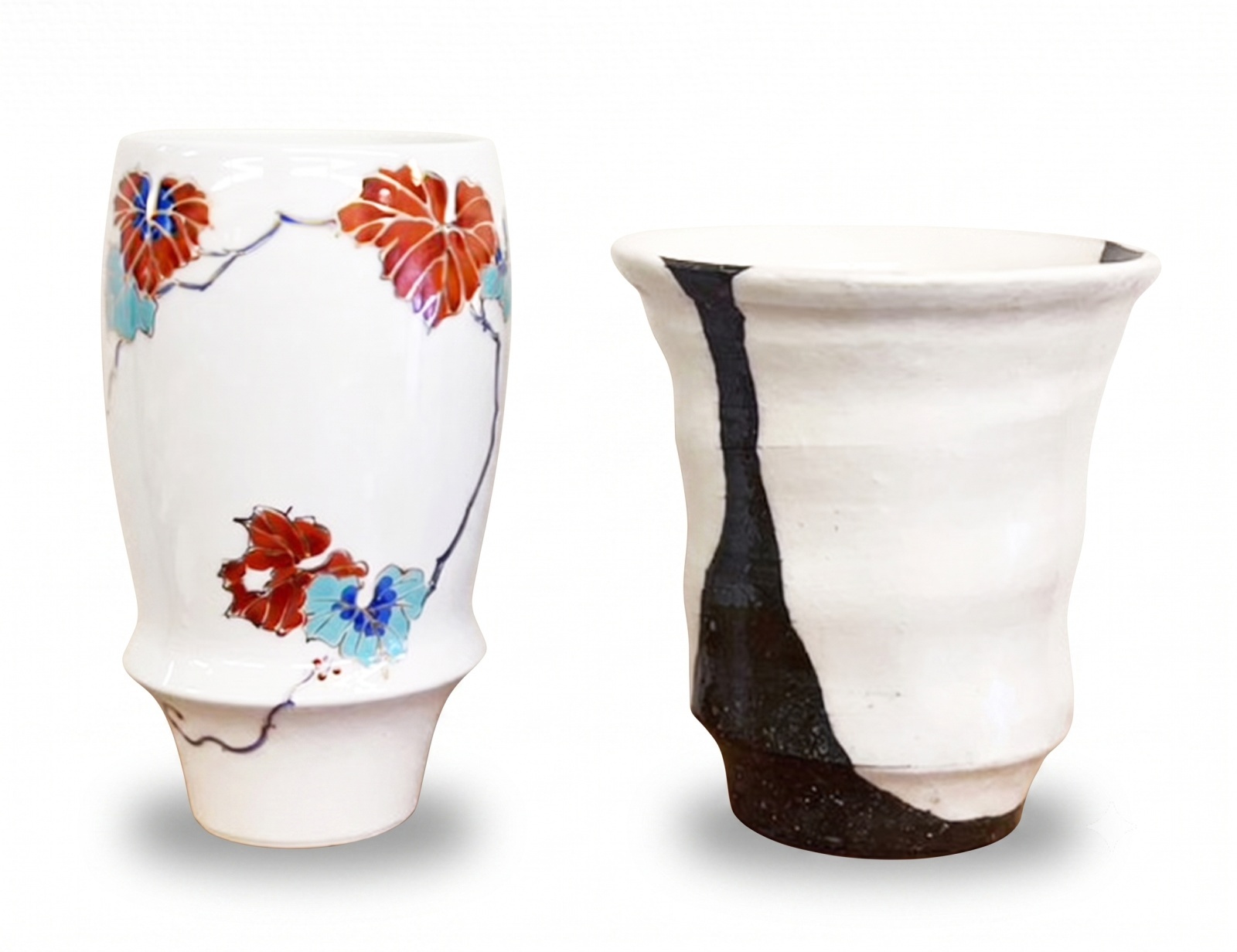
Porcelain and pottery cups. Although the difference may not always be obvious at first glance, their raw materials and the color of the ceramic body provide useful clues.
Porcelain and pottery are both types of ceramics, but they differ in their raw materials, firing temperatures, texture, water absorption, and decorative qualities. Porcelain is typically white, hard, and well suited to thin, lightweight forms, while pottery is valued for the warmth, texture, and natural character of clay. This guide explains the differences between porcelain and pottery, how to tell them apart, and how they relate to Arita ware.
What Is the Difference Between Porcelain and Pottery?
The main differences between porcelain and pottery lie in their raw materials and the characteristics of the finished ceramic body. Porcelain is made primarily from porcelain stone and fired at high temperatures, producing a hard, white body. Pottery, on the other hand, is made primarily from clay, and the natural color and texture of the clay often remain visible in the finished piece.
As a result, porcelain tends to have a clean, white appearance that provides an excellent surface for decorative techniques such as sometsuke (underglaze blue), akae (overglaze enamels), and gold decoration. Pottery is known for the warmth, earthy tones, and natural textures characteristic of clay.
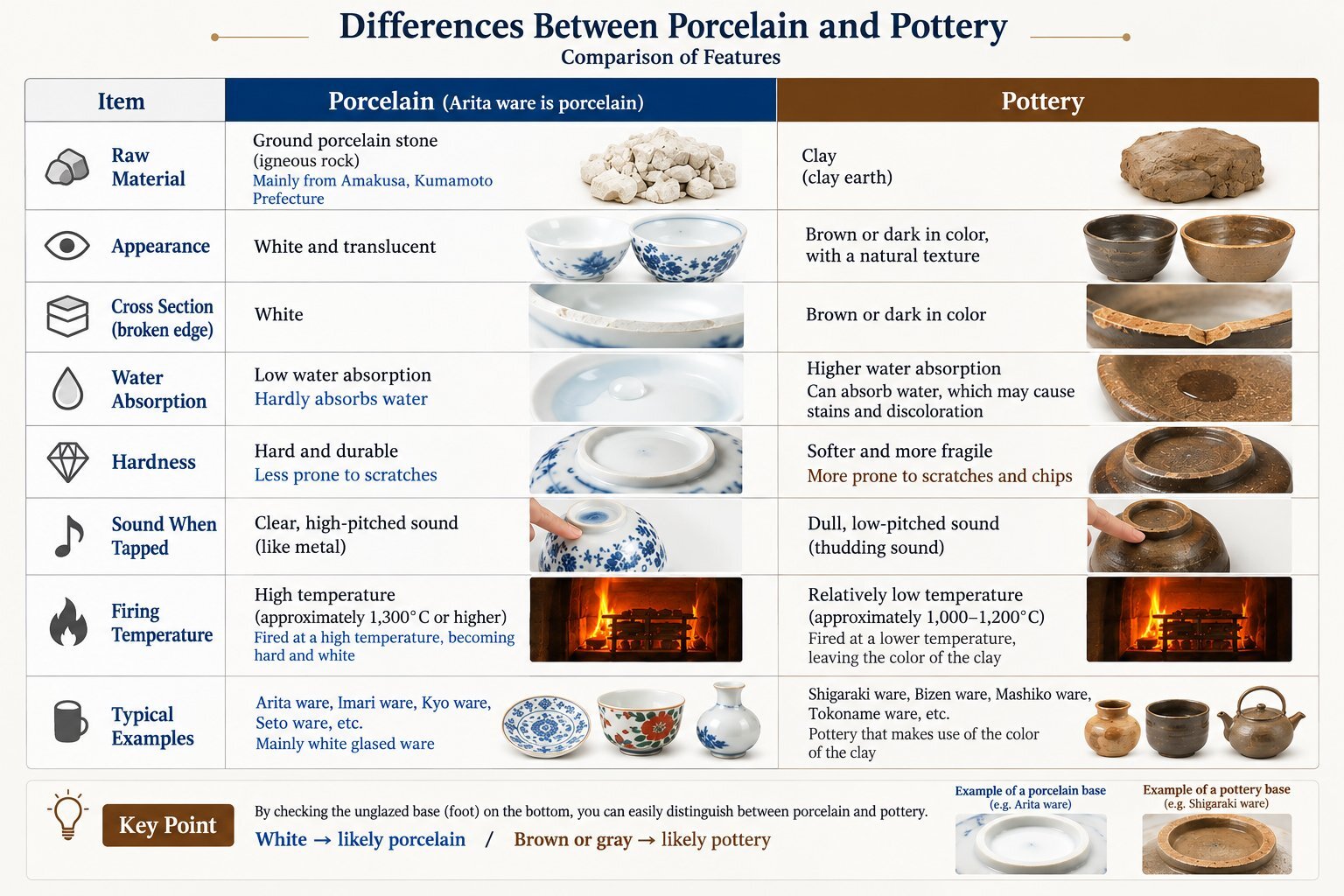
The main differences between porcelain and pottery include their raw materials, appearance, water absorption, hardness, sound when tapped, and firing temperature.
Characteristics of Porcelain
Porcelain has a hard, densely fired, usually white ceramic body. Because it can retain strength even when made relatively thin, porcelain can be formed into lightweight and delicate tableware. It is practical for everyday use and also provides an excellent white surface for a wide variety of decoration.
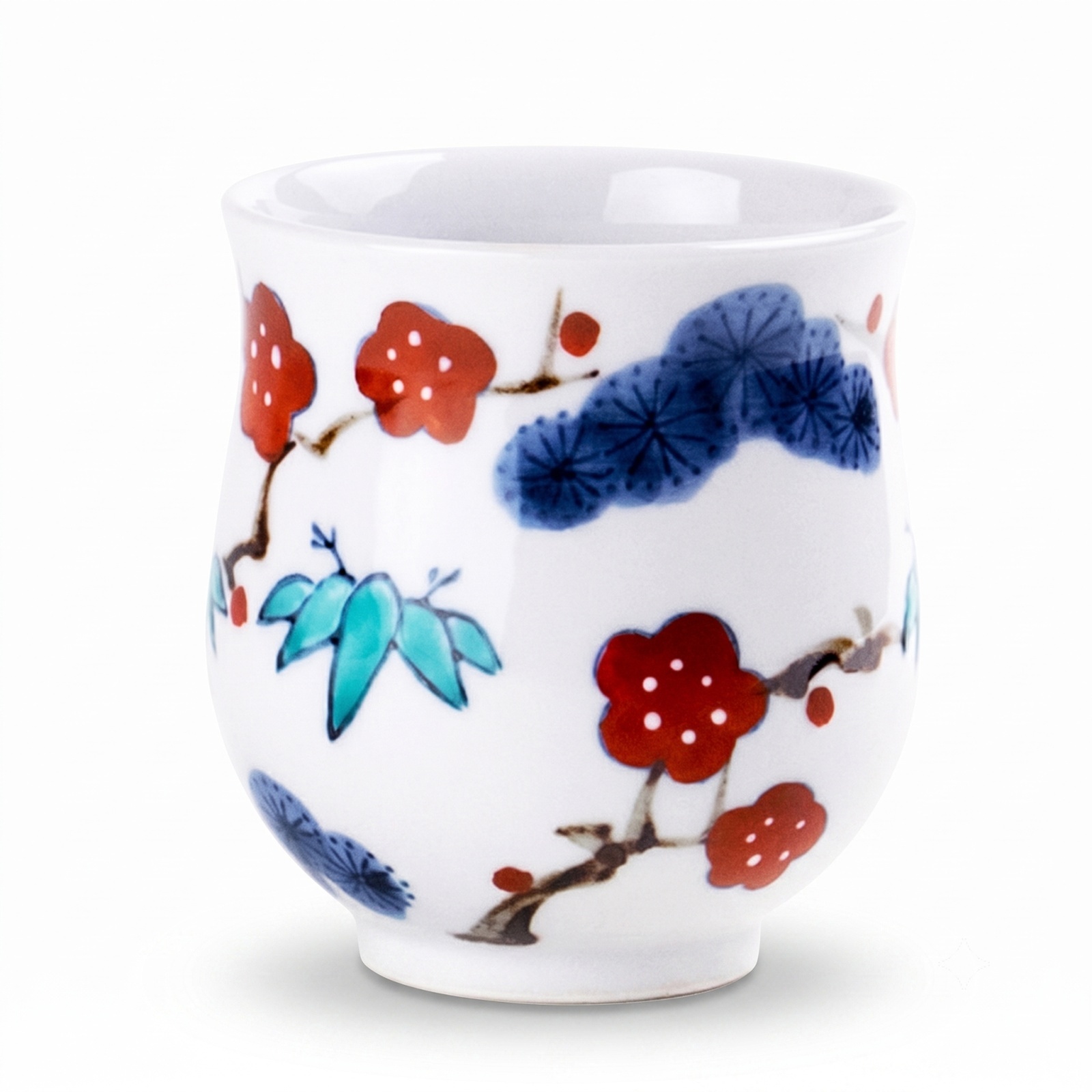
A porcelain teacup with a clean white appearance.
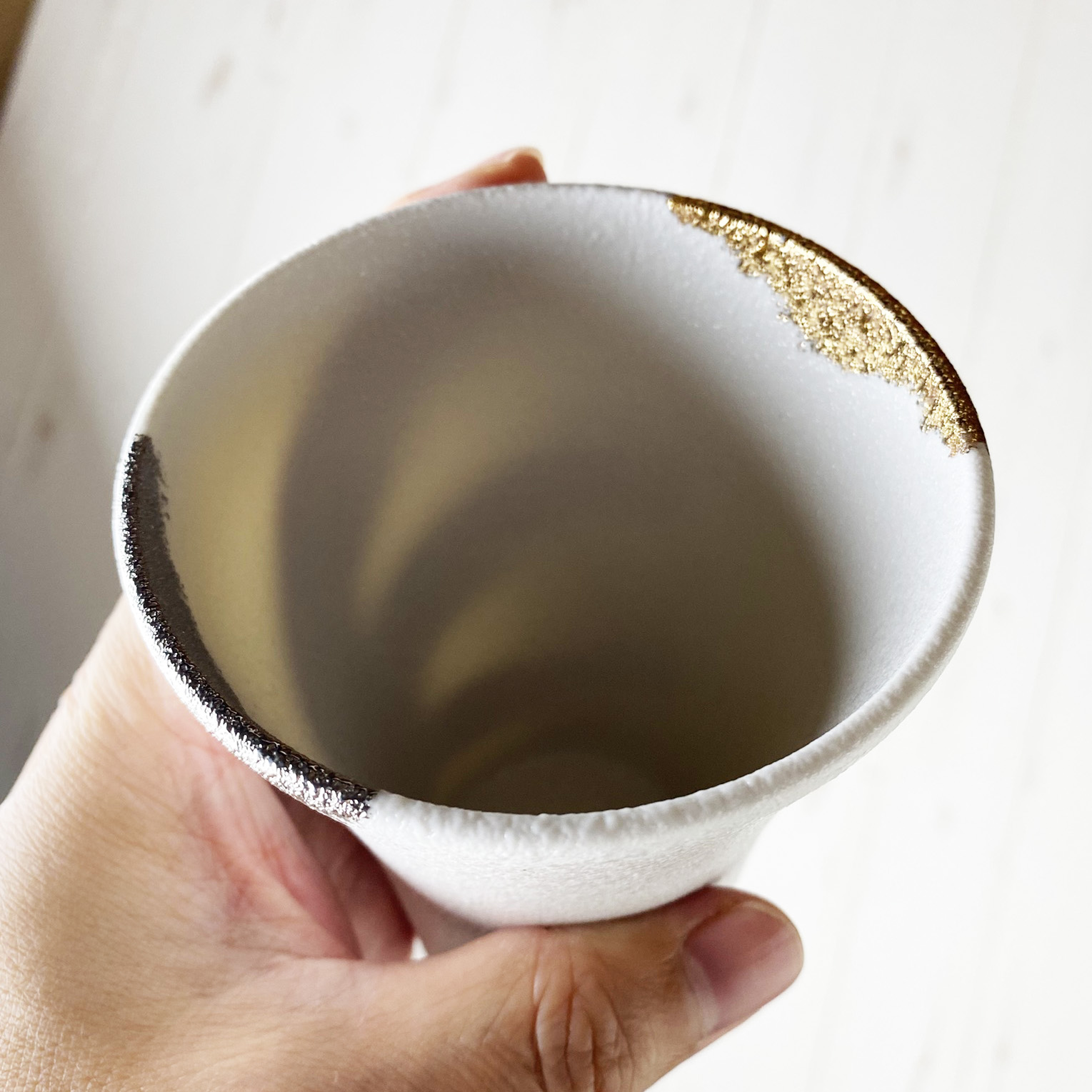
Thin porcelain can be slightly translucent. Here, the shadow of a finger can be seen faintly through the cup.
Can Be Made Thin and Lightweight
Because porcelain is fired at high temperatures, its body becomes hard and dense. This allows vessels to retain strength even when made relatively thin, making it possible to create lightweight and easy-to-handle tableware. A delicate rim and a light feel in the hand are among the distinctive qualities of porcelain.
Low Water Absorption and Easy to Keep Clean
Porcelain has a densely vitrified body and therefore absorbs very little water. In addition, most porcelain tableware is glazed, which makes it difficult for moisture and stains to penetrate the surface and helps prevent odors and mold from developing.
An Excellent Surface for Colorful Decoration
The white body of porcelain provides an ideal background for painted decoration. The deep blue of sometsuke, as well as red, yellow, green, purple, and gold used in overglaze decoration, can all be displayed vividly against the white porcelain surface.
This beautiful white body is one of the reasons such a wide variety of patterns and styles developed in Arita ware. Decorative traditions such as the Ko-Imari, Kakiemon, and Nabeshima styles evolved by making effective use of the white porcelain surface.
Characteristics of Pottery
Pottery is made primarily from clay. Compared with porcelain, the natural color and texture of the clay are more likely to appear in the finished vessel, giving pottery its characteristic warmth and earthy appearance.
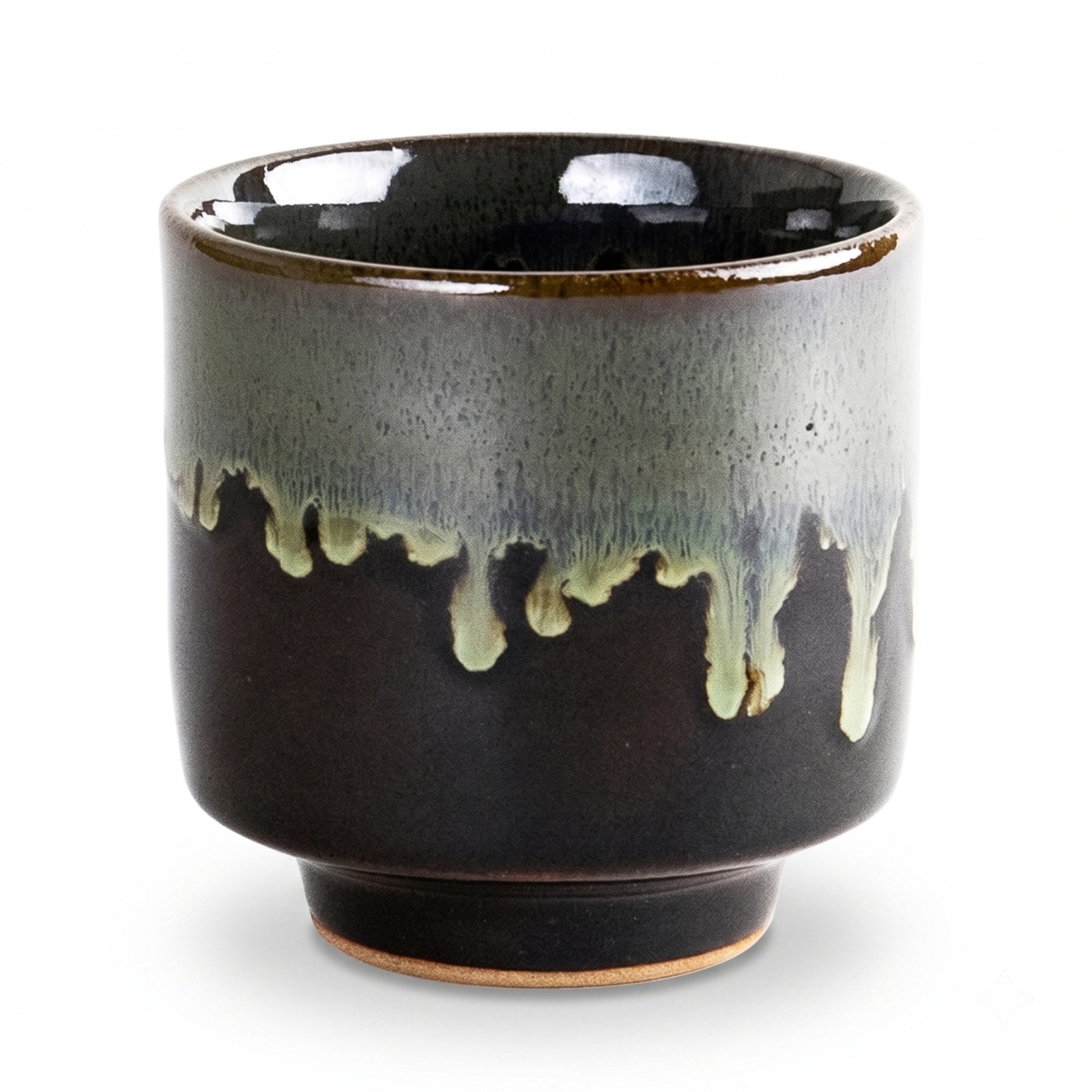
Pottery has a warmth and natural earthy character that is difficult to reproduce in porcelain.
Pottery can have a softer visual character and a distinctly tactile quality. Variations in the flow of the glaze, particles in the clay, and changes produced during firing give individual pieces their own character and can bring warmth and depth to the dining table.
Neither porcelain nor pottery is inherently superior to the other. Each has its own beauty and character. Combining both on the dining table can create a richer presentation suited to different foods and seasons.
A Black Surface Does Not Necessarily Mean Pottery
Porcelain and pottery cannot always be identified by surface color alone. A vessel covered with black glaze may still be porcelain if the ceramic body underneath is white. Conversely, a vessel covered with a pale glaze may be pottery if the underlying body has the natural brown or earthy color of clay.
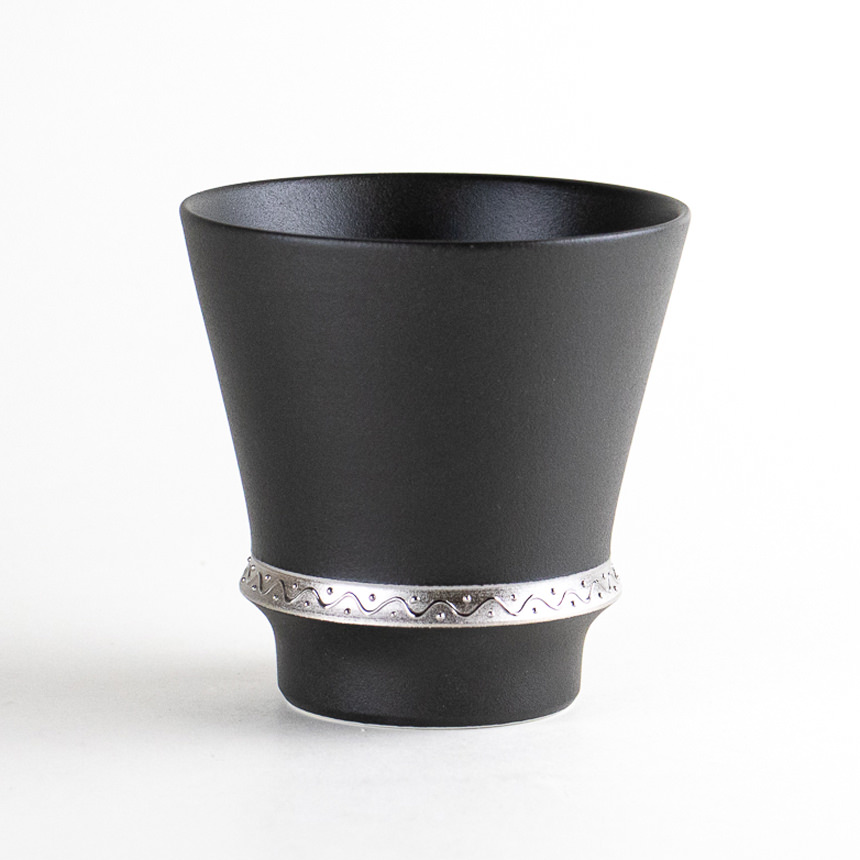
A black-glazed porcelain cup. Surface color alone does not tell you whether a piece is porcelain or pottery.
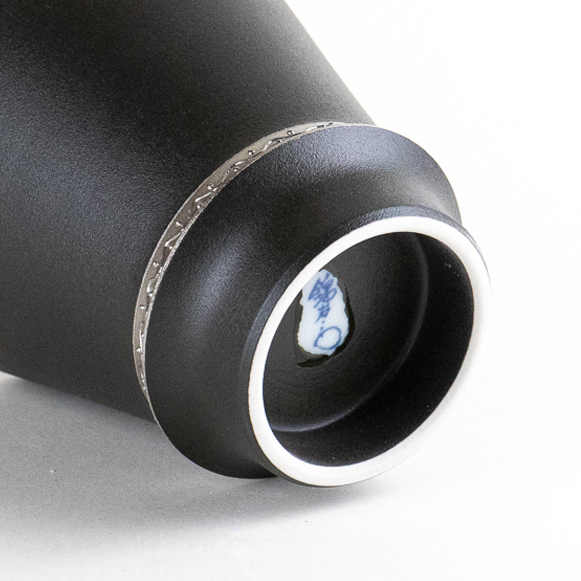
The unglazed area around the foot reveals the white body underneath, showing that this vessel is porcelain.
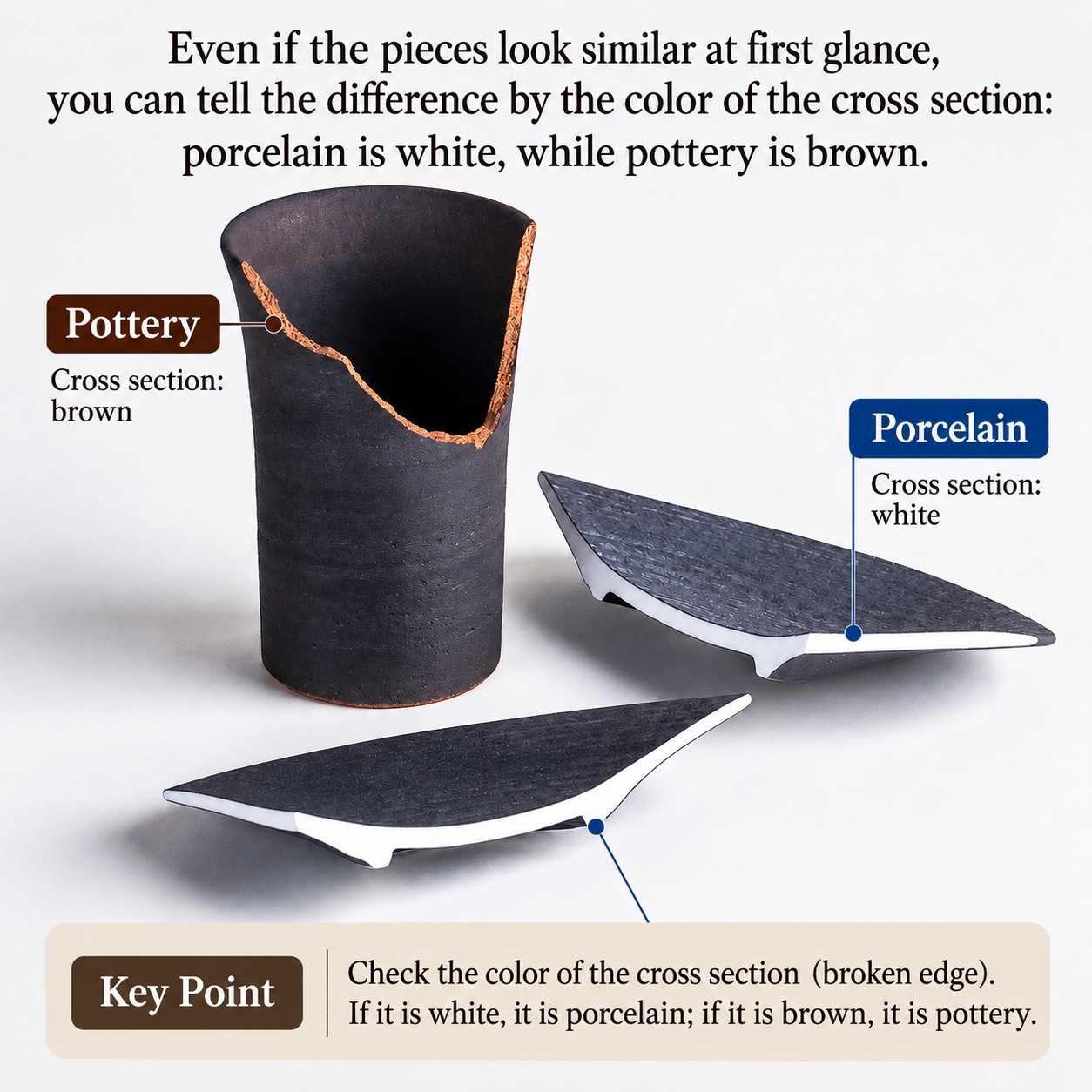
Although both pieces appear dark on the surface, their broken edges reveal the difference: porcelain has a white cross section, while pottery has a brown one.
How to Tell Porcelain and Pottery Apart
When trying to distinguish porcelain from pottery, it is often more useful to examine an unglazed area than the glazed surface. One of the easiest places to check is the foot ring on the bottom of the vessel.
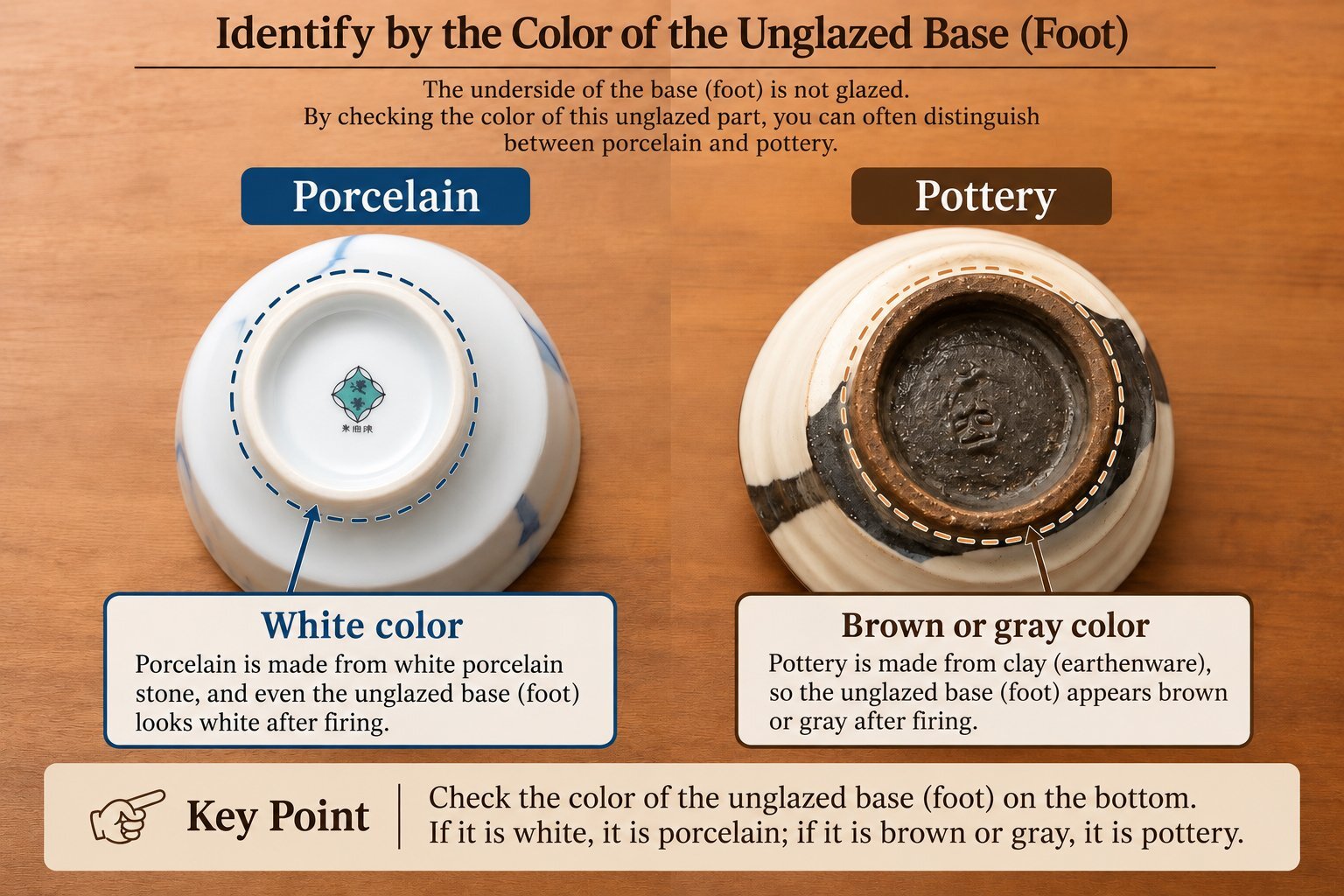
The unglazed area of the foot ring reveals the color of the ceramic body. A white body usually indicates porcelain, while a brown, gray, or darker body is more likely to indicate pottery.
Looking at the color of the unglazed foot is a practical way to explain the difference between porcelain and pottery, even when examining pieces in a shop. However, special clay bodies, glazes, and production methods can create exceptions, so this should be used as a helpful guideline rather than an absolute rule.
Why Is the Foot Ring Usually Left Unglazed?
When ceramics are made, glaze is often applied over most of the vessel before firing. During firing, the glaze melts and forms a glass-like surface. If glaze remains on the part of the vessel that touches the kiln shelf, the piece can fuse to the shelf during firing.
For this reason, glaze is removed from the area of the foot that will come into contact with the kiln shelf before the piece is placed in the kiln. This is why finished ceramics often have an unglazed area on the bottom. Because the color of the ceramic body itself is visible there, this area can also provide a useful clue when distinguishing porcelain from pottery.
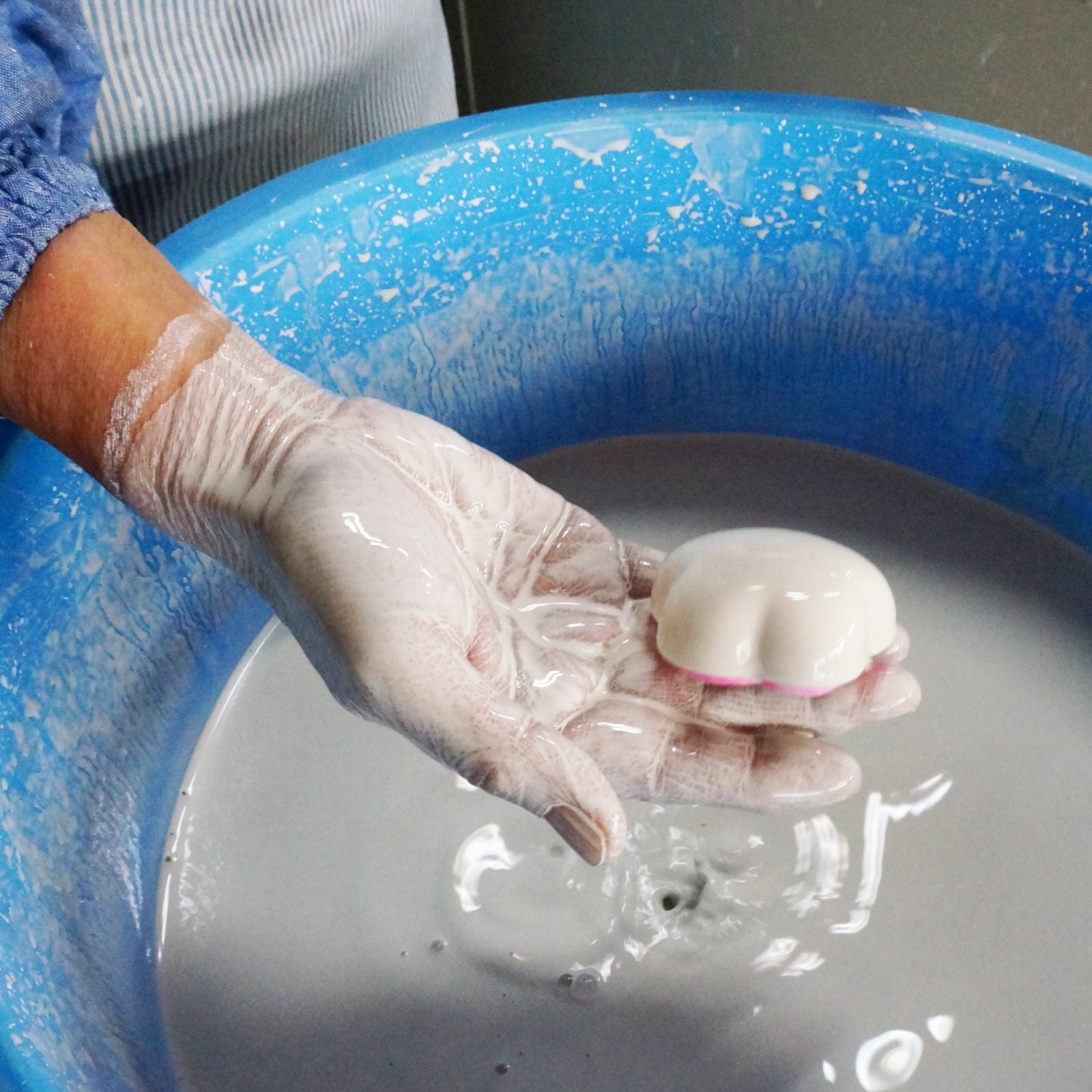
Applying glaze to ceramic ware. A common method is to dip the piece into liquid glaze.
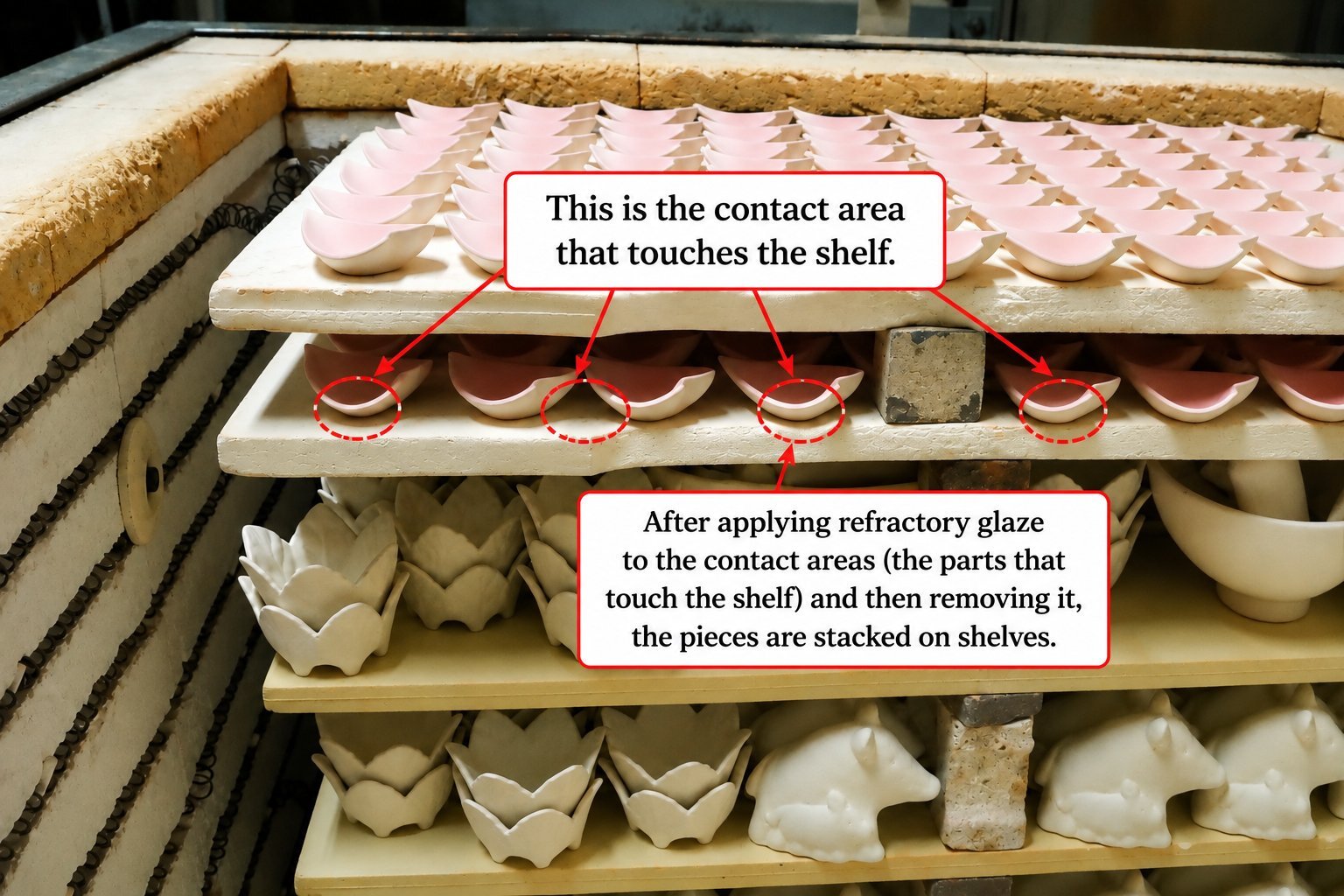
Glazed pieces stacked on kiln shelves. Glaze is removed from the areas that touch the shelves to prevent the pieces from sticking during firing.
The Relationship Between Arita Ware and Porcelain
Arita is known as the birthplace of porcelain in Japan. Around 1616, porcelain stone was discovered at Izumiyama in Arita, and this discovery is associated with the beginning of full-scale porcelain production in Japan.
Porcelain stone was quarried at Izumiyama over many generations and supported the development of Arita ware. Today, the quarry is so deeply excavated that it gives the impression that a large part of the mountain itself was transformed into ceramics over the centuries.
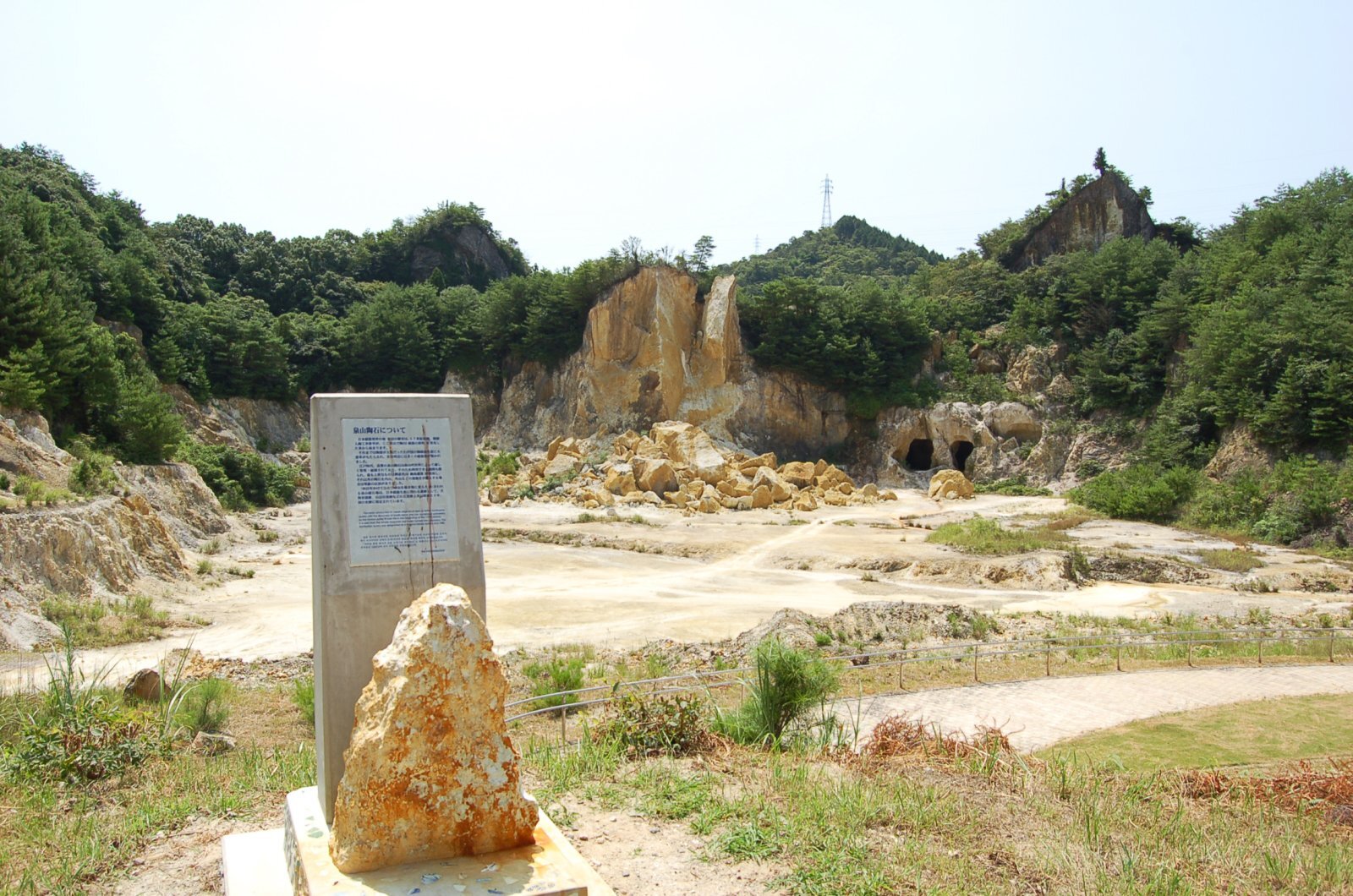
The Izumiyama porcelain stone quarry in Arita, an essential site in the history of Japanese porcelain and Arita ware.
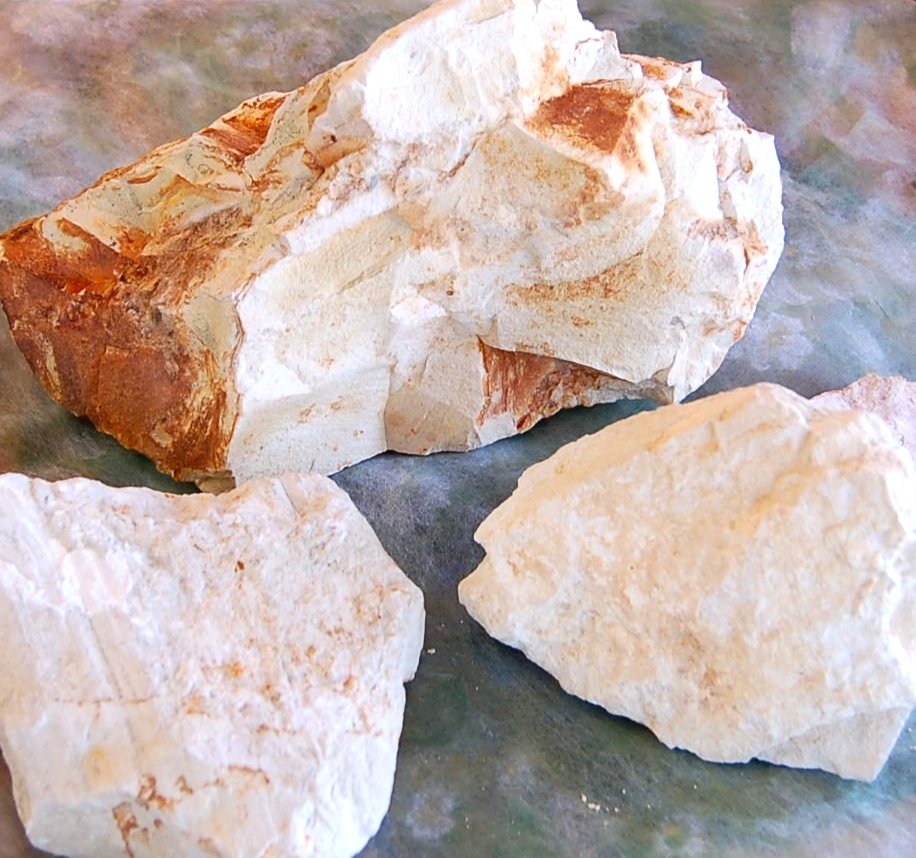
Porcelain stone from Izumiyama. This material played an important role in the beginnings of Arita porcelain.
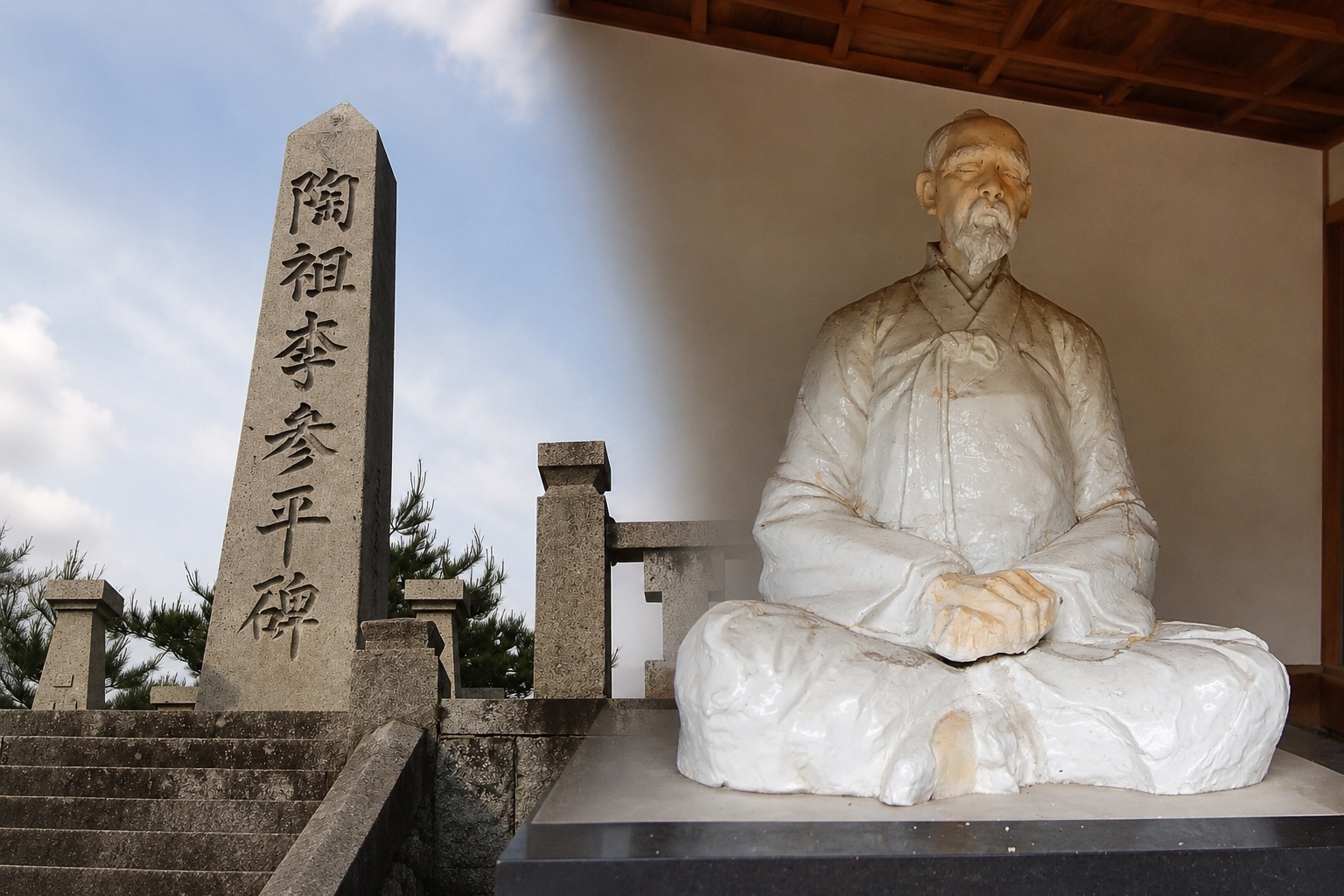
A statue and monument to Yi Sam-pyeong, traditionally regarded as a founding figure of Arita porcelain. Both are located in Arita.
Porcelain Stone Used in Arita Ware Today
Izumiyama is extremely important to the history of Arita ware, but much of the porcelain produced in Arita today is made using porcelain stone brought from the Amakusa region of Kumamoto Prefecture.
At the porcelain stone quarries in Amakusa, not every part of the mountain is suitable for ceramic production. Quarrying therefore focuses on selected veins of high-quality porcelain stone. After extraction, the stone is crushed and refined to produce the raw material used for porcelain bodies.
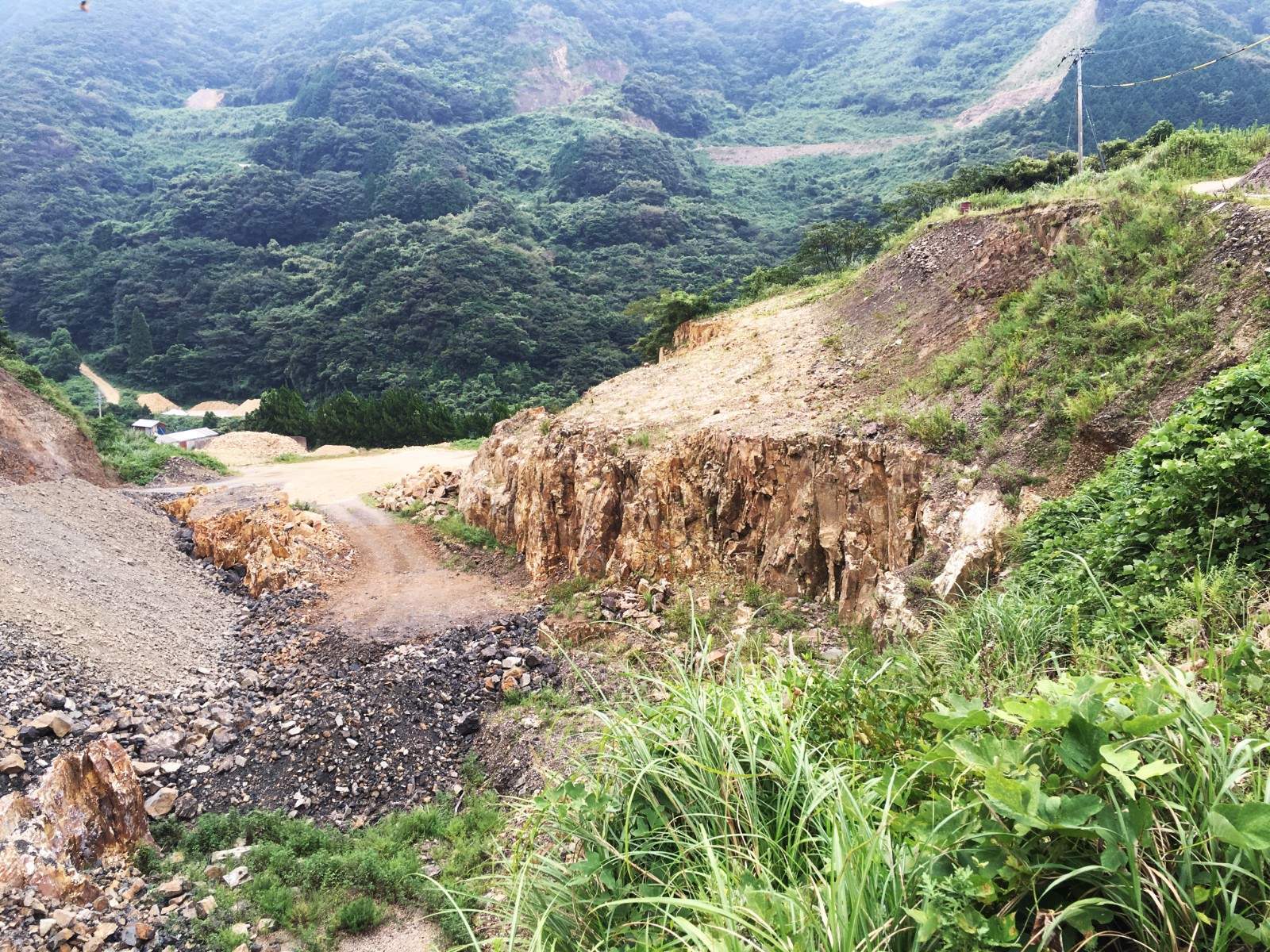
A porcelain stone quarry in Amakusa, Kumamoto Prefecture.
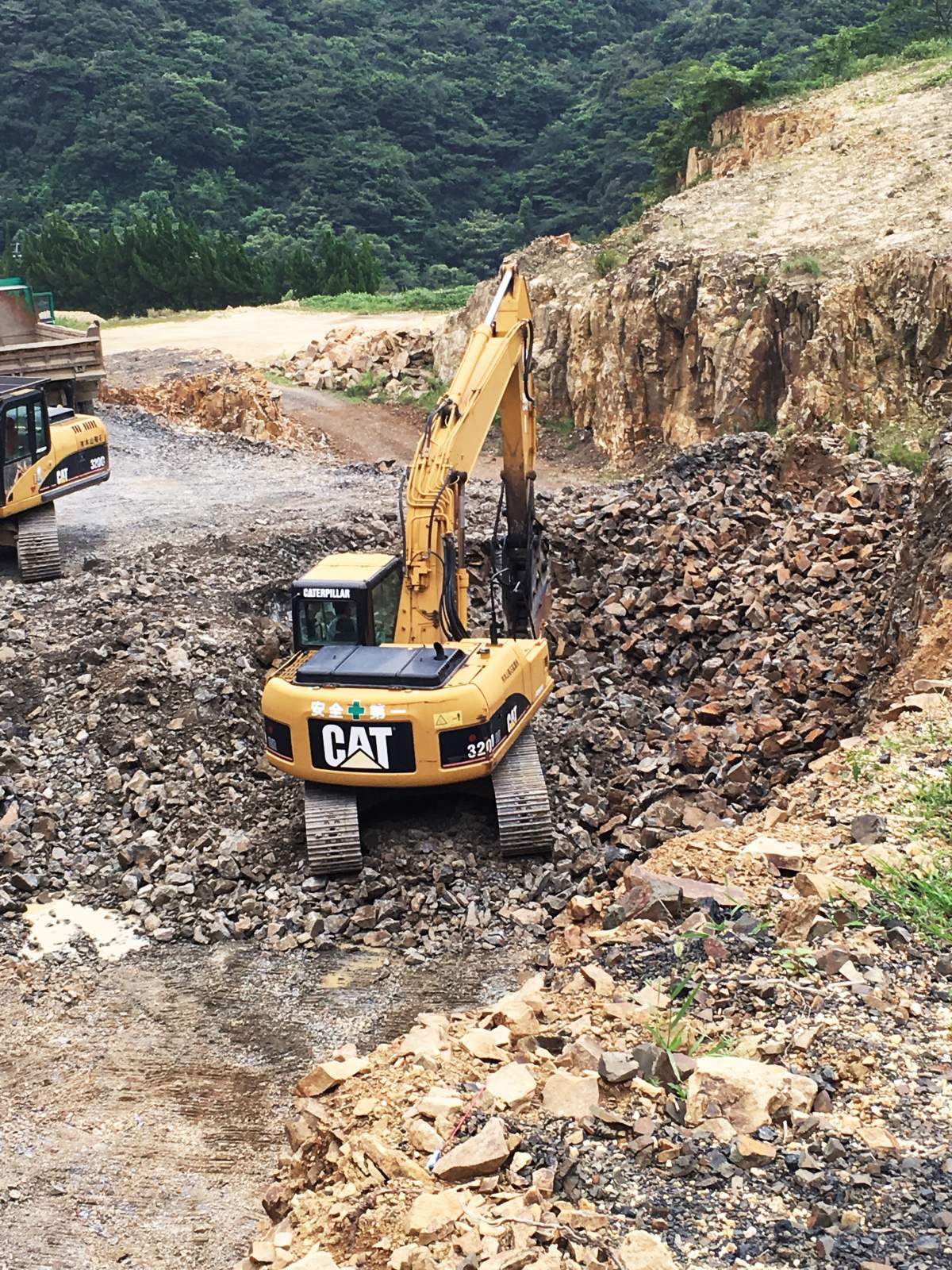
Porcelain stone is extracted from suitable veins using excavators and other equipment.
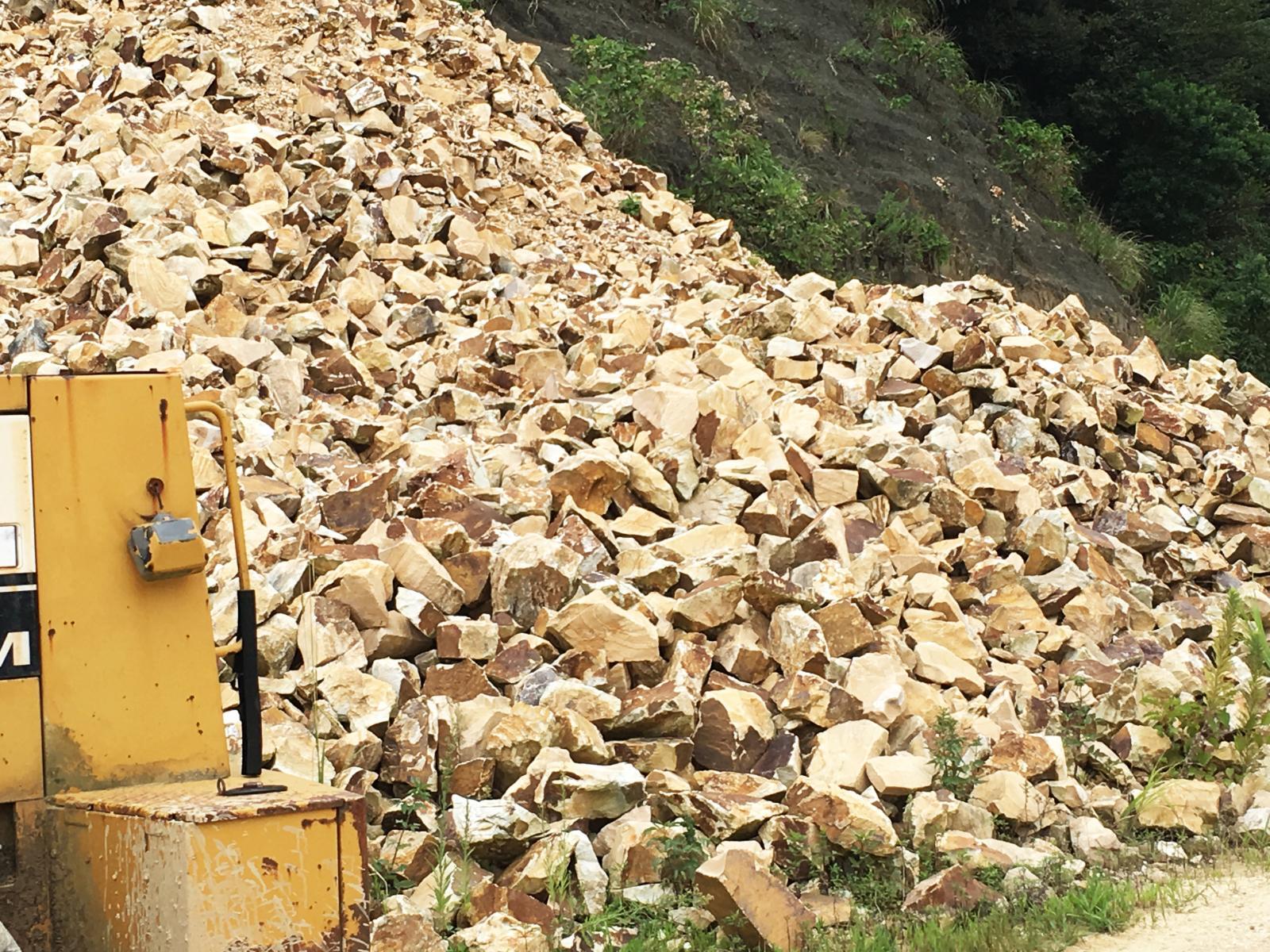
Amakusa porcelain stone piled at the quarry. It is an important raw material supporting much of today's Arita ware production.
Is All Arita Ware Porcelain?
The term “Arita ware” is generally used for ceramics produced in Arita and the surrounding area. Arita developed as the birthplace of Japanese porcelain, and even today, much of the ware produced there is porcelain.
However, some kilns in Arita today also produce pottery, and the range of ceramic expression in the region has expanded over time. A more accurate understanding, therefore, is that Arita is the birthplace of Japanese porcelain and that most Arita ware is made of porcelain, rather than assuming that every piece of Arita ware must be porcelain.
Understanding Arita ware is about more than simply classifying a piece as porcelain or pottery. The beauty of white porcelain, colorful painted decoration, the warmth of clay, and new expressions created by contemporary kilns all contribute to the rich variety of Japanese ceramics. Learning about these differences can make choosing and appreciating tableware even more enjoyable.
Summary: Porcelain and Pottery Each Have Their Own Character
Porcelain and pottery differ in their raw materials, firing temperatures, body color, water absorption, and texture. Porcelain is generally white and hard, can be made relatively thin and lightweight, and provides an excellent surface for colorful decoration. Pottery, meanwhile, offers the warmth, texture, and natural character of clay.
Neither is inherently better than the other. Each has its own qualities, and combining porcelain and pottery on the dining table can create rich and varied presentations suited to different foods and seasons.
Arita is known as the birthplace of Japanese porcelain, and much of the Arita ware produced today is still porcelain. Understanding its history and materials adds another dimension to the enjoyment of Japanese tableware.