Japanese pottery ceramics souvenir in Tokyo Japan
Font size:
Shopping Cart
-
Your cart is empty.
Categories
Shop Manager Profile
Arita Ware Encyclopedia
Discover the history, styles, techniques, and traditional patterns of Arita ware, explained from the perspective of a specialist in Japanese ceramics.
What Is Sometsuke? | Japanese Blue-and-White Porcelain
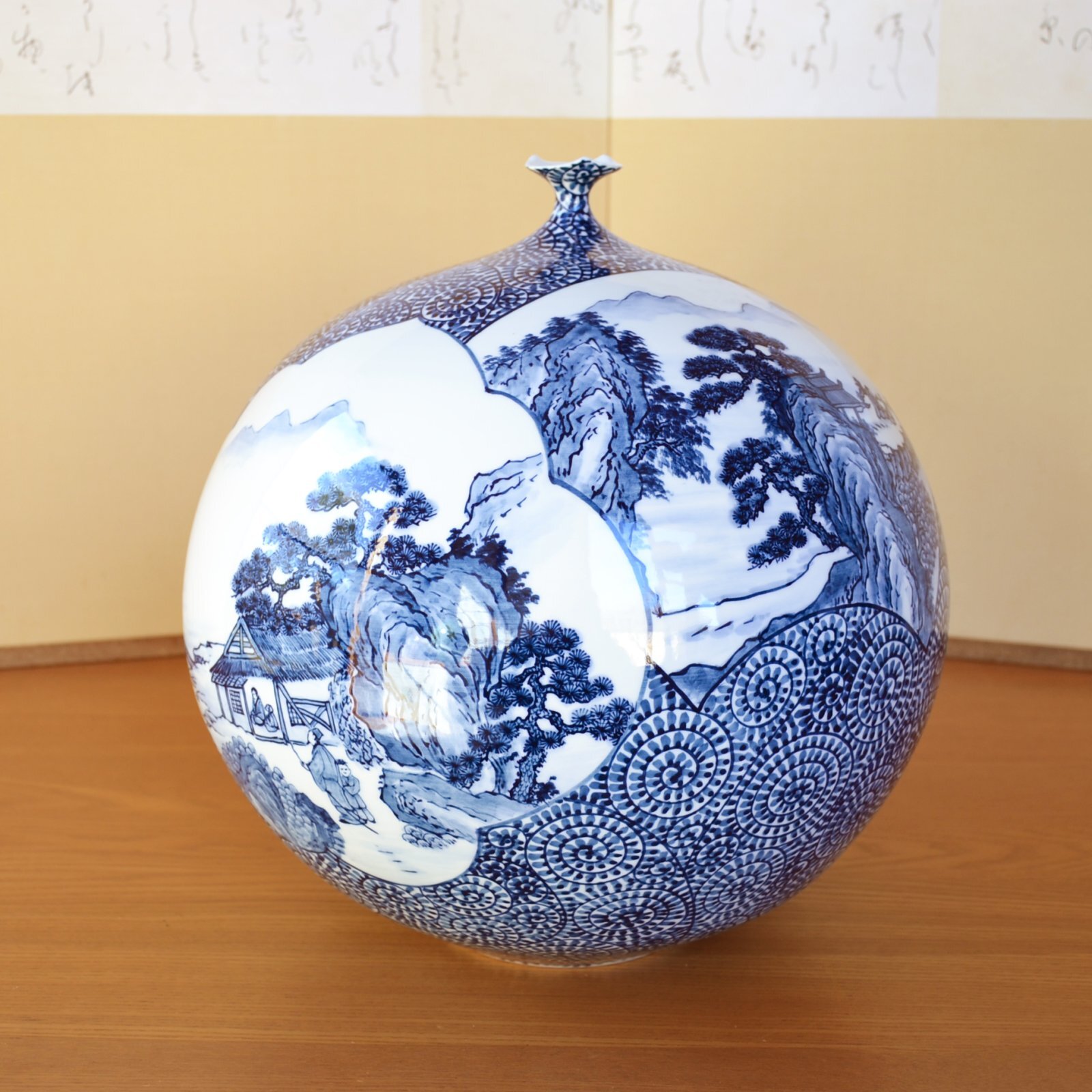
Arita ware decorated in Sometsuke, with landscape and Tako Karakusa patterns expressed through shades of blue.
Sometsuke is a traditional Japanese underglaze decoration technique in which designs are painted on bisque-fired ware using a cobalt-based pigment known as gosu. The piece is then coated with glaze and fired, producing blue designs beneath the transparent glazed surface. The striking contrast of blue against white porcelain has made Sometsuke one of the most representative decorative techniques of Arita ware. Its expressive range extends from bold brushwork to exceptionally fine line painting, giving it a timeless beauty that fits naturally into contemporary life.
Sometsuke Is an Underglaze Decoration Technique
Sometsuke refers to decoration painted onto bisque-fired ware before the glaze is applied. Because the design lies beneath the glaze, this method is known as underglaze decoration.
The designs are generally painted using a cobalt-based pigment called gosu. During firing, gosu develops its characteristic blue color. For this reason, Sometsuke is most commonly associated with blue decoration on white porcelain.
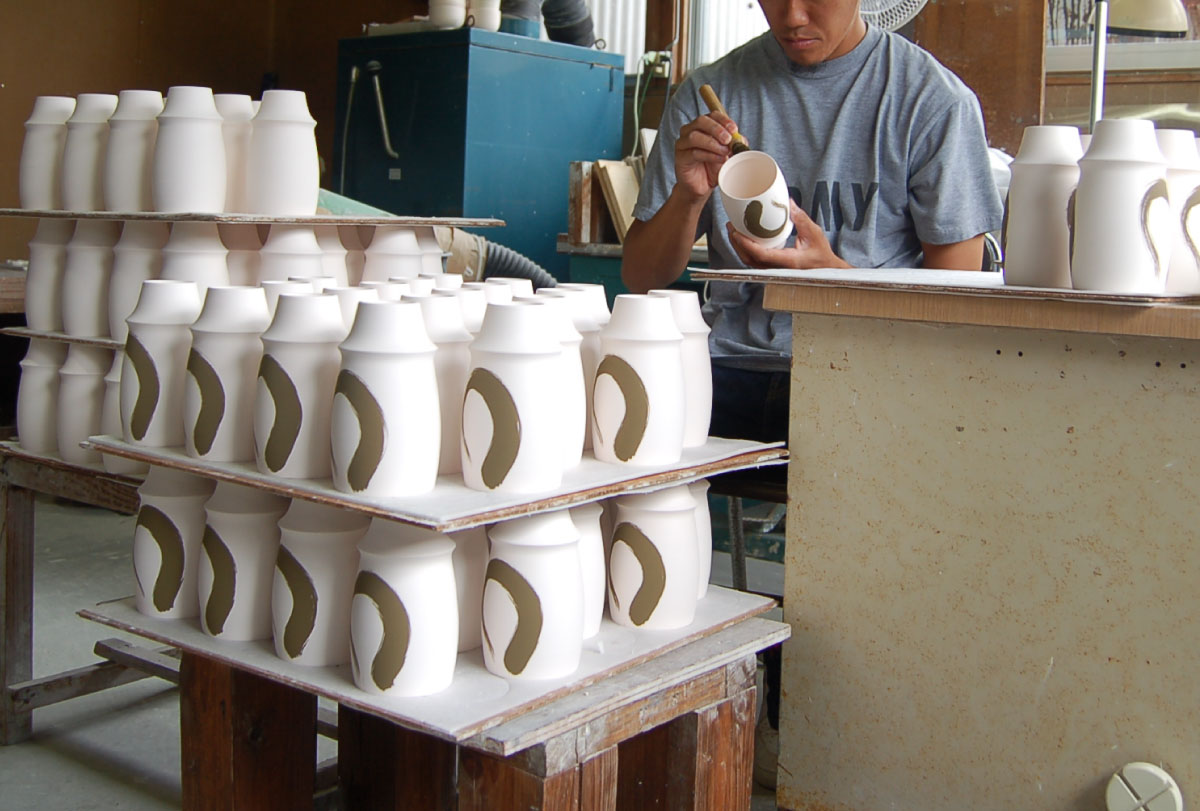
Painting a bisque-fired vessel with gosu before glazing.
Why Sometsuke Designs Resist Fading
In Sometsuke, glaze is applied over the painted decoration. During firing, the glaze melts and forms a transparent, glass-like surface, leaving the painted design sealed beneath it.
As a result, the design is protected from direct abrasion during everyday use and generally does not wear away through ordinary handling. This is an important difference from overglaze decoration, in which pigments are applied and fired on top of the glazed surface.
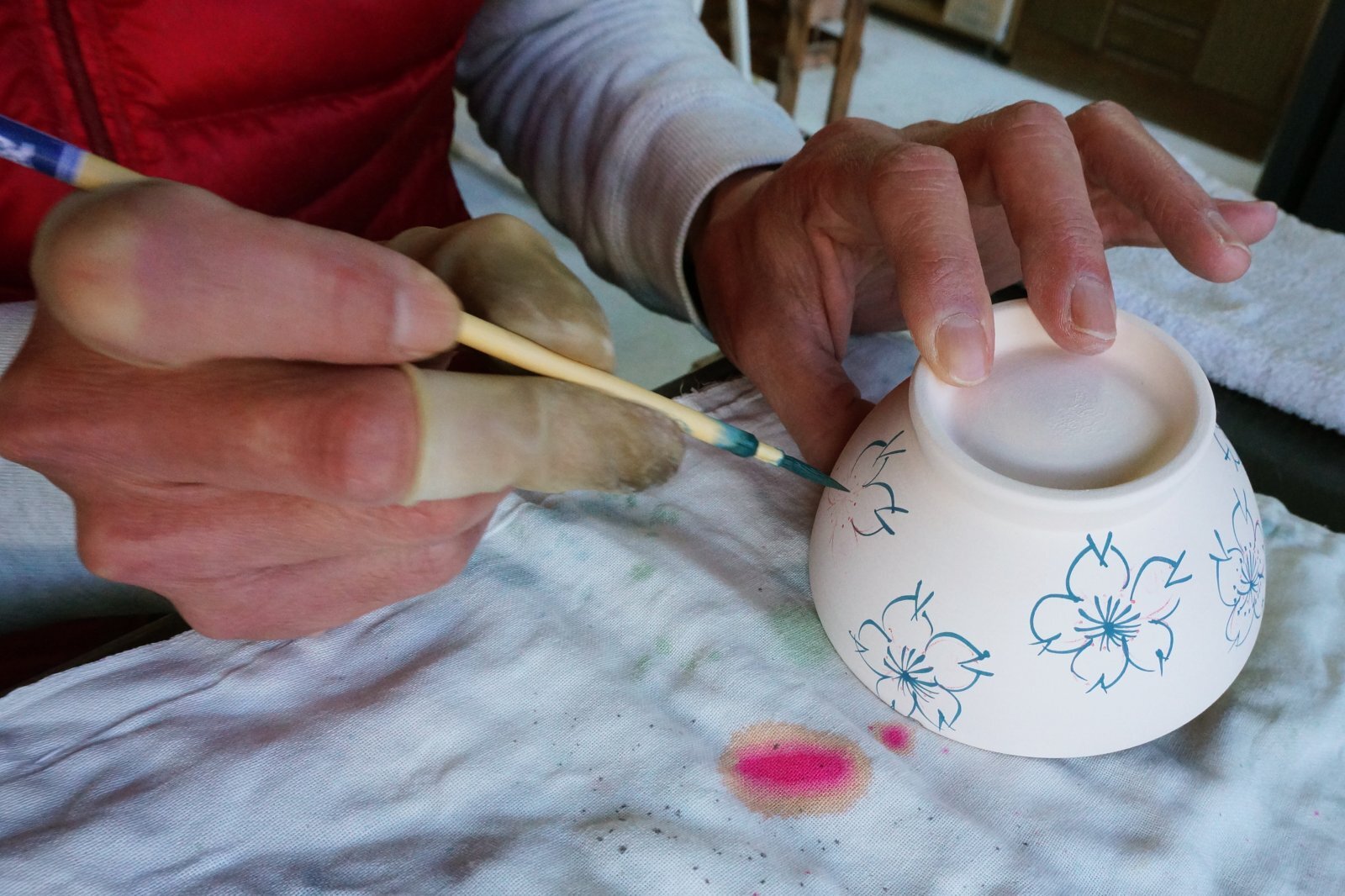
Layering fine brush lines creates the delicate detail characteristic of Sometsuke.
Gosu: The Pigment Behind Sometsuke Blue
Sometsuke decoration is usually painted with a cobalt-based pigment known as gosu. When fired, the pigment develops into shades of blue, creating beautiful blue designs against white porcelain.
Although Sometsuke may appear to use a single color, its blue can range from deep indigo-like tones to pale blue. By controlling the amount of pigment in the brush and using gradation, bleeding, and shading, artisans can depict mountains, water, flowers, animals, landscapes, and many other subjects with remarkable depth and variety.
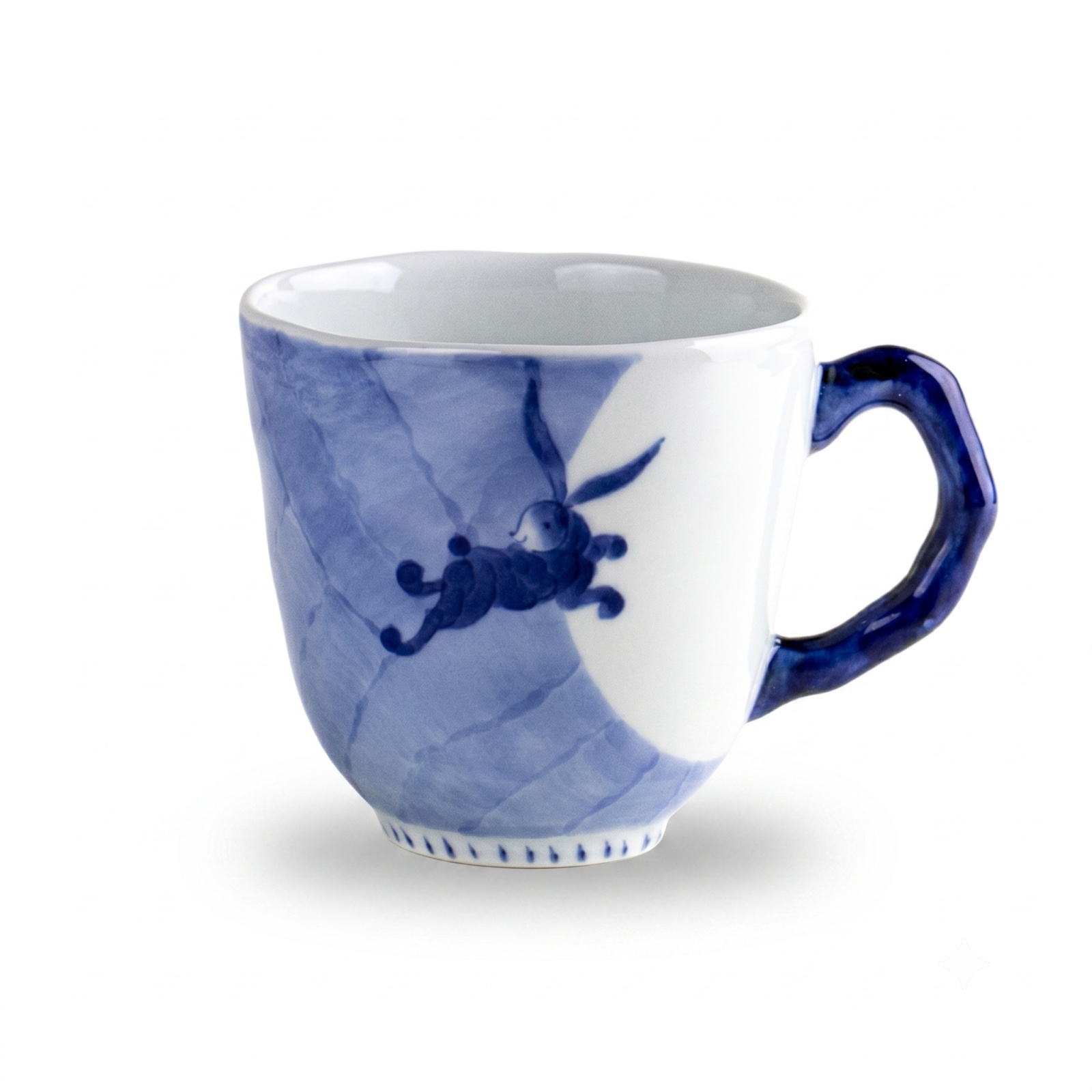
Different concentrations of gosu can create softness, shading, and a sense of depth.
From Bold Brushwork to Intricate Fine Lines
One of the great attractions of Sometsuke is its extraordinary range of expression. Some designs are painted freely and dynamically with broad brushes, while others are constructed from countless precise lines drawn with a fine brush.
Even within the same blue-and-white palette, Sometsuke can convey strength, tranquility, elegance, lightness, or elaborate decorative richness.
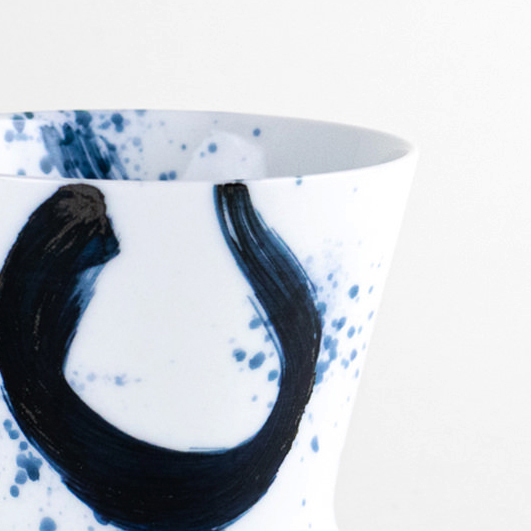
Sometsuke expressed through bold, energetic brushwork.
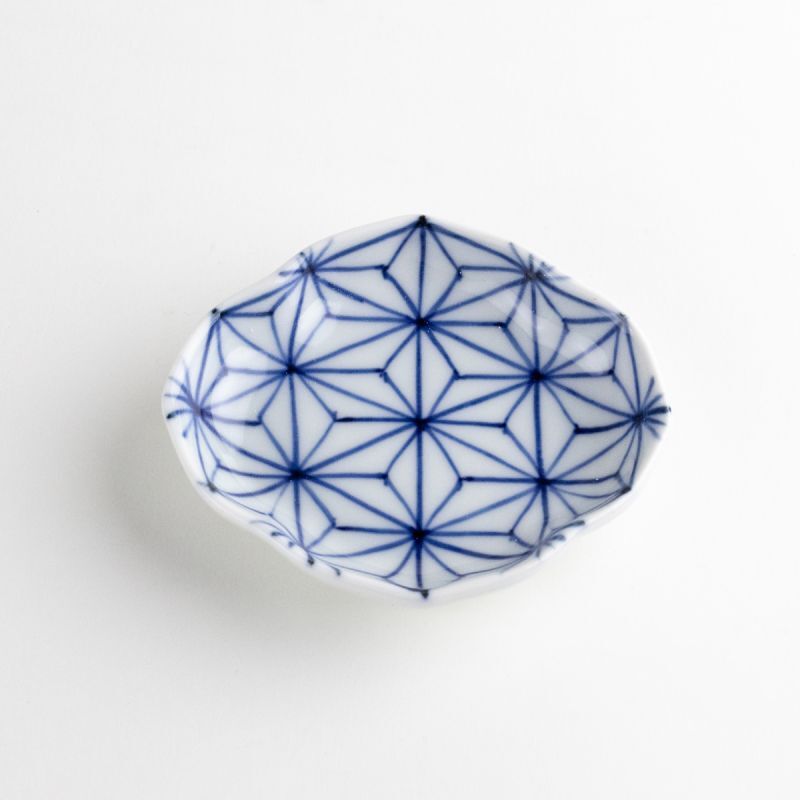
The traditional Asanoha pattern drawn with fine lines.
Traditional Sometsuke Patterns in Arita Ware
Arita ware has a long tradition of Sometsuke patterns, including Sansui landscapes, Tako Karakusa, Hana Karakusa, Amime, and Asanoha. Although these designs have been used for generations, their balanced blue-and-white appearance gives them a timeless quality that works naturally on today's dining table.
Sansui Landscape
Sansui designs depict landscapes composed of elements such as mountains, rivers, pine trees, houses, and people. They are among the classic motifs of Arita Sometsuke, creating the impression of a miniature landscape painting unfolding across the surface of the vessel.
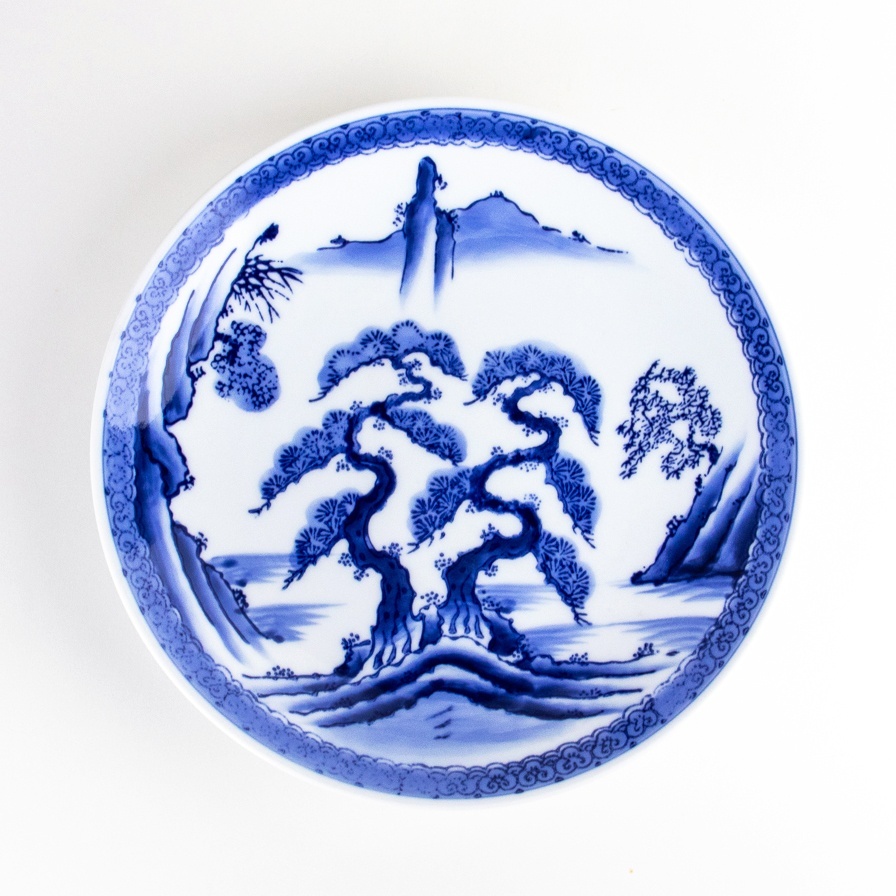
A Sometsuke plate decorated with a Sansui landscape.
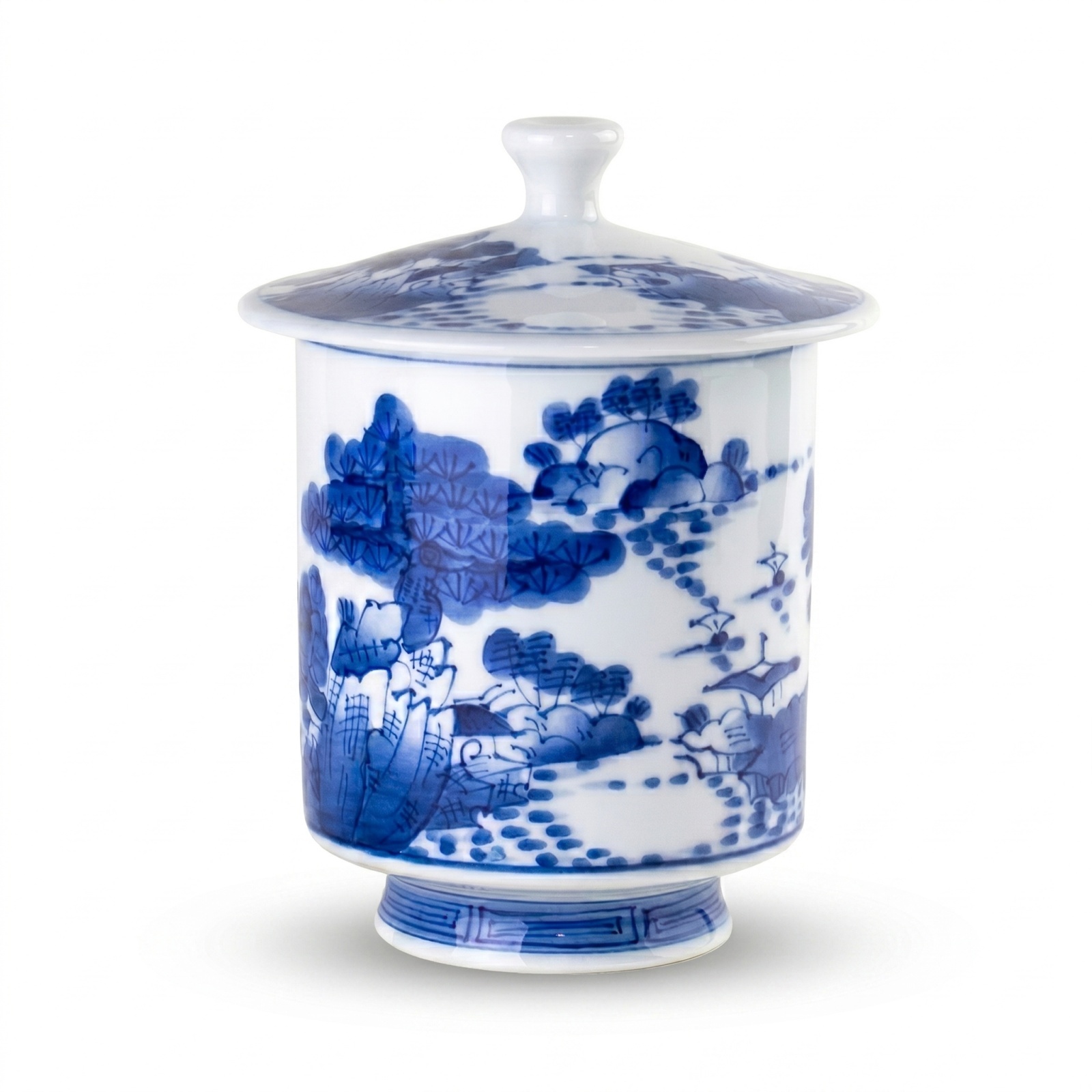
A lidded teacup decorated with a traditional Sansui design.
Tako Karakusa
Tako Karakusa is characterized by densely curling arabesque-like vines. The rhythmic movement of its vigorous lines gives the pattern a distinctive visual energy. It has long been used as a traditional motif in Arita and Imari ware.
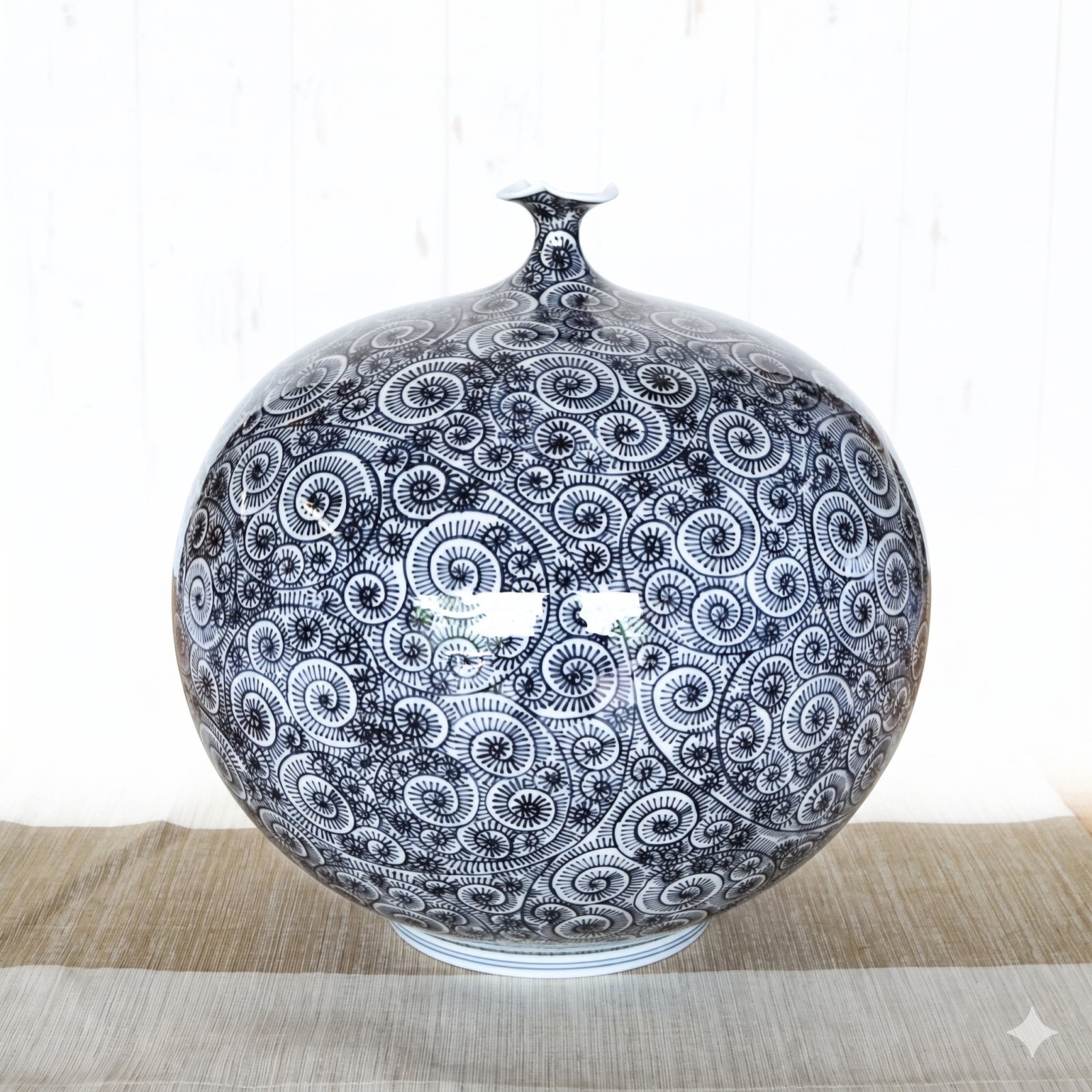
A Sometsuke vase decorated with Tako Karakusa, distinguished by its powerful flowing lines.
Hana Karakusa and Amime Patterns
Hana Karakusa is a decorative floral arabesque pattern composed of flowers and curling plant vines. Amime, or the net pattern, may appear simple at first glance, but drawing evenly spaced lines across the curved surface of a vessel requires considerable skill.
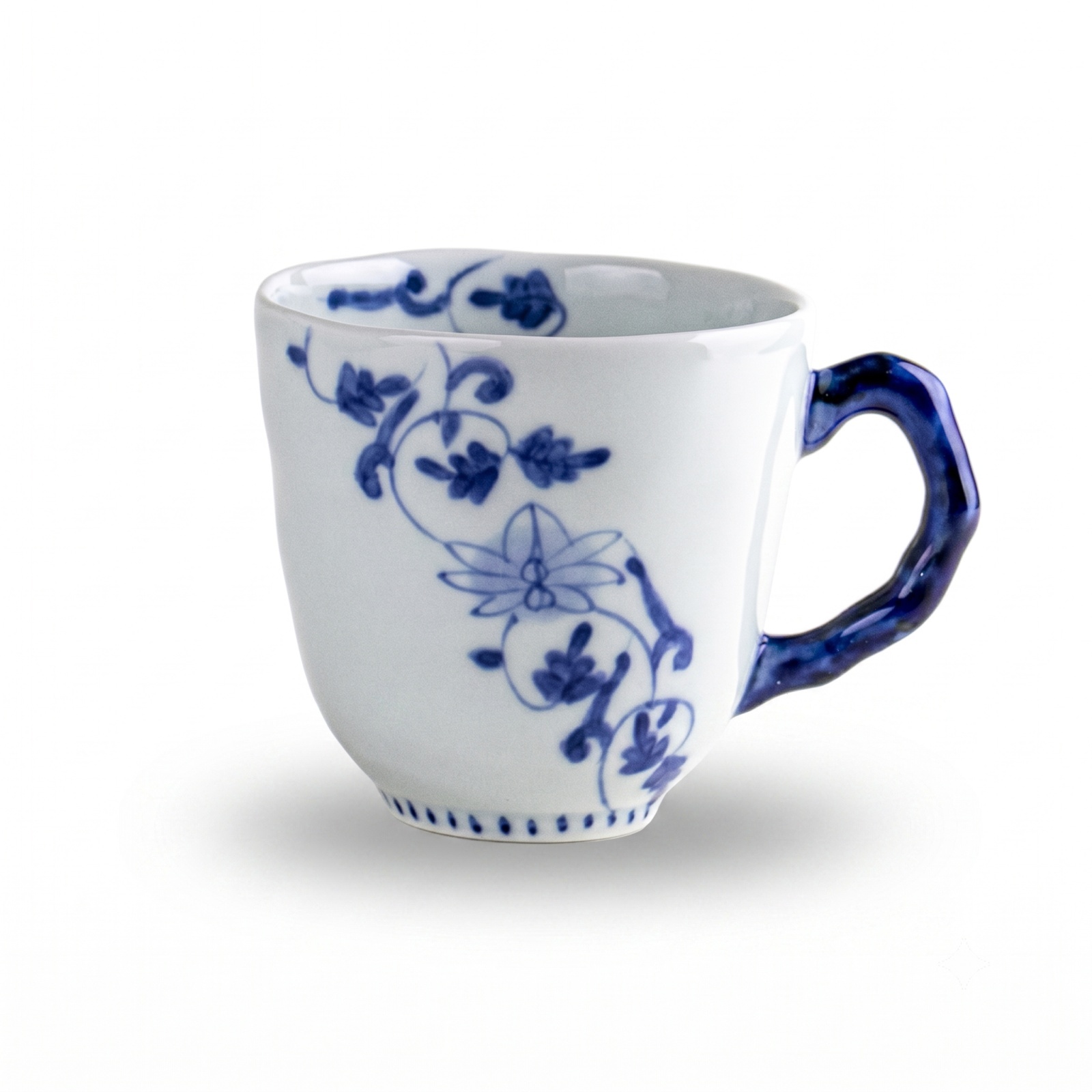
A mug decorated with the Hana Karakusa pattern.
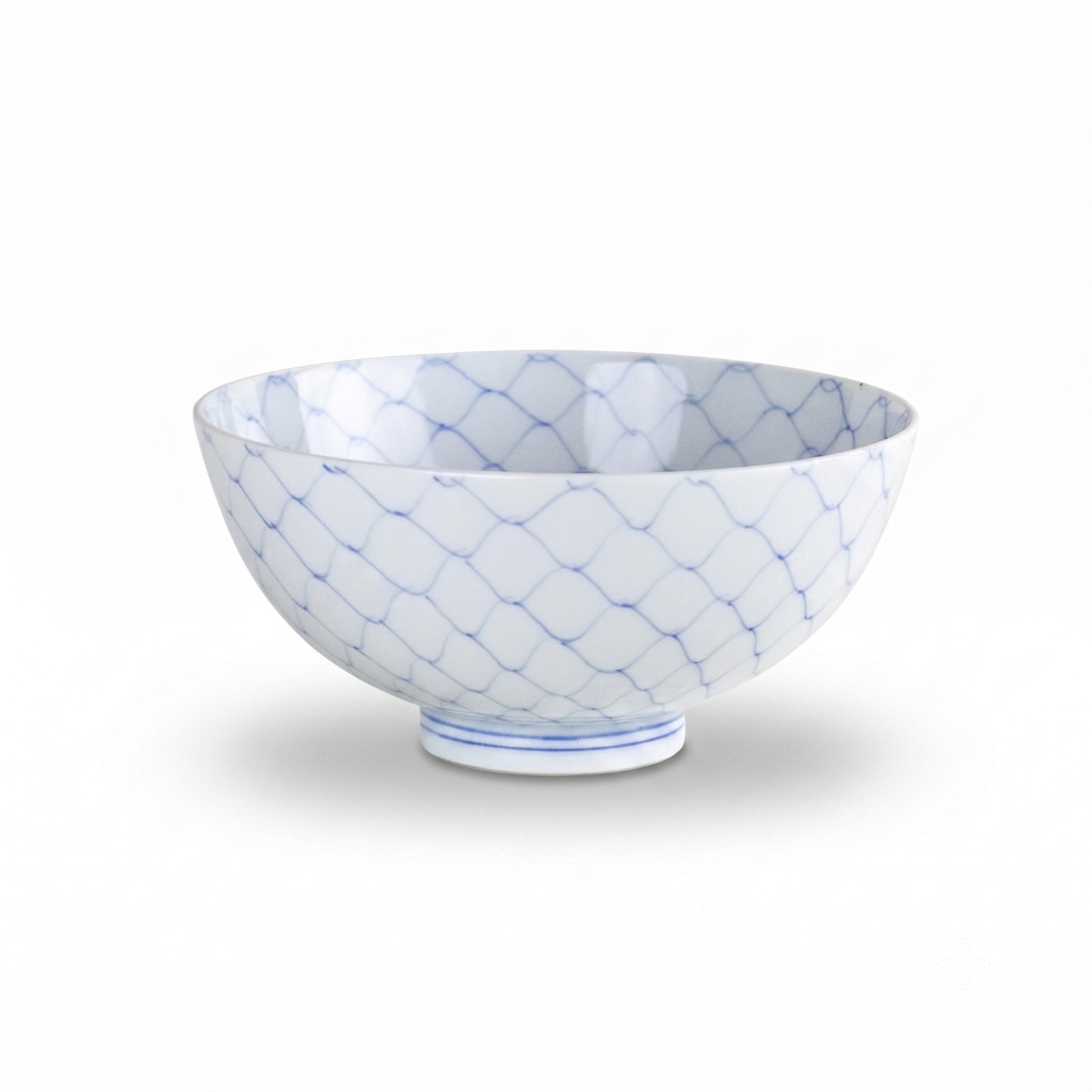
The Amime net pattern requires precise and highly skilled brushwork.
Sometsuke Fits Naturally into Contemporary Living
Although Sometsuke has deep roots in traditional Japanese design, it also fits naturally into contemporary homes and dining spaces. The combination of blue and white has a clean, fresh appearance that works beautifully with wooden tables, white walls, and Western-style interiors.
As tableware, Sometsuke can be used not only for Japanese cuisine but also for Western dishes, Chinese food, curry, noodles, and desserts. Its blue-and-white decoration complements a wide variety of foods. Sometsuke vases and decorative objects can also bring a quiet visual presence to an interior.
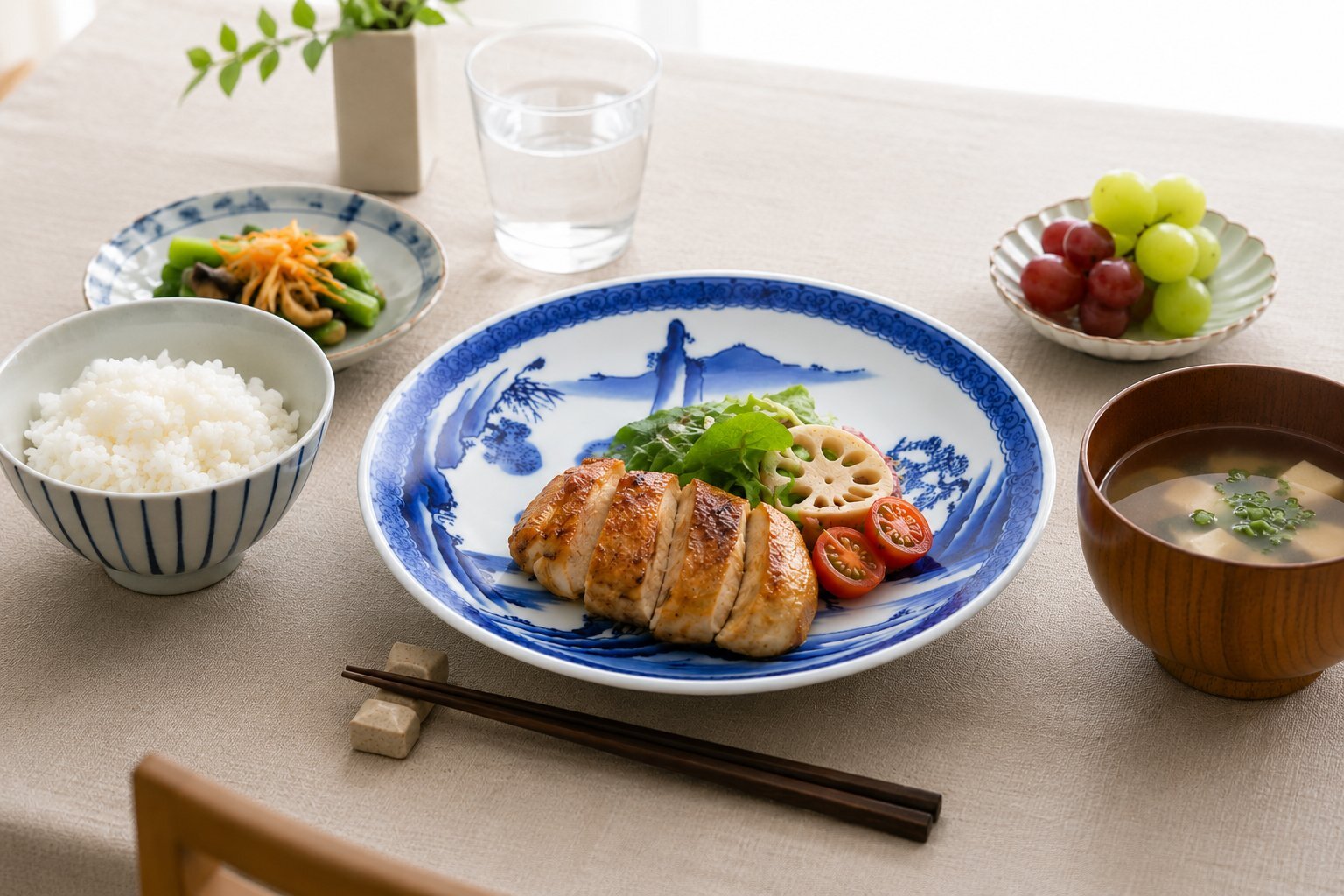
A traditional Sometsuke plate fits naturally into a contemporary dining setting.
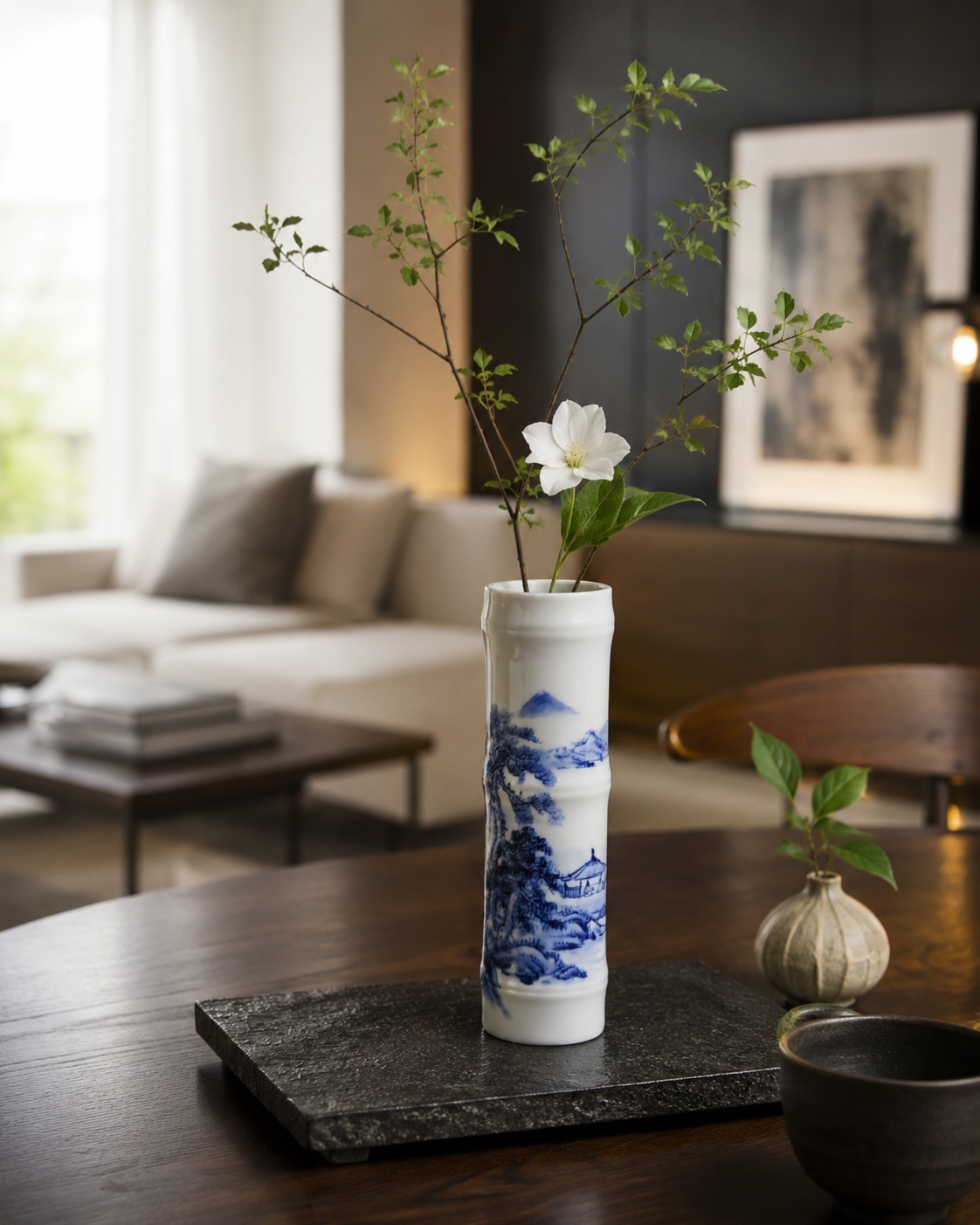
A Sometsuke flower vase also complements Western-style interiors.
Contemporary Sometsuke Tableware
Sometsuke is sometimes associated mainly with traditional or antique-style ceramics, but today many pieces combine this historic technique with casual forms designed for everyday use.
Small bowls, plates, donburi bowls, noodle bowls, curry plates, and many other practical forms are now produced in Sometsuke. Its continued evolution from a traditional decorative technique into tableware suited to contemporary life is another part of its appeal.
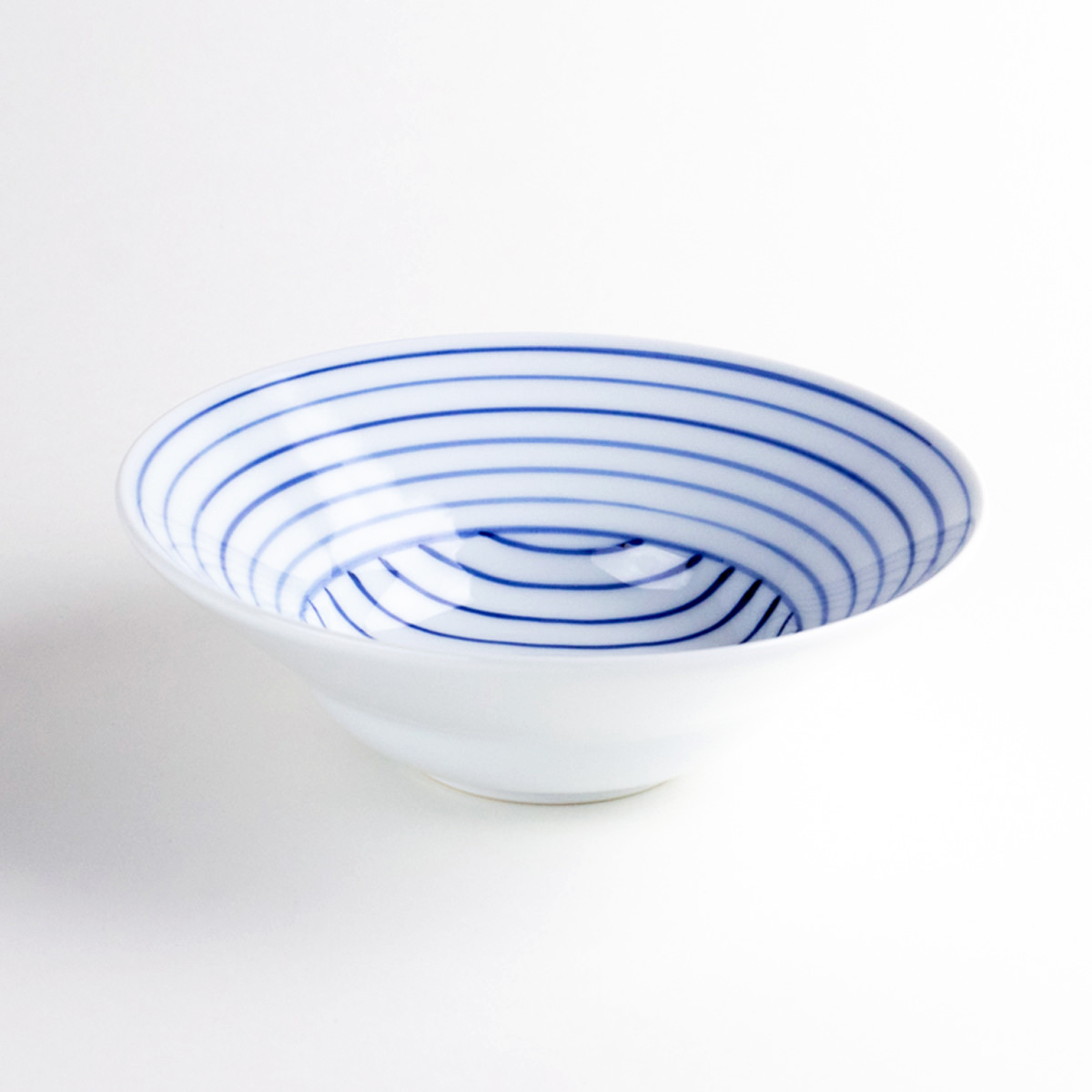
A casual Sometsuke small bowl for everyday use.
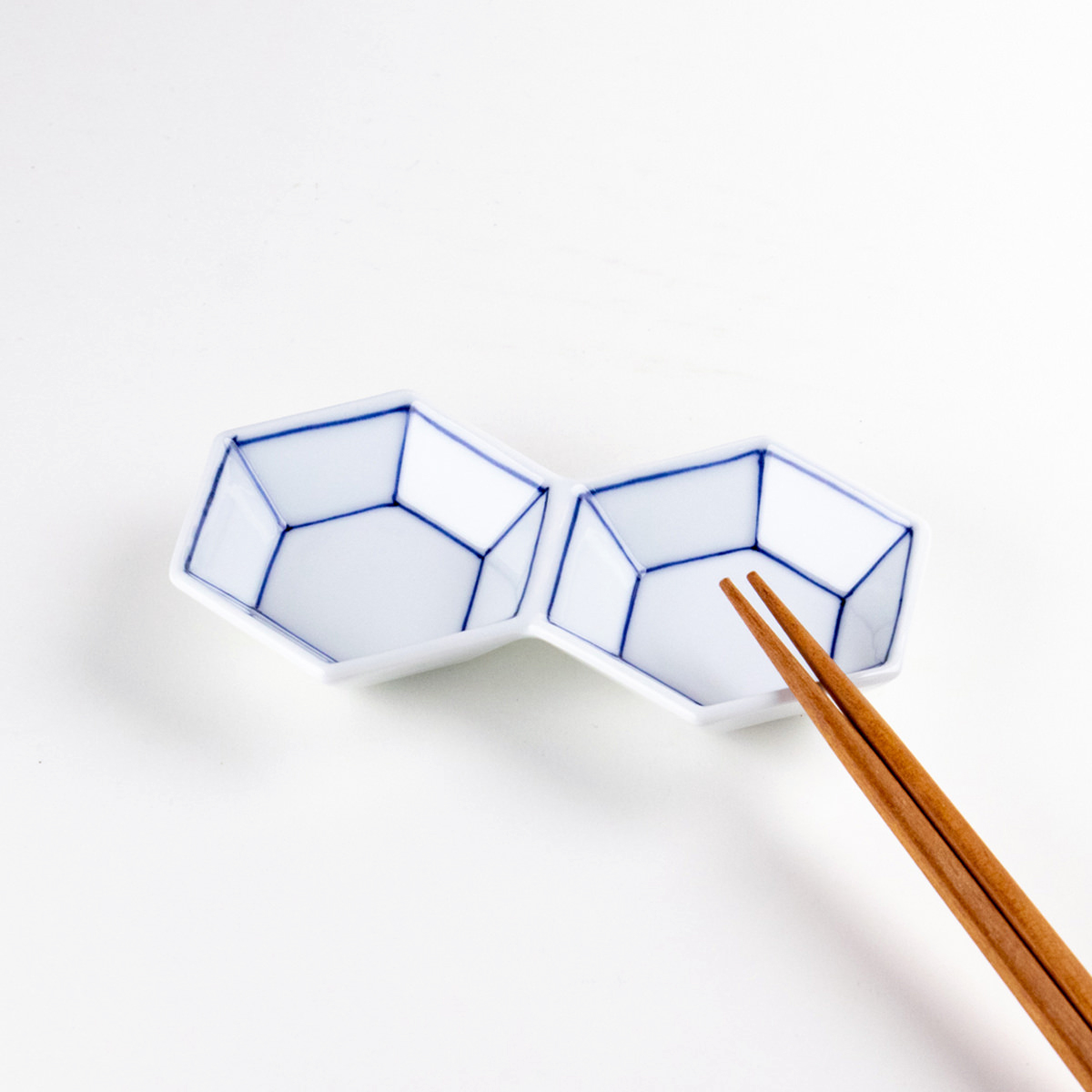
A Sometsuke small plate with a contemporary form.
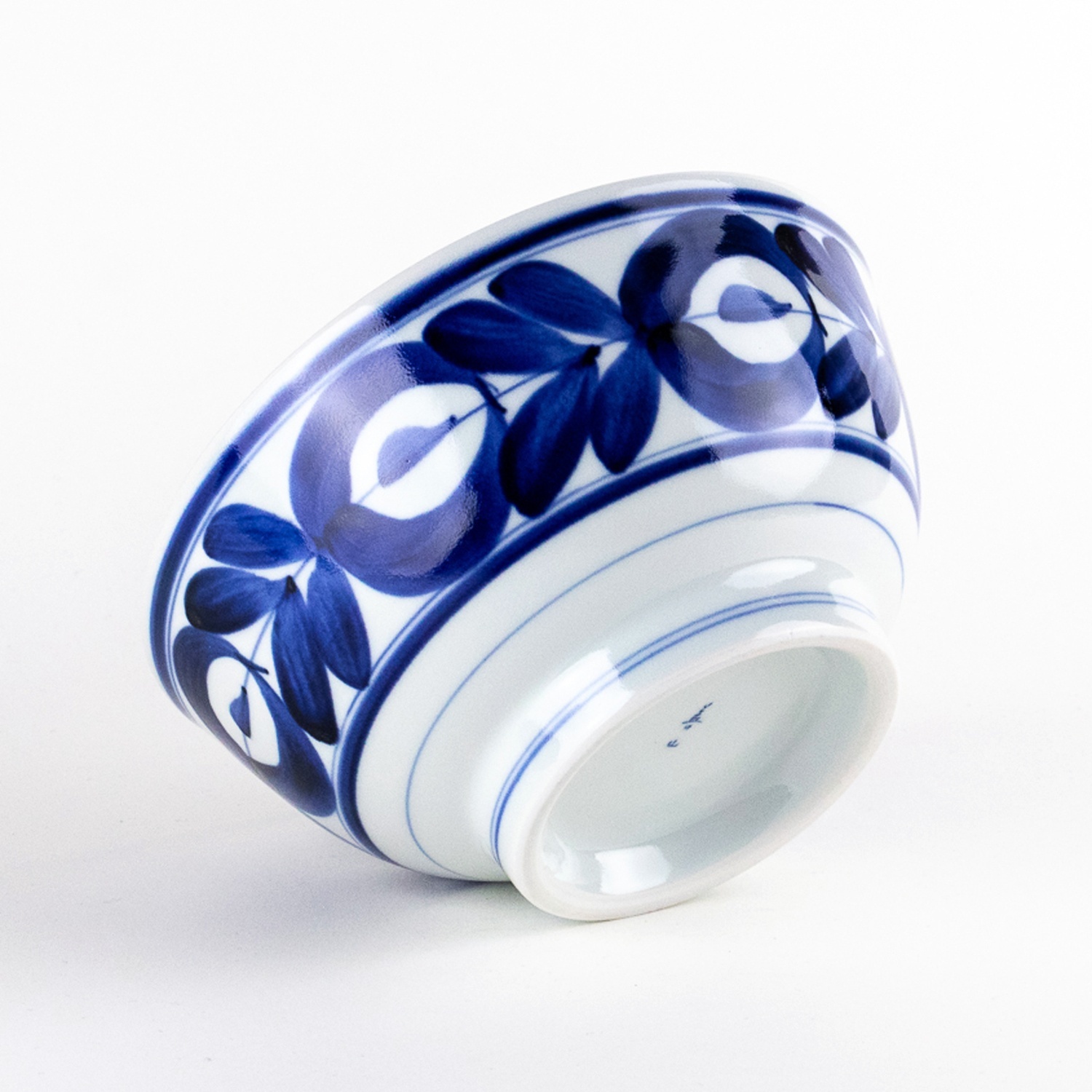
Sometsuke also works beautifully for donburi and noodle bowls.
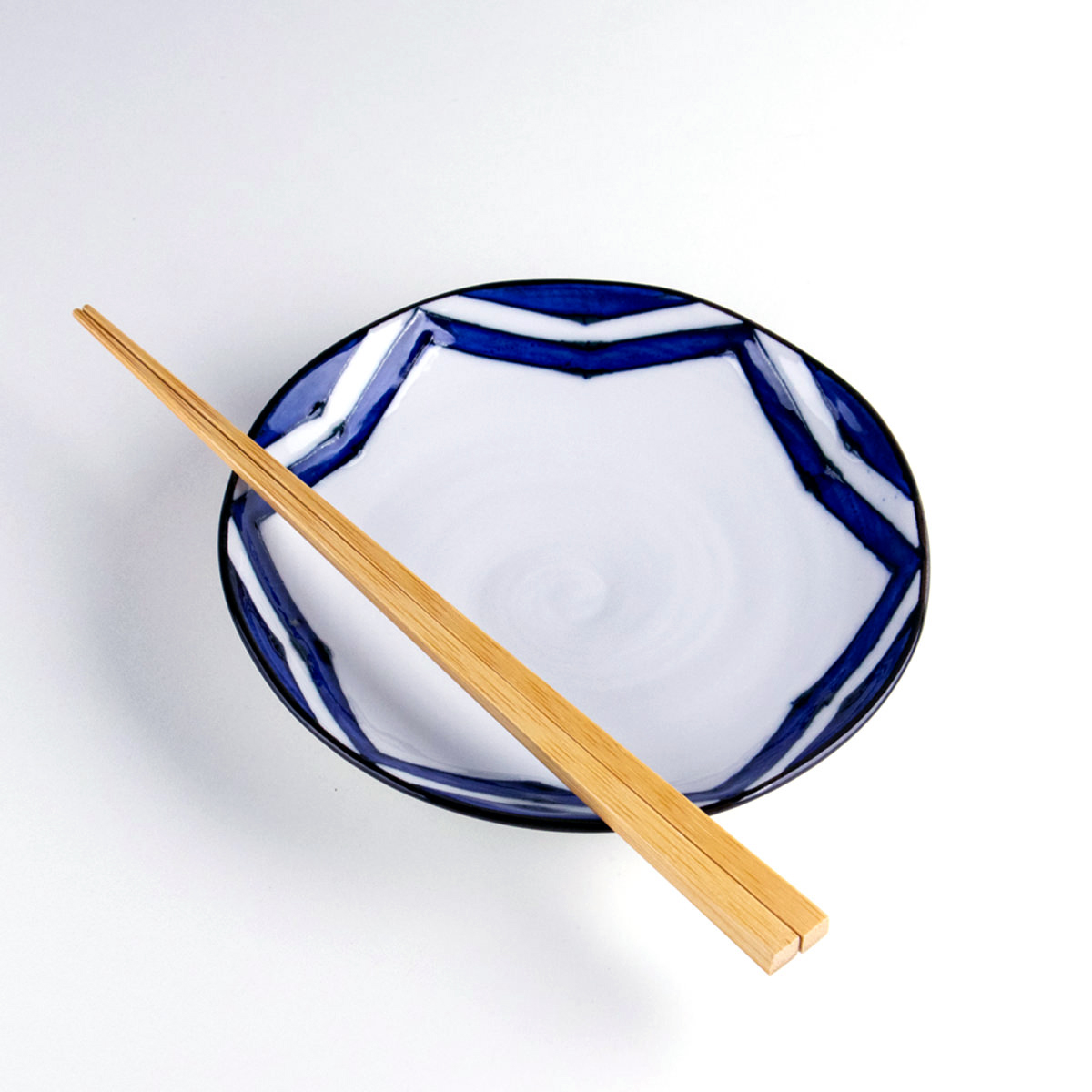
A Sometsuke plate designed for everyday use.
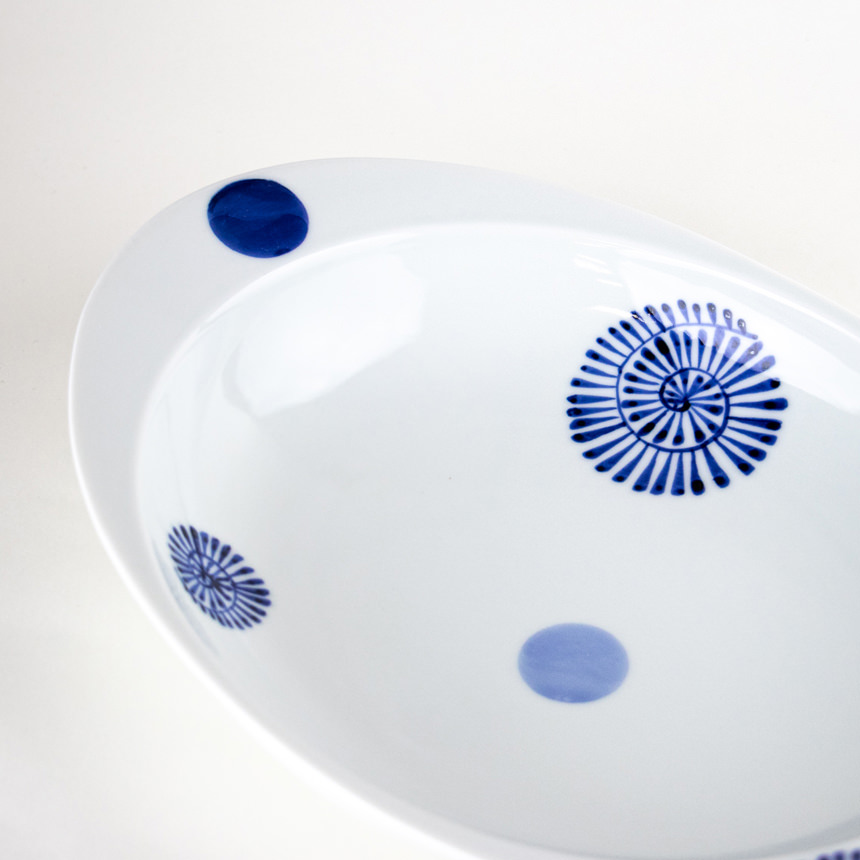
A Sometsuke vessel that can also be used as a curry plate.
The Appeal of Handcrafted Sometsuke
The character of Sometsuke is strongly influenced by the movement of the artisan's brush. A single line, differences in color intensity, subtle bleeding, and the use of empty space can dramatically change the impression of a piece.
Sometsuke includes both hand-painted pieces and pieces decorated using transfer techniques. Both are widely enjoyed as Sometsuke ware, but hand-painted pieces naturally show subtle variations from one item to another, giving each vessel its own individual expression.
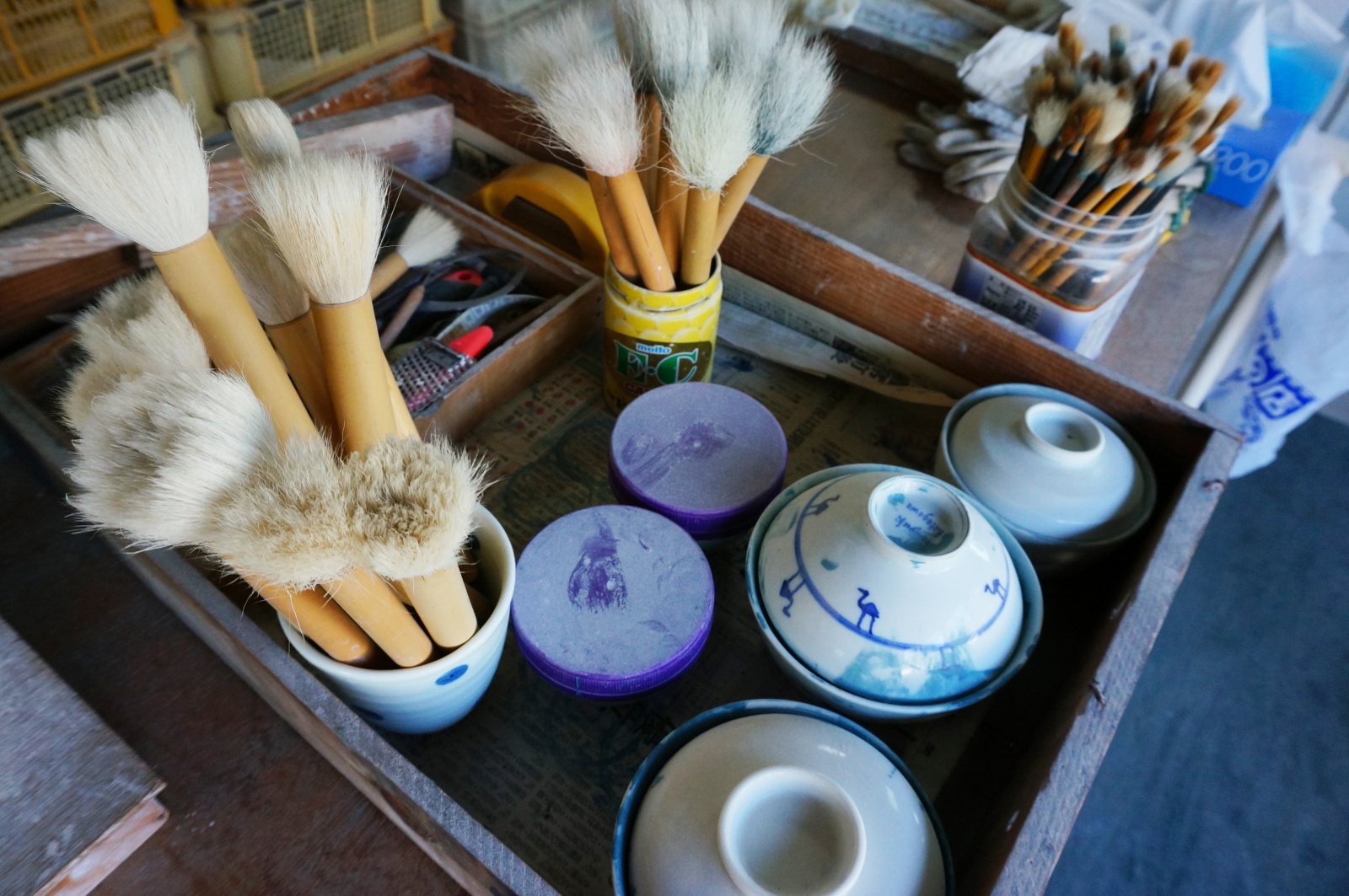
Brushes and tools in a ceramic workshop. The expression of Sometsuke is supported by the skill of the artisan.
Summary: Sometsuke Combines Tradition with Everyday Practicality
Sometsuke is a traditional underglaze decoration technique in which designs are painted on bisque-fired ware with gosu, covered with glaze, and then fired. Because the decoration lies beneath the glazed surface, it is well protected from ordinary wear, making Sometsuke especially suitable for tableware intended for long-term everyday use.
With its blue decoration standing out beautifully against white porcelain, Sometsuke is deeply traditional yet remarkably adaptable to contemporary life. From bold brushwork to intricate fine-line painting, its wide range of expression is one of the enduring attractions of Arita ware.