Japanese pottery ceramics souvenir in Tokyo Japan
Font size:
Shopping Cart
-
Your cart is empty.
Categories
Shop Manager Profile
Arita Ware Encyclopedia
Discover the history, styles, techniques, and traditional patterns of Arita ware, explained from the perspective of a specialist in Japanese ceramics.
← Back to Arita Ware Encyclopedia
What Is Hakuji? | The Beauty of White Porcelain in Arita Ware
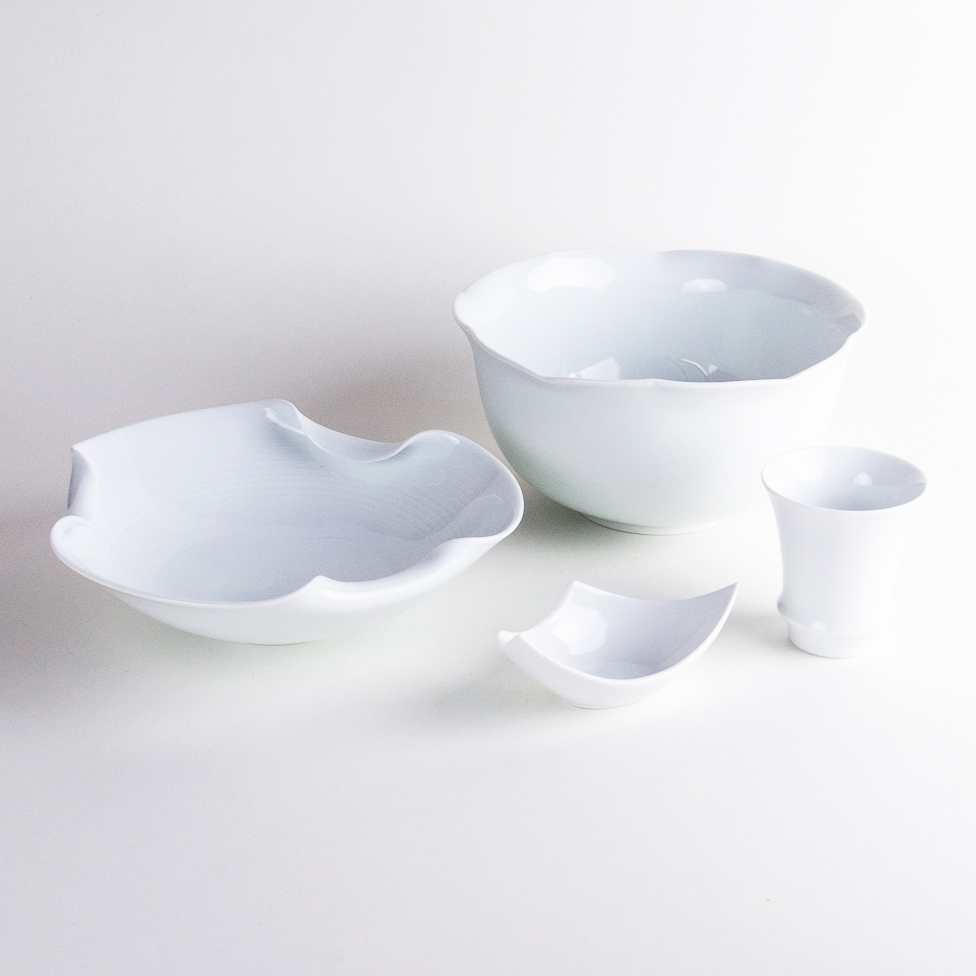
Hakuji white porcelain. Without painted decoration, the beauty of its whiteness, luster, and form stands out.
Hakuji is white porcelain without painted decoration, appreciated for the beauty of the porcelain itself. Rather than simply being “porcelain with nothing painted on it,” Hakuji highlights the whiteness of the body, the luster of the glaze, graceful curves, and the subtle play of light and shadow. Arita developed as the birthplace of Japanese porcelain, and Hakuji can be seen as one of the purest expressions of its beauty.
What Is Hakuji?
Hakuji literally means “white porcelain.” It is porcelain in which the beauty of the white body and transparent glaze takes center stage. Unlike sometsuke, which uses blue decoration, or akae, which adds colorful overglaze enamels, Hakuji allows the form of the vessel and the beauty of its white surface to speak for themselves.
Although Hakuji may appear simple at first glance, there is much to appreciate: its shape, thickness, curves, the way the glaze settles on the surface, and the way light reflects from it. Precisely because there is no painted pattern, the quality and refinement of the vessel itself become more apparent.
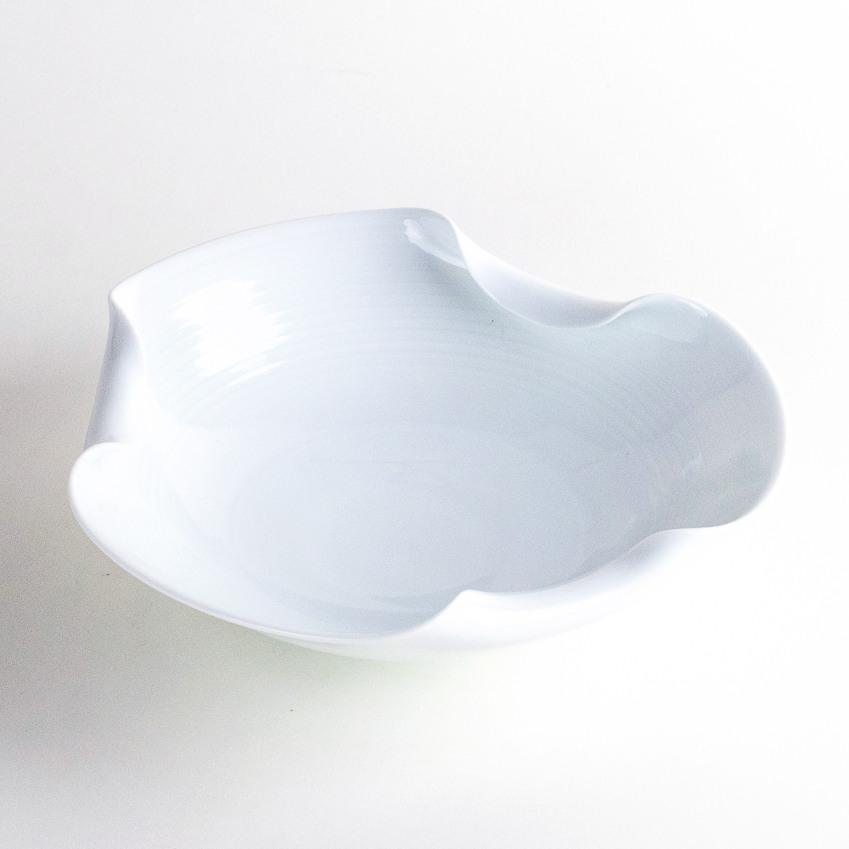
A Hakuji bowl. Without painted decoration, its curves and silhouette become especially striking.
Hakuji Is More Than “Porcelain with Nothing Painted on It”
Hakuji is not simply tableware from which decoration has been omitted. Because there is no painted design, the whiteness of the porcelain, the smooth glaze, the curves of the vessel, and the beauty of open space become the main features.
Unlike ceramics decorated with patterns, Hakuji expresses beauty through form and texture. The rise of the rim, the way light falls across the surface, and the smooth sensation when held in the hand are all part of its quiet appeal.
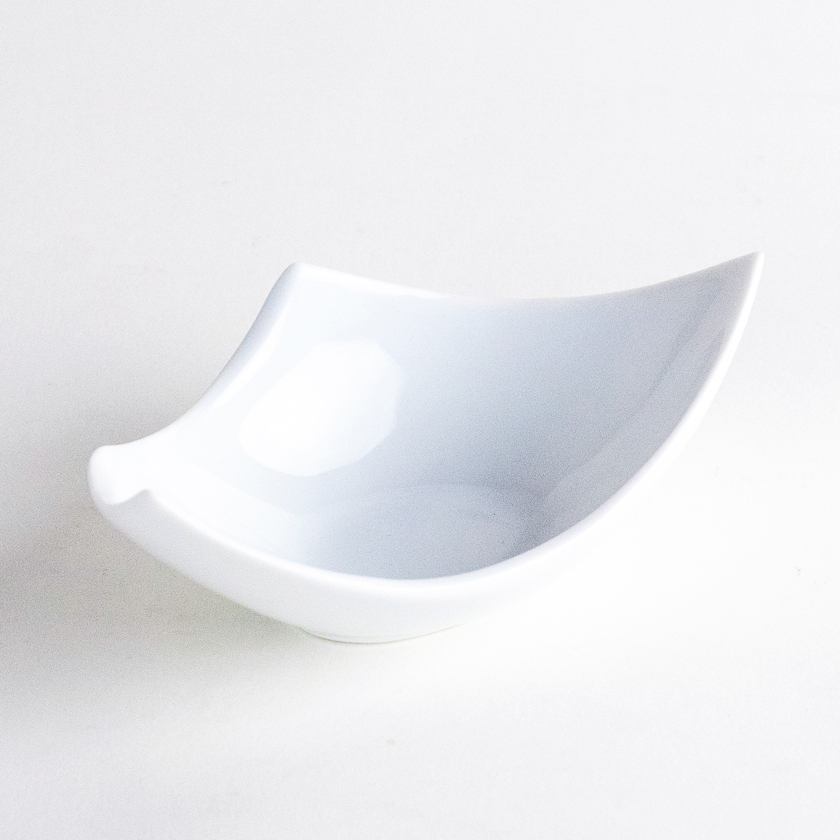
A boldly shaped Hakuji bowl. The all-white surface allows the form itself to stand out.
Soft curves and the luster of the white glaze create the clean, serene impression characteristic of Hakuji.
Hakuji and Arita Ware
Arita is known as the birthplace of Japanese porcelain. The development of hard, white porcelain provided the foundation for the many decorative traditions that later flourished in Arita ware, including sometsuke, akae, the Ko-Imari style, the Kakiemon style, and the Nabeshima style.
Hakuji is also the foundation upon which these decorative expressions are built. The beauty of a clean white porcelain surface allows the blue of sometsuke to appear clear and vivid, while red enamels and gold decoration stand out brilliantly. In this sense, Hakuji represents both a starting point for Arita ware and the foundation that supports many of its characteristic forms of decoration.
Hakuji is not about elaborate decoration. Its appeal lies in the beauty of white porcelain, the refinement of its form, and its ability to enhance the appearance of food. Once these qualities are noticed, it becomes clear how much expression can exist within such apparent simplicity.
White Porcelain Makes the Colors of Food Stand Out
Hakuji does not compete with the colors of food. A white surface naturally enhances reds, greens, yellows, and even delicate translucent ingredients, allowing the food itself to become the visual focus.
It works beautifully with delicate Japanese dishes such as sushi and sashimi, as well as fruit and desserts. Rather than demanding attention, Hakuji acts as a quiet stage that presents food at its best.
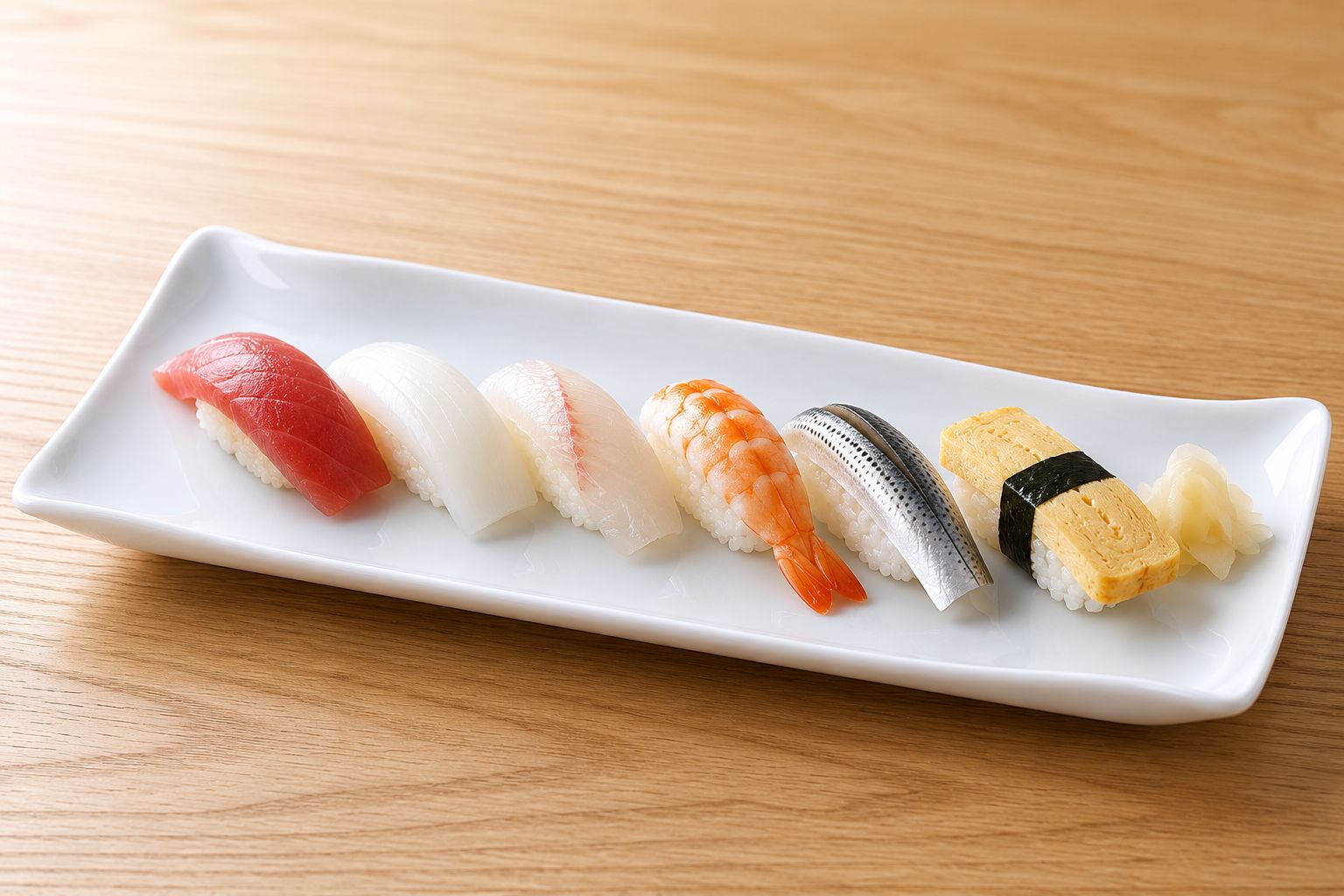
Sushi served on a long Hakuji plate. The colors of the ingredients stand out vividly against the white porcelain.
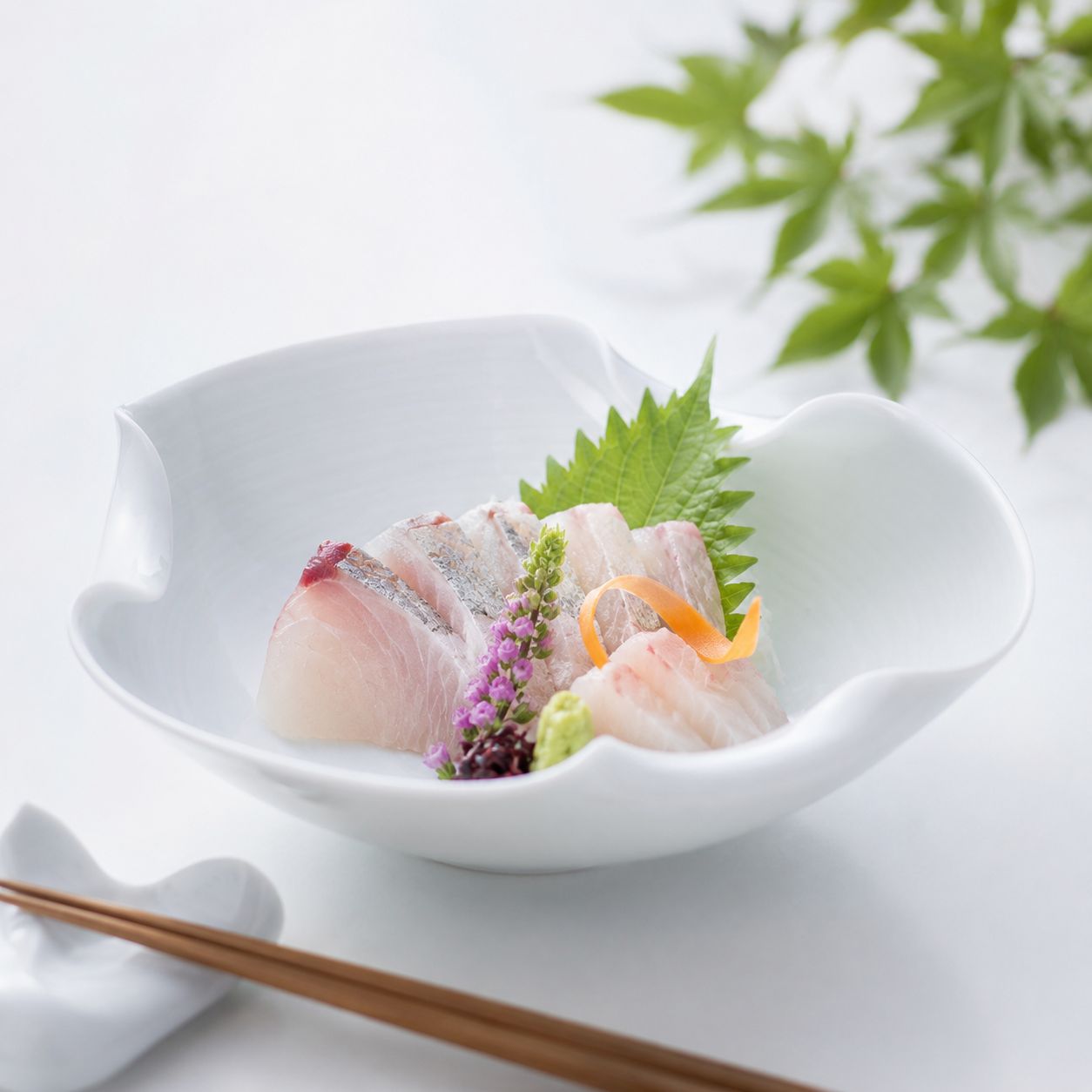
Sashimi served in a Hakuji bowl. Its clean, refined appearance complements Japanese cuisine beautifully.
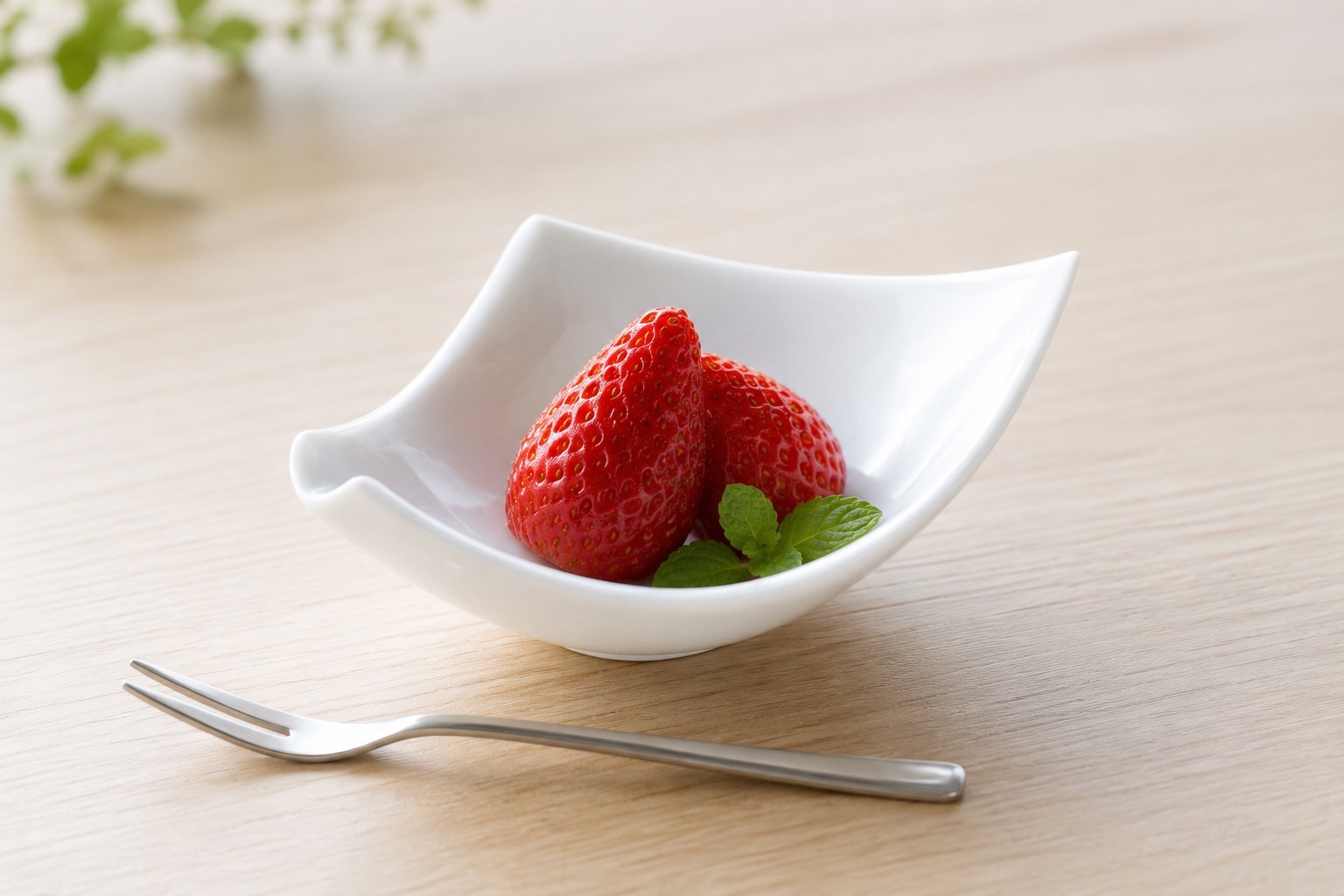
Strawberries in a small Hakuji bowl. The contrast between white porcelain and vivid red fruit creates a striking presentation.
Hakuji for Sake Ware and Tea Ware
Hakuji is widely used not only for tableware but also for sake ware and tea ware. Because the white porcelain does not interfere visually with the drink, it allows the clarity of sake and the natural color of tea to be appreciated.
Without painted decoration, the form of the vessel also becomes more prominent. In the simple actions of pouring, holding, and drinking, the quiet beauty of Hakuji can be experienced directly.
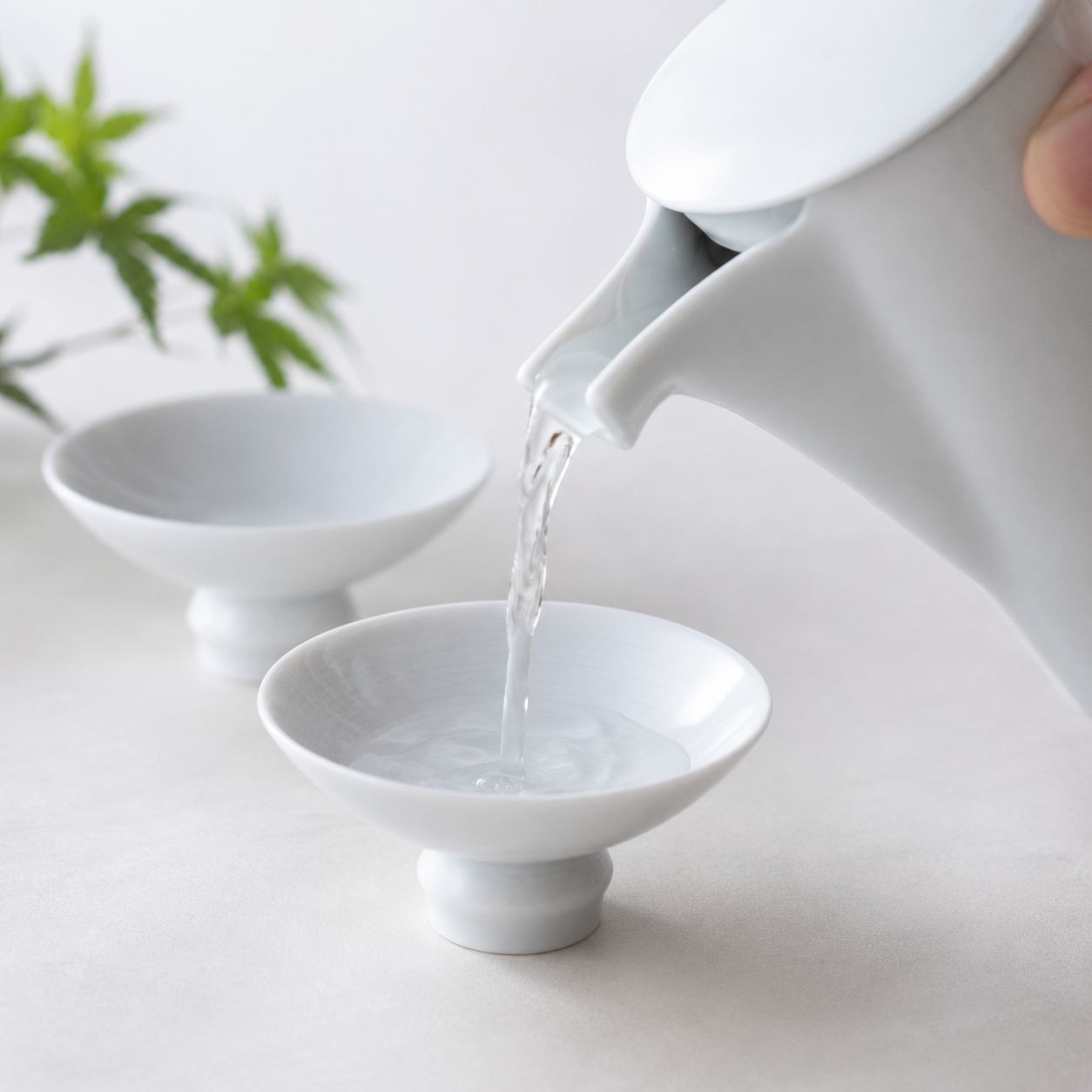
Sake being poured into Hakuji sake ware. The quiet elegance of white porcelain adds refinement to the experience of enjoying sake.
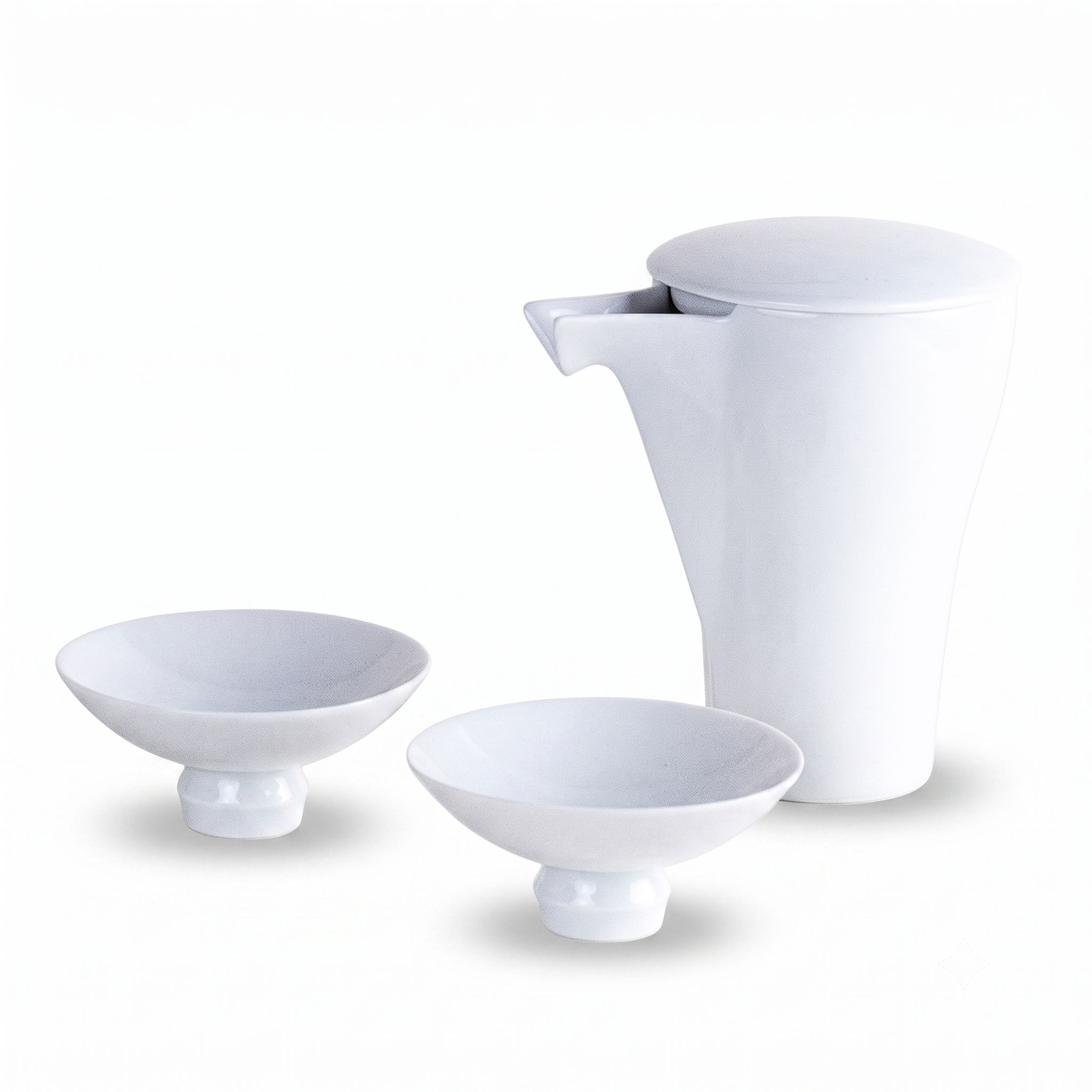
A Hakuji sake set. The all-white surface emphasizes its distinctive contemporary form.
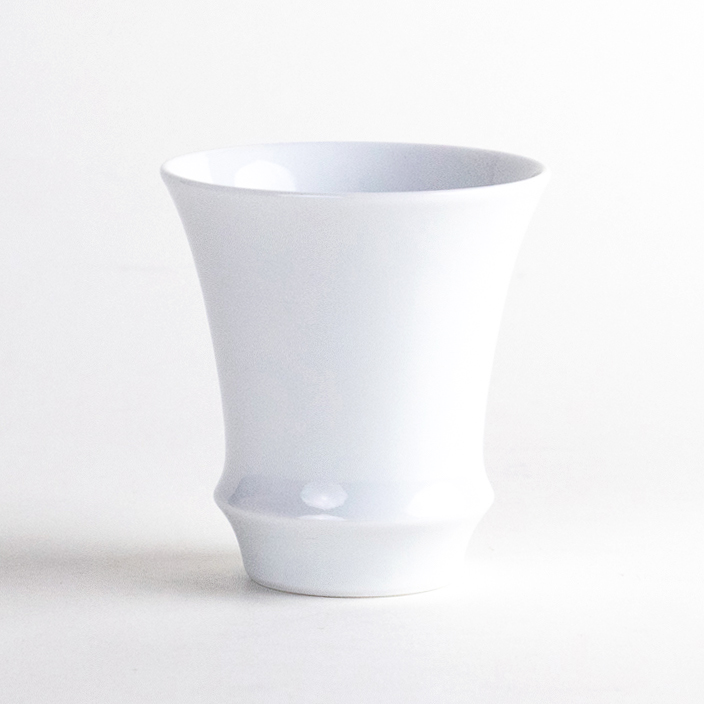
A Hakuji guinomi sake cup. Its crisp, refined appearance pairs naturally with Japanese cuisine and sake.
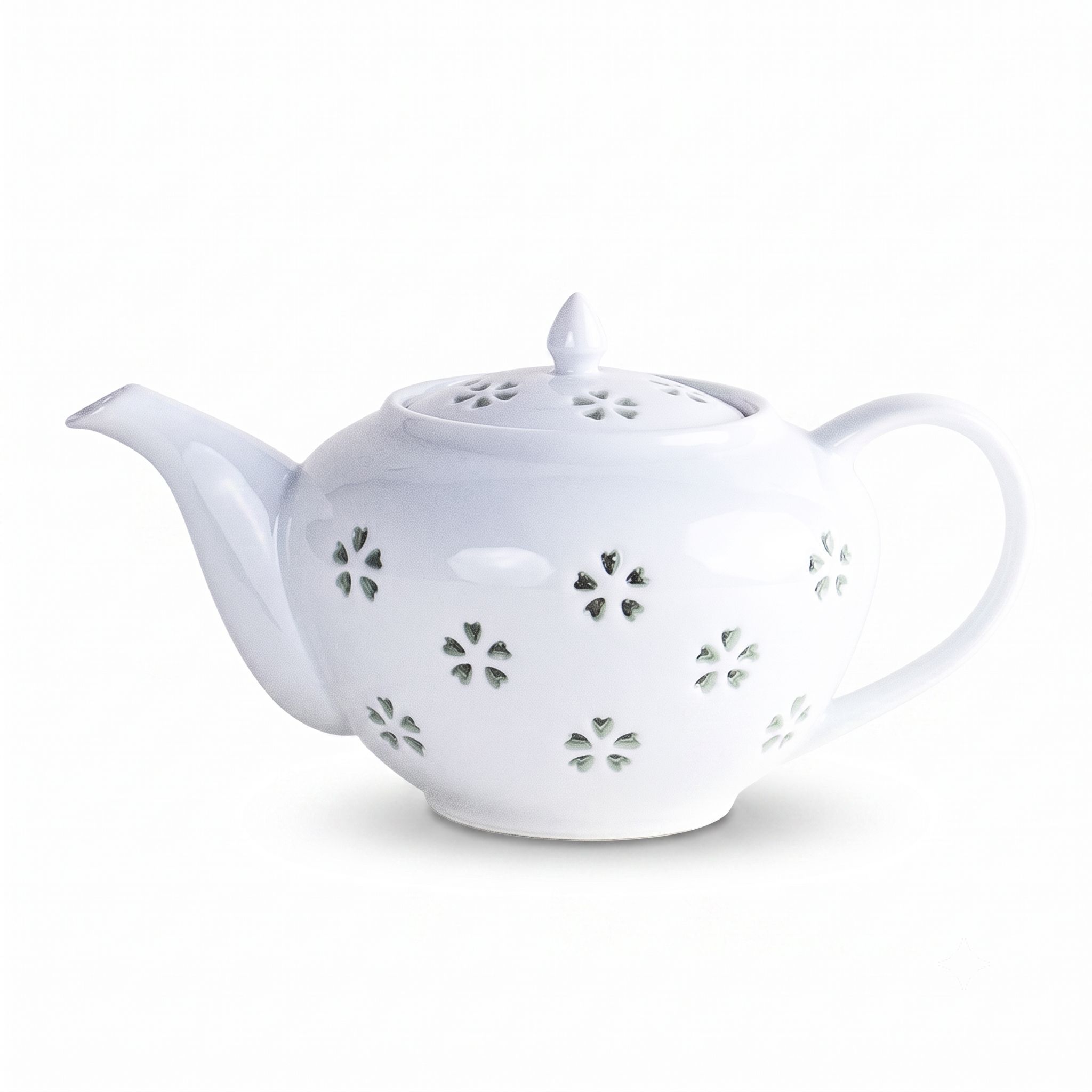
A Hakuji teapot featuring a delicate openwork technique known as crystal carving, adding another dimension to the beauty of white porcelain.
Hakuji vs. Sometsuke
Hakuji and sometsuke are both important expressions of Arita porcelain. Hakuji celebrates the beauty of white porcelain itself, while sometsuke uses a cobalt pigment known as gosu to paint designs that appear blue after firing.
Even when the shape of the vessel is identical, Hakuji and sometsuke can create very different impressions. Hakuji has a quiet, pure appearance that emphasizes form, while sometsuke introduces movement and character through blue painted designs. Neither is inherently superior; they are simply different approaches to porcelain decoration and expression.
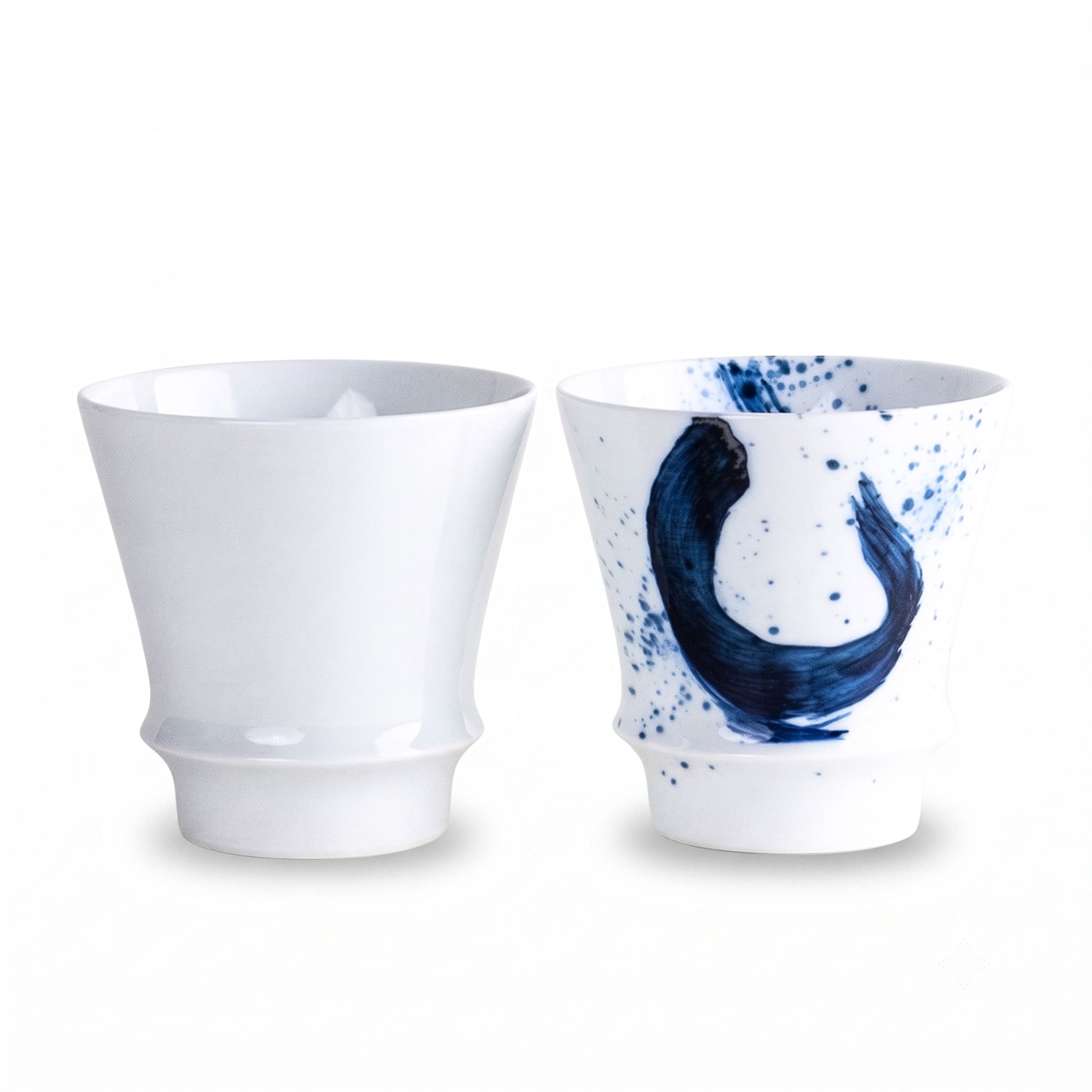
Even with the same form, Hakuji and sometsuke create very different impressions. Hakuji highlights the beauty of the shape, while sometsuke adds expression through painted decoration.
Seihakuji: Bluish-White Porcelain
A related form of porcelain is seihakuji, or bluish-white porcelain. It combines the purity of white porcelain with a subtle blue tint and a sense of translucency.
While Hakuji conveys the quiet clarity of pure white, seihakuji has a cool, transparent quality reminiscent of water or air. Like Hakuji, its appeal does not come from strong colors, but from the delicate tone of the glaze and the way it responds to light.

A seihakuji bowl. The subtle blue tint gives the white porcelain a cool, clear appearance.
The Simplicity of Hakuji Makes It Difficult to Perfect
Because Hakuji has no painted decoration to cover its surface, the shape of the vessel and the quality of the glaze remain fully visible. Even slight distortion, unevenness in the glaze, surface texture, or variations in the thickness of the rim can affect the overall impression.
For this reason, Hakuji may appear simple, but it clearly reveals the skill of the maker. Within a vessel that seems to have “nothing” painted on it are the techniques required to achieve a balanced form, bring out the beauty of the white porcelain, and create a refined glazed surface.
Hakuji in Contemporary Living
Although Hakuji has deep roots in traditional Japanese tableware, it fits naturally into contemporary lifestyles. Its clean white appearance works well with minimalist interiors, wooden tables, and Western-style tableware, making it suitable not only for Japanese cuisine but also for Western dishes and desserts.
Hakuji is also not tied to a particular season. From spring vegetables and summer sashimi to autumn fruit and warm winter dishes, white porcelain enhances the colors and textures of food while bringing a sense of cleanliness and understated elegance to the table.
Summary: Hakuji Celebrates the Beauty of White Porcelain
Hakuji is porcelain without painted decoration, appreciated for the beauty of the white porcelain itself. Its whiteness, luster, curves, and subtle qualities of the glaze become especially visible precisely because no additional decoration is applied.
Hakuji is not “empty” porcelain. Within its white space, the skill of the maker and the beauty of the vessel's form become visible. By enhancing food and bringing a quiet elegance to its surroundings, Hakuji represents an essential expression for understanding the beauty of Arita ware.