Japanese pottery ceramics souvenir in Tokyo Japan
Font size:
Shopping Cart
-
Your cart is empty.
Categories
- History
- Making process
- Kintsugi | The technique of repairing broken items
- About Arita Ware
- What Is Arita Ware?
- Porcelain vs. Pottery
- What Is Hakuji?
- What Is Sometsuke?
- What Is Akae?
- Three Major Styles of Arita Ware
- What Is Ko-Imari?
- What Is Ko-Imari Style?
- What Is Kakiemon Style?
- What Is Nabeshima Style?
Shop Manager Profile
Arita Ware Encyclopedia
Explore the history, styles, techniques, and patterns of Arita ware, explained clearly from the perspective of a specialist.
What Is Nabeshima Style? | The Pinnacle of Arita Porcelain Created for Presentation
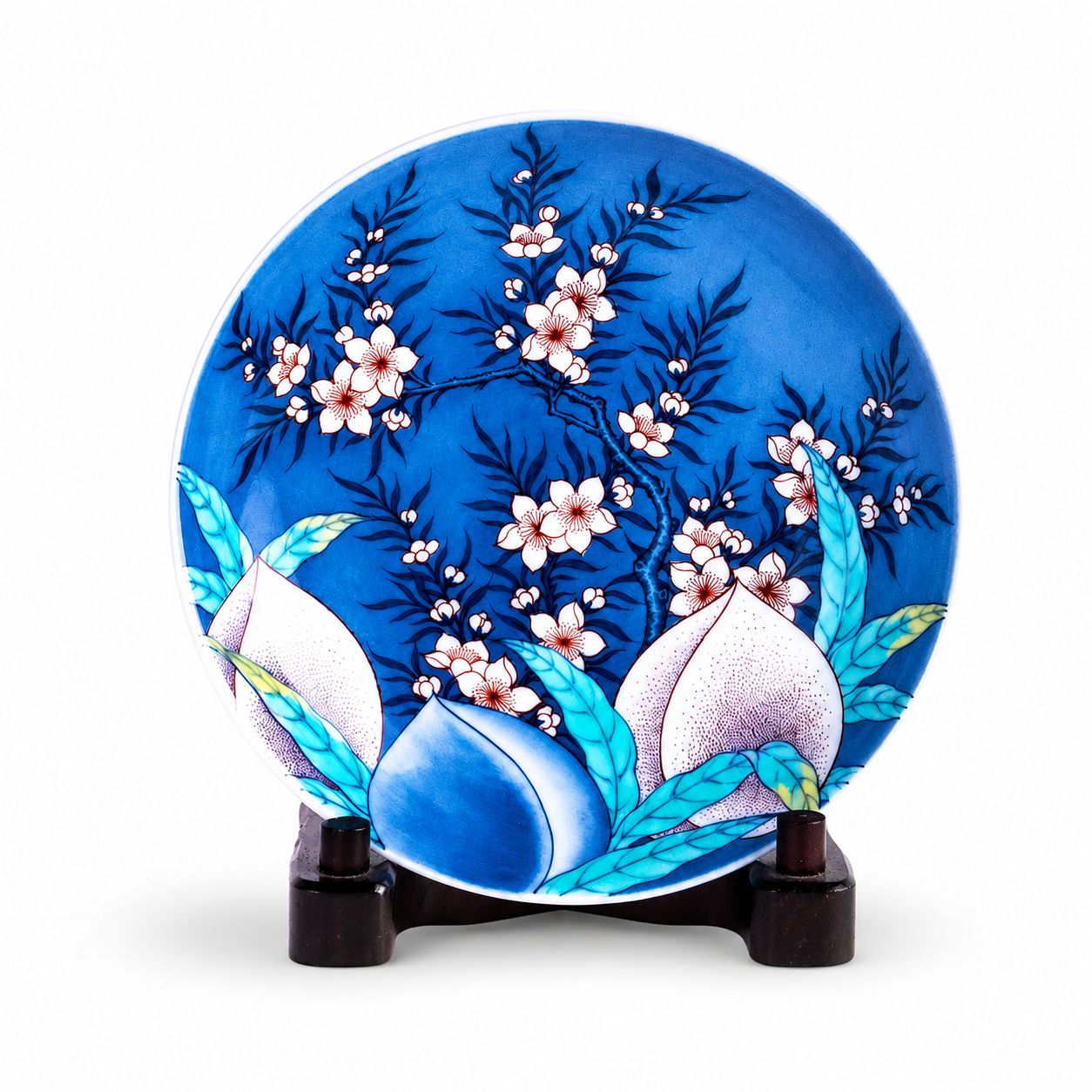
A Nabeshima-style decorative plate, distinguished by its meticulous decoration and refined composition.
Nabeshima style is a refined porcelain tradition produced at the official kiln of the Nabeshima domain during the Edo period. Rather than being made for ordinary sale, these exceptional pieces were created as presentation wares for the shogun’s household and feudal lords. Their hallmarks include elegant forms, meticulous patterns, and careful attention to beauty even on parts that are not normally seen.
What Is Nabeshima Style?
Nabeshima is one of the three major styles associated with Arita ware. Together with Ko-Imari and Kakiemon, it is essential to understanding the history and aesthetics of Arita porcelain.
While Ko-Imari style is known for splendor and Kakiemon style for the beauty of open white space, Nabeshima style emphasizes the dignity expected of presentation ware. Its appeal lies in balanced forms, precise patterns, restrained colors, and meticulous finishing even in less visible areas.
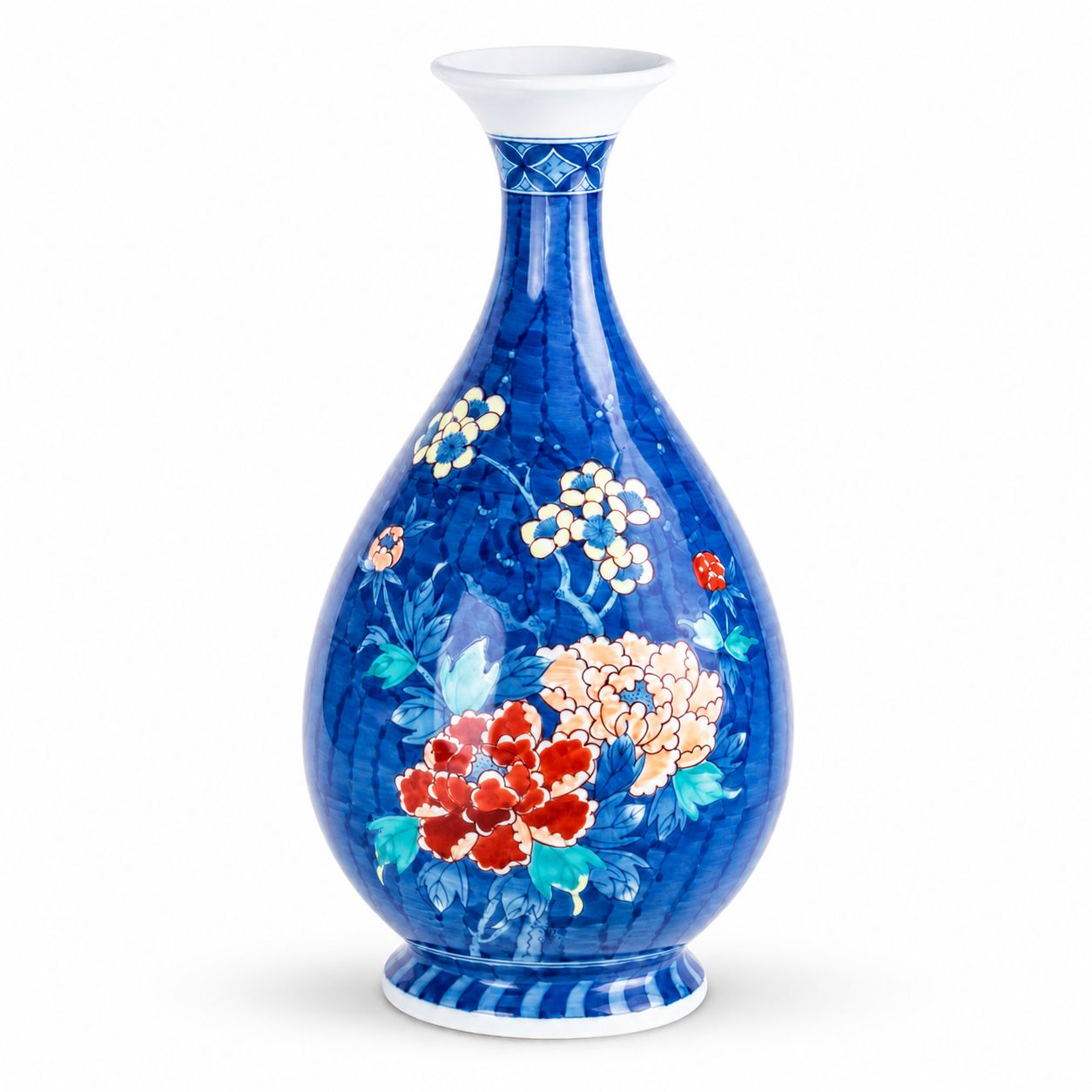
A Nabeshima-style vase with an elegant combination of underglaze blue and overglaze enamels.
Special Ware Made at the Nabeshima Domain Kiln
A defining feature of Nabeshima ware is that it was not originally produced as ordinary merchandise. It was made at the official kiln of the Nabeshima domain as prestigious presentation ware.
During the Edo period, the Nabeshima domain established its kiln at Okawachiyama, where highly skilled artisans produced fine porcelain. Because these pieces were presented to the shogun’s household and powerful feudal lords, they carried the prestige of the domain itself.
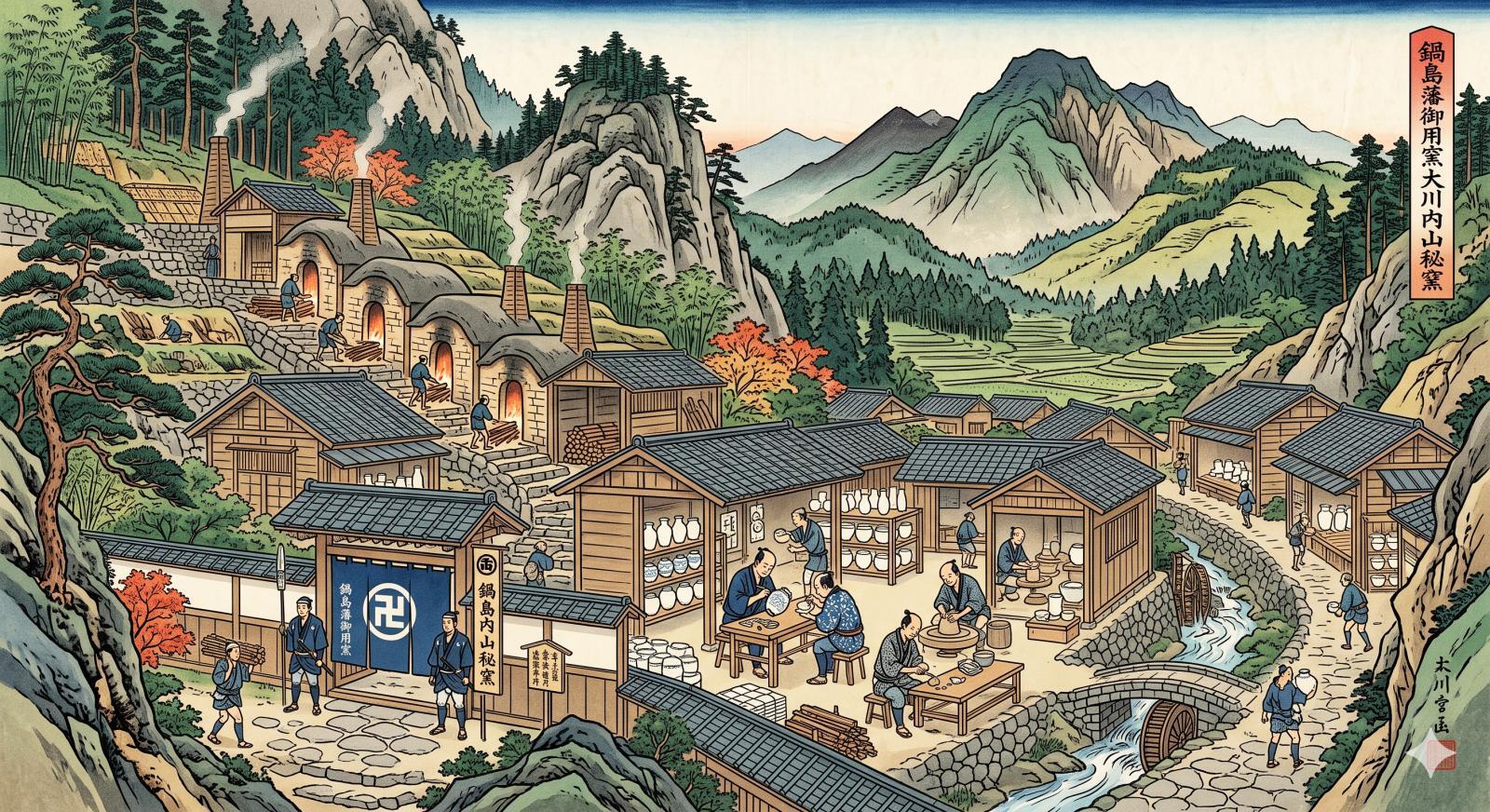
An image of the Nabeshima domain kiln nestled in the mountains of Okawachiyama.
A Secluded Kiln That Protected Its Techniques
The Nabeshima domain kiln was located at Okawachiyama, surrounded by mountains. One reason for this secluded location is said to have been the protection of advanced porcelain-making techniques from spreading outside the domain.
Artisans worked under strict supervision to create wares worthy of presentation. Nabeshima style is still regarded as one of the highest achievements of Arita porcelain not simply because of its beauty, but because exceptional quality was pursued under the domain’s careful control.
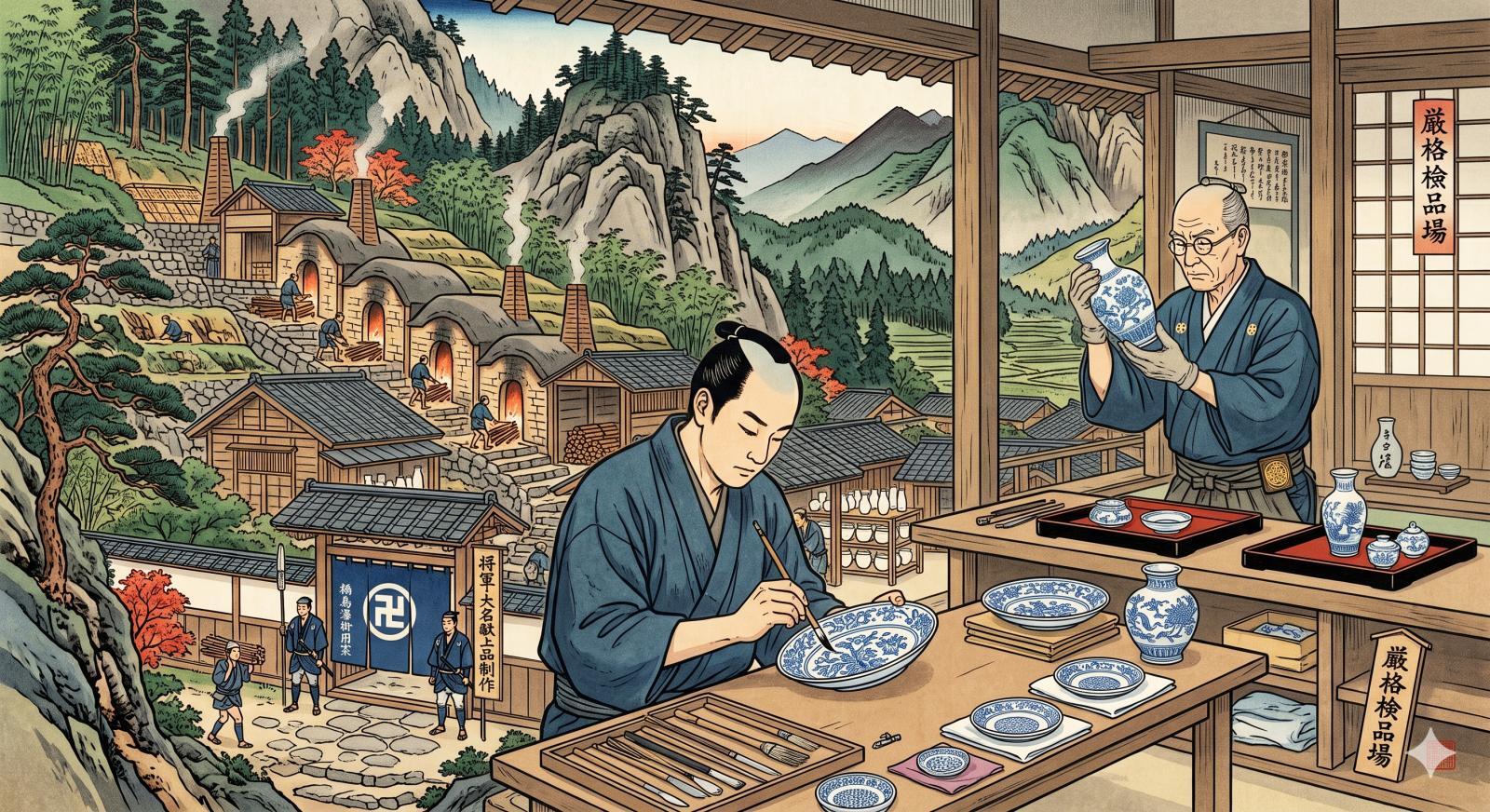
An image of artisans producing presentation ware.
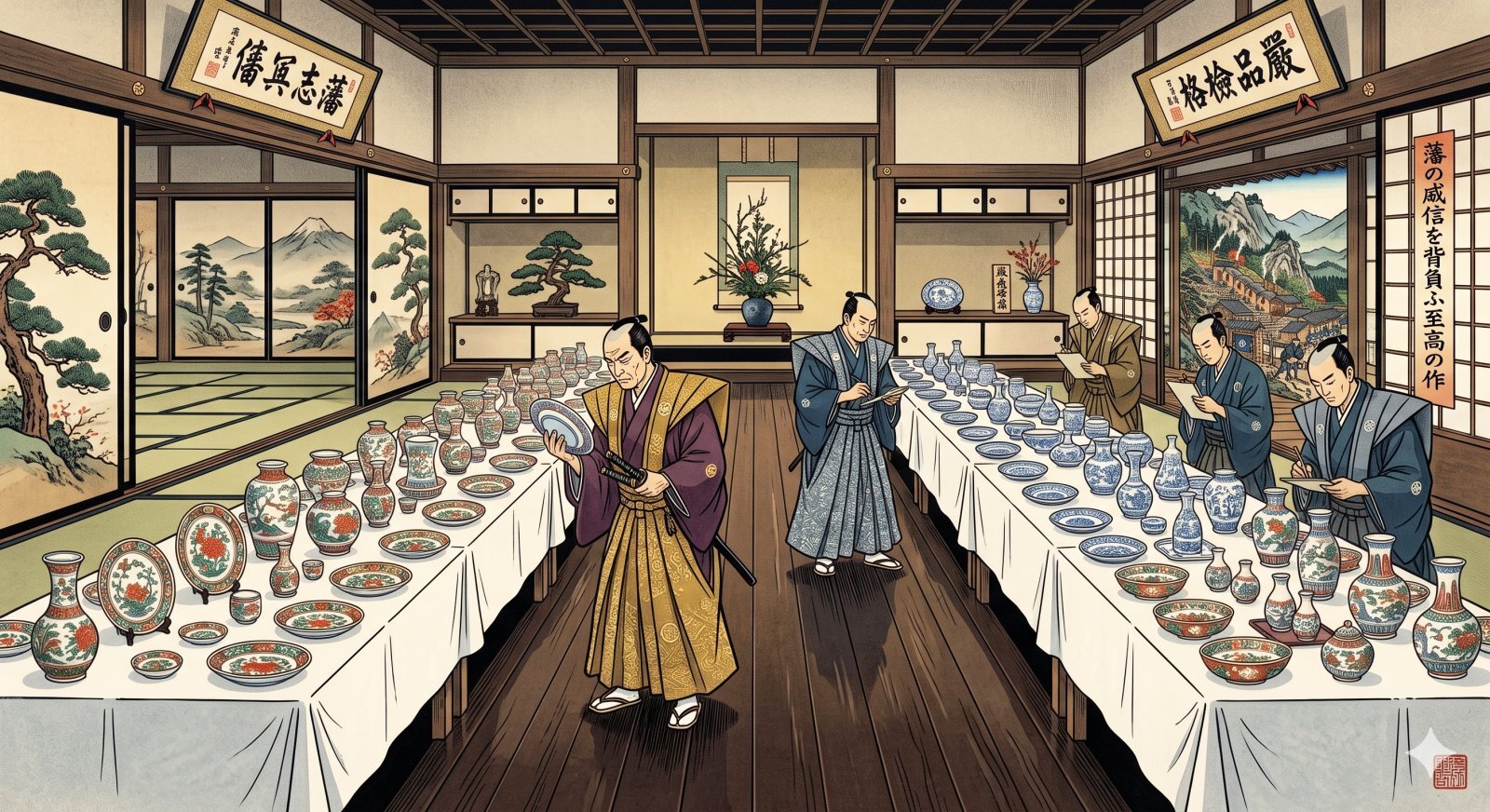
An image of finished pieces being carefully inspected.
Presentation Ware for the Shogun and Feudal Lords
Nabeshima ware was presented by the domain to the shogun’s household and feudal lords. Unlike mass-produced everyday wares, these pieces were expected to achieve an exceptionally high standard in form, decoration, and firing.
These vessels were more than functional objects: they represented the dignity and technical skill of the Nabeshima domain. Great care was given not only to the visible decoration but also to the feel in the hand, the finishing of the reverse, and the precision of the patterns.
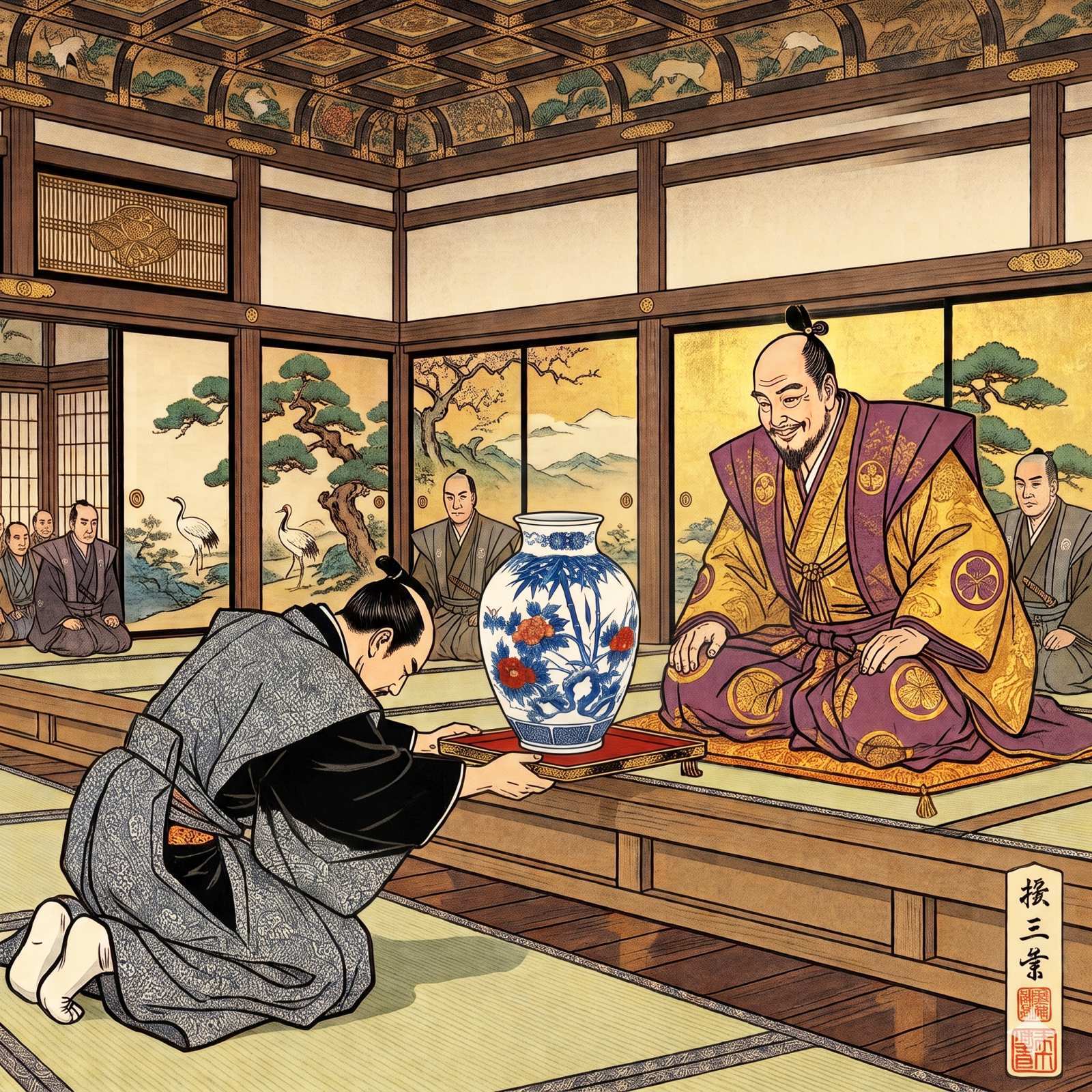
An image of presentation ware being offered to the shogun’s household.
Characteristics of Nabeshima Style
Elegant, Dignified Forms
Nabeshima ware is characterized by exceptionally well-balanced forms. Rather than pursuing decoration for its own sake, the outlines, placement of motifs, and use of open space are carefully controlled, creating a composed and dignified impression.
Combining Underglaze Blue and Overglaze Enamels
Some Nabeshima pieces are decorated entirely in underglaze cobalt blue, while Iro-Nabeshima combines underglaze blue with overglaze enamels in colors such as red, green, and yellow.
In Iro-Nabeshima, a restrained palette is used with great refinement rather than simply increasing the number of colors, producing an elegant and sophisticated beauty.
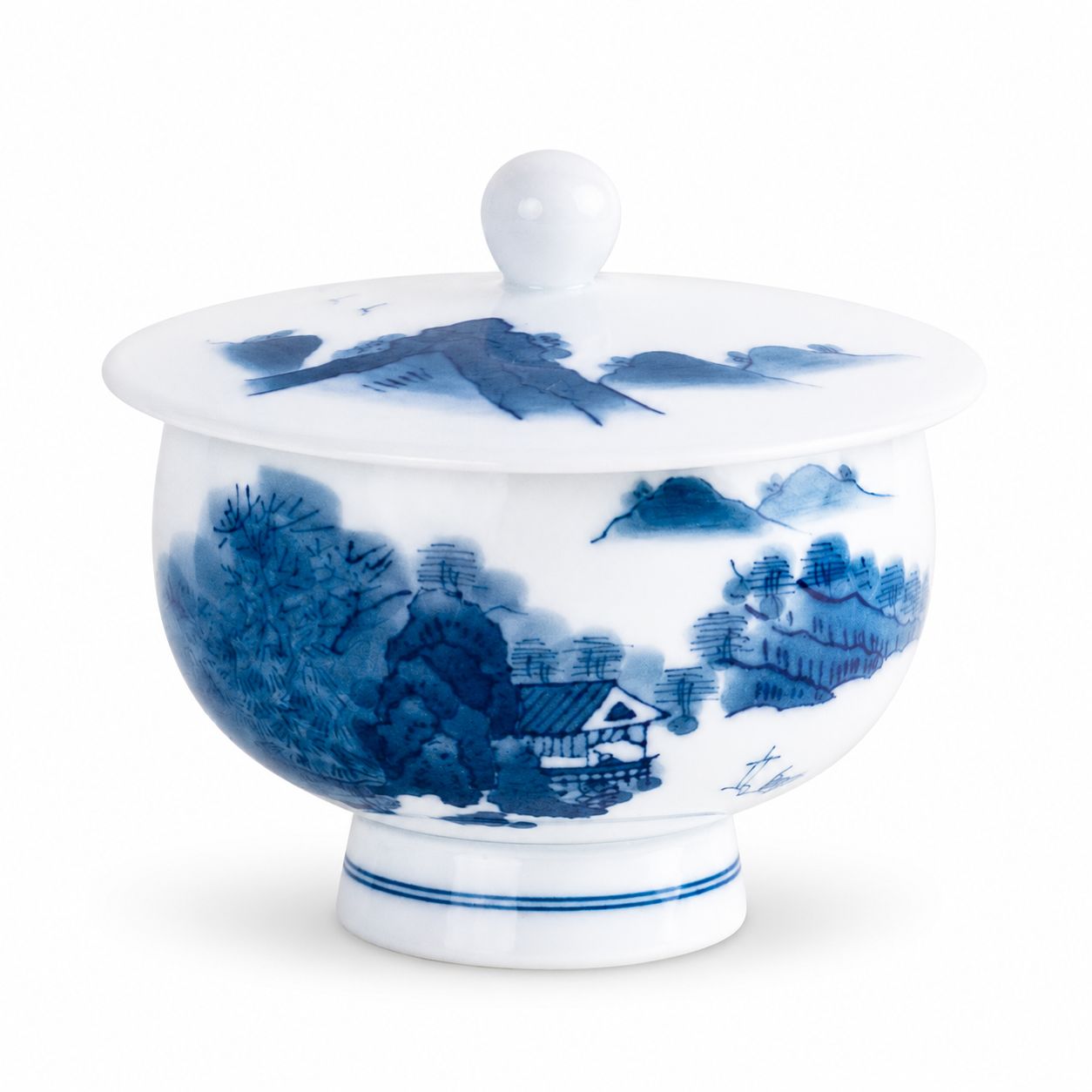
Sometsuke Nabeshima expressed in cobalt blue.
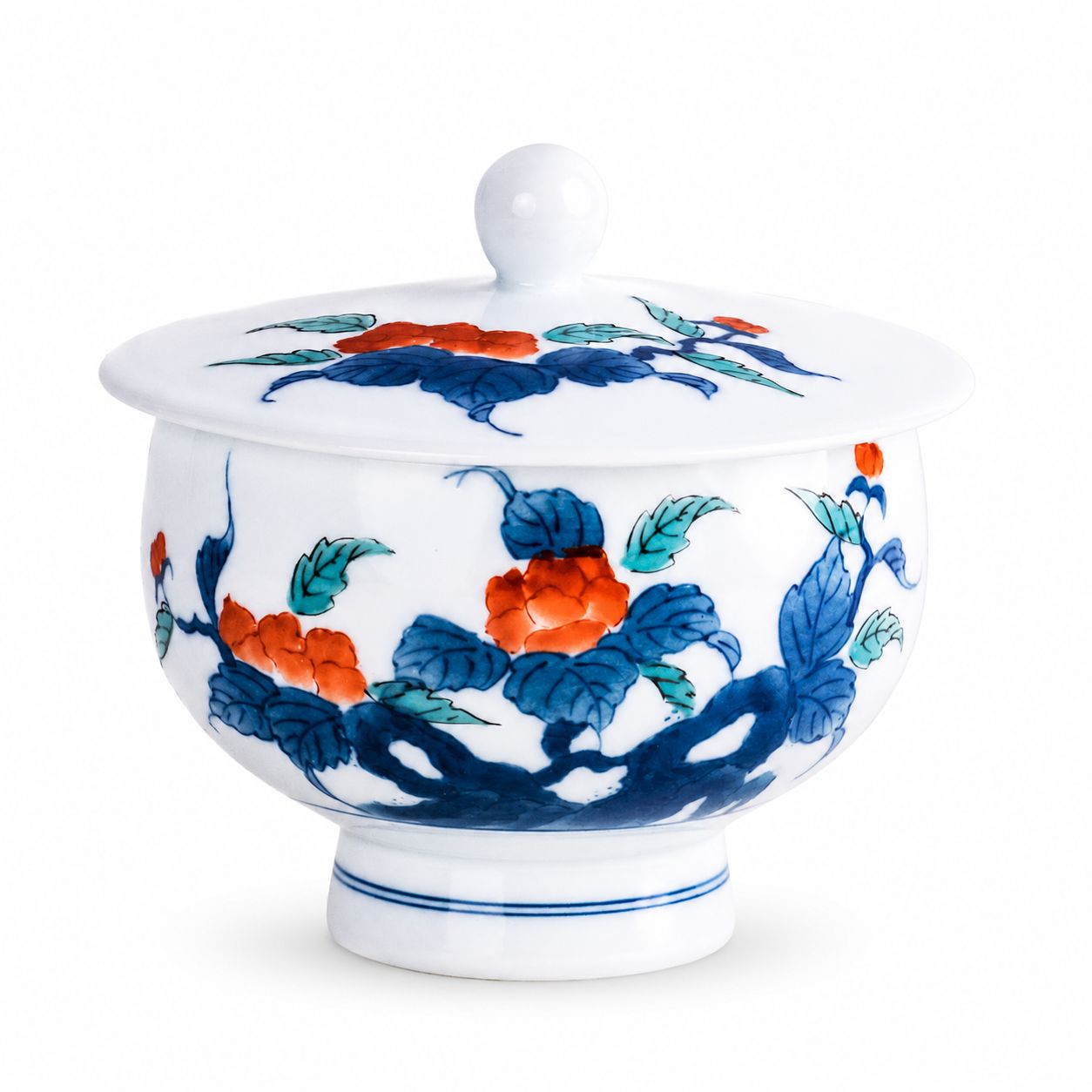
Iro-Nabeshima in the same form. The addition of overglaze colors creates a distinctly different impression.
The Beauty of Iro-Nabeshima
Iro-Nabeshima is one of the signature expressions of Nabeshima style. Cobalt-blue underglaze decoration is complemented by red, green, yellow, and other overglaze enamels, creating a look that is colorful yet restrained.
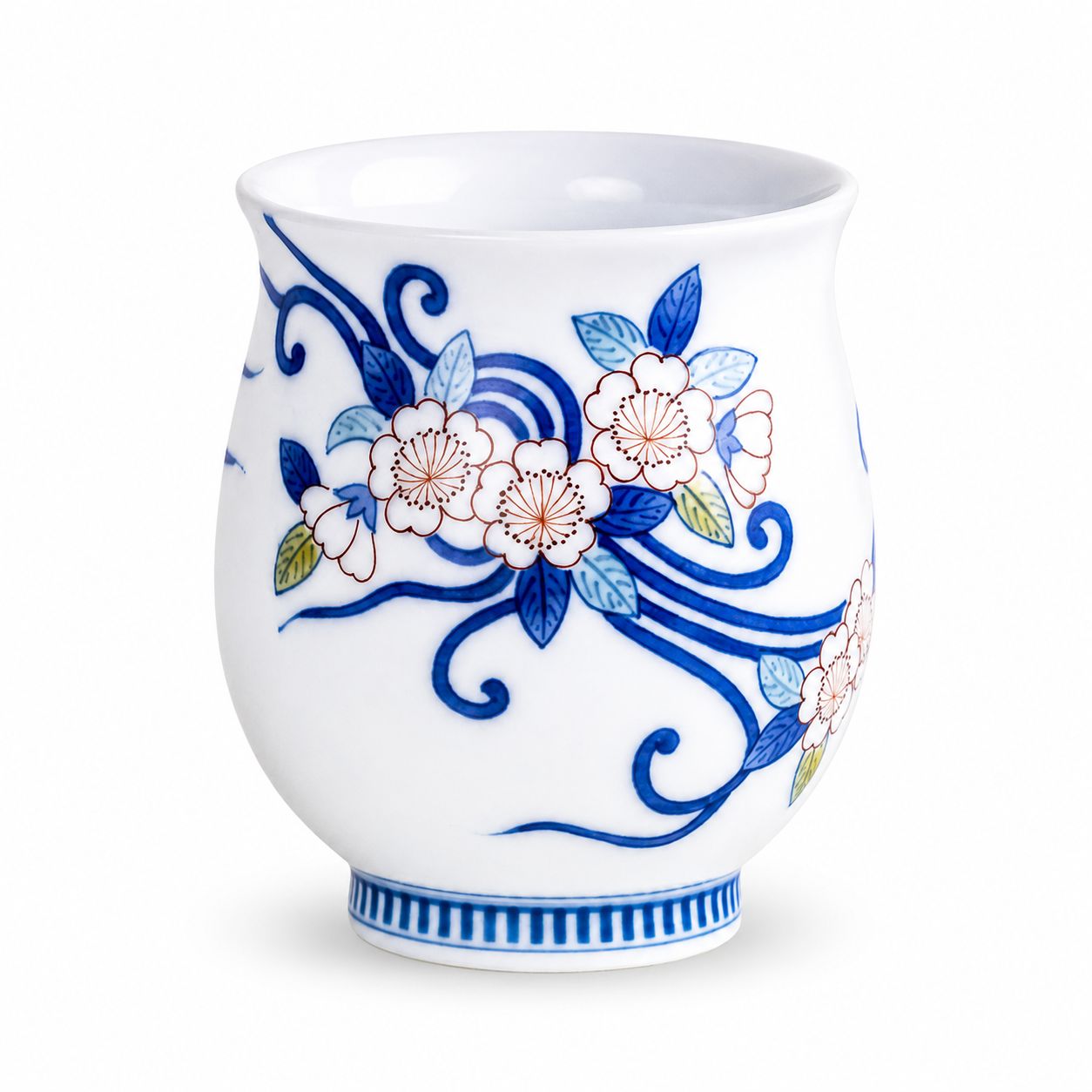
Iro-Nabeshima with a cherry blossom motif.
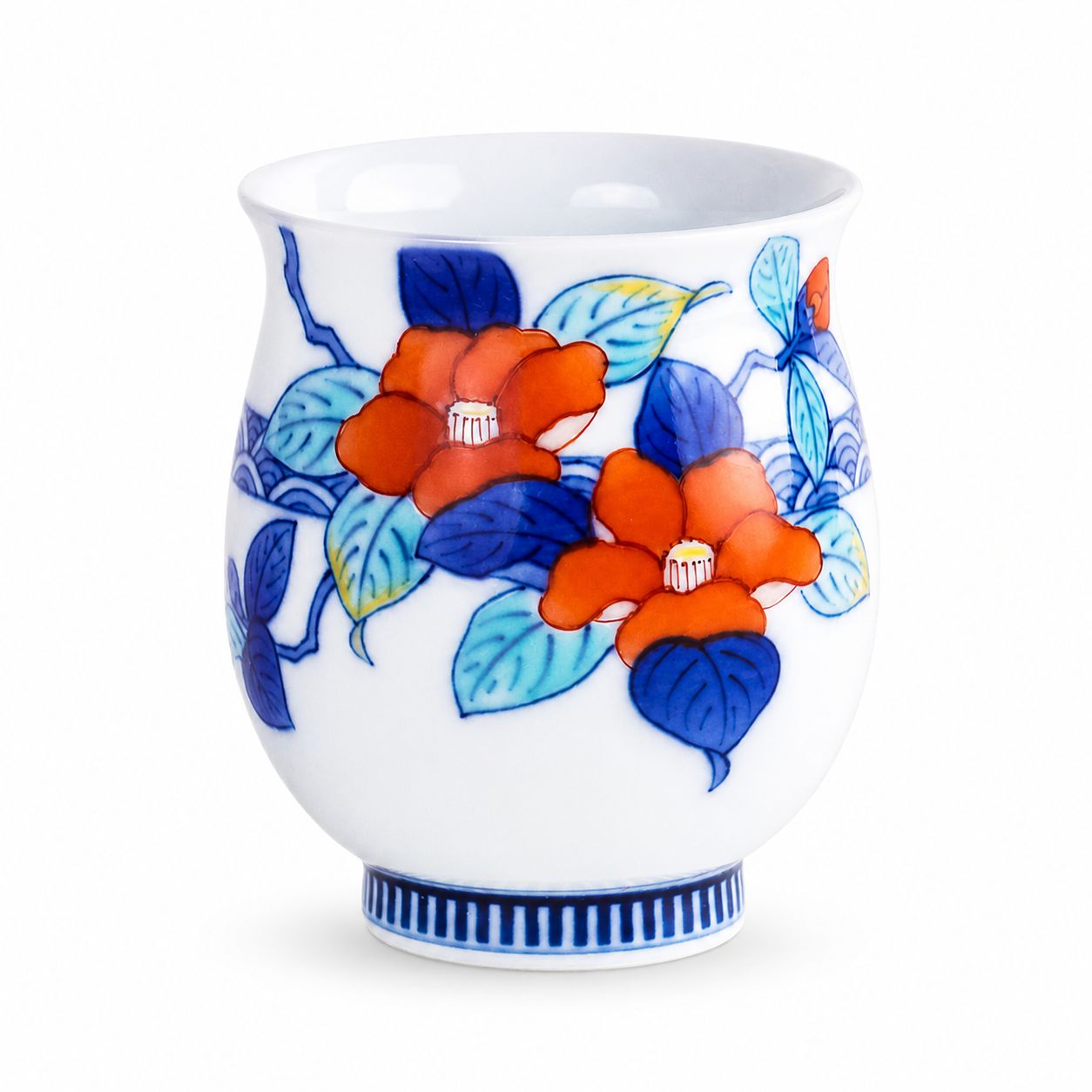
Iro-Nabeshima with a camellia motif.
Comb-Patterned Foot Ring (Kushi-Kodai)
One important feature of Nabeshima style is the kushi-kodai, or comb-patterned foot ring. The kodai is the ring-shaped foot on the underside of a vessel.
On Nabeshima ware, the side of this foot ring may be decorated with fine vertical lines resembling marks drawn with a comb. Decorating even the normally less visible underside reflects the meticulous aesthetic of Nabeshima style.
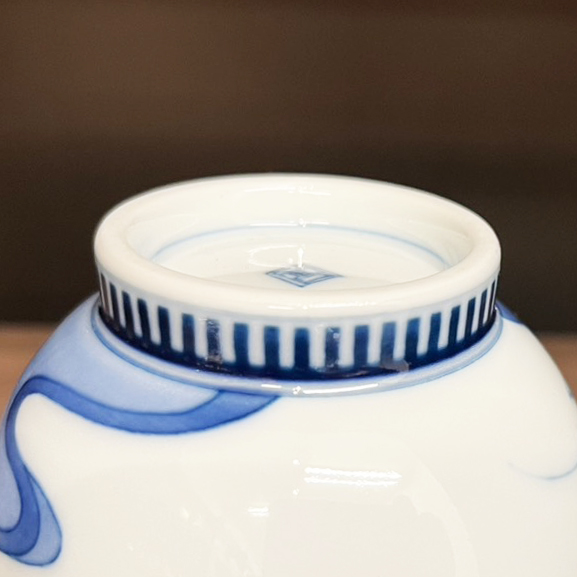
A kushi-kodai with fine vertical lines around the foot ring.
Patterns Found in Nabeshima Style
Nabeshima ware employs a wide variety of motifs, including flowers and plants, geometric designs, and auspicious patterns. Rather than covering a vessel indiscriminately, motifs are arranged within carefully balanced compositions to create an elegant impression.
Seigaiha Wave Pattern
Seigaiha is a traditional pattern of overlapping waves. Because the gentle waves appear to continue endlessly, the motif has long been appreciated as an auspicious symbol expressing wishes for peace and prosperity.
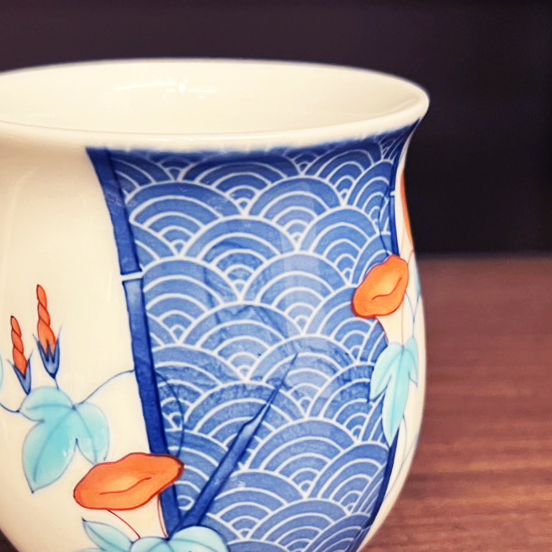
A seigaiha wave pattern decorating part of a teacup.
Back Marks and Kiln Marks
Some Nabeshima-style pieces bear a kiln mark or inscription on the underside, which can provide a clue to the kiln that produced the piece.
A back mark alone, however, is not enough to determine a piece’s value or age. Its form, decoration, firing, porcelain body, and overall workmanship should also be considered.
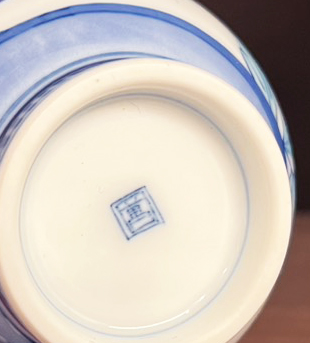
An example of a back mark found on a Nabeshima-style piece.
Nabeshima Style Today
The aesthetics of Nabeshima style continue to be carried on by Arita and Imari kilns today. With its history as prestigious presentation ware, many contemporary pieces still convey the refinement and dignity associated with the tradition.
From teacups and decorative plates to vases and incense burners, the elegant patterns and careful craftsmanship of Nabeshima style are expressed in forms suited to contemporary life.
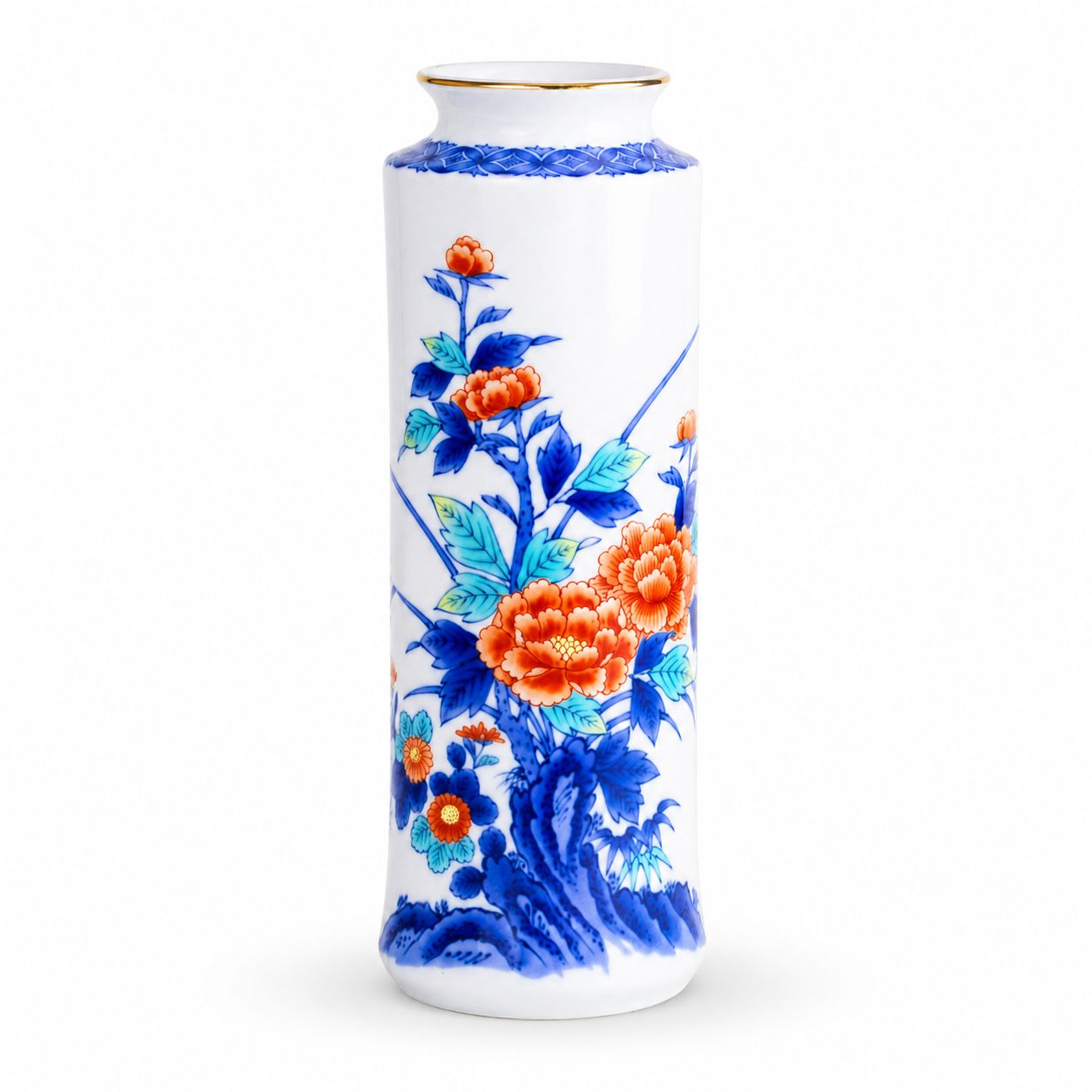
Nabeshima-style vase。
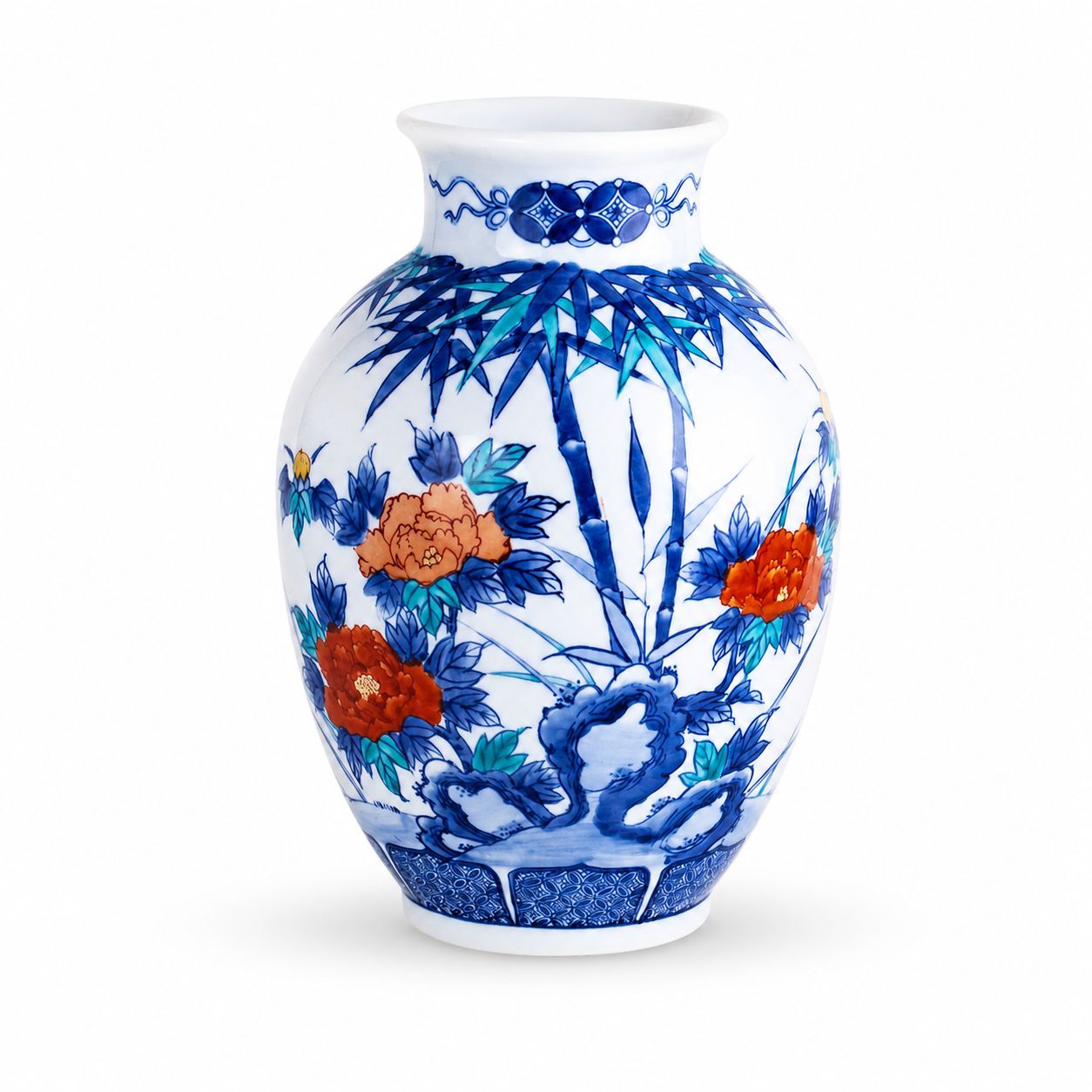
An expression of Nabeshima style carried into the present day.
Enjoying Nabeshima Style in Everyday Life
Although Nabeshima is a formal and prestigious style, it also fits naturally into contemporary dining and interiors. A Nabeshima-style teacup can add a sense of quiet refinement to an everyday table.
Used as a vase, it can bring a poised presence not only to a traditional Japanese room but also to a modern living space.
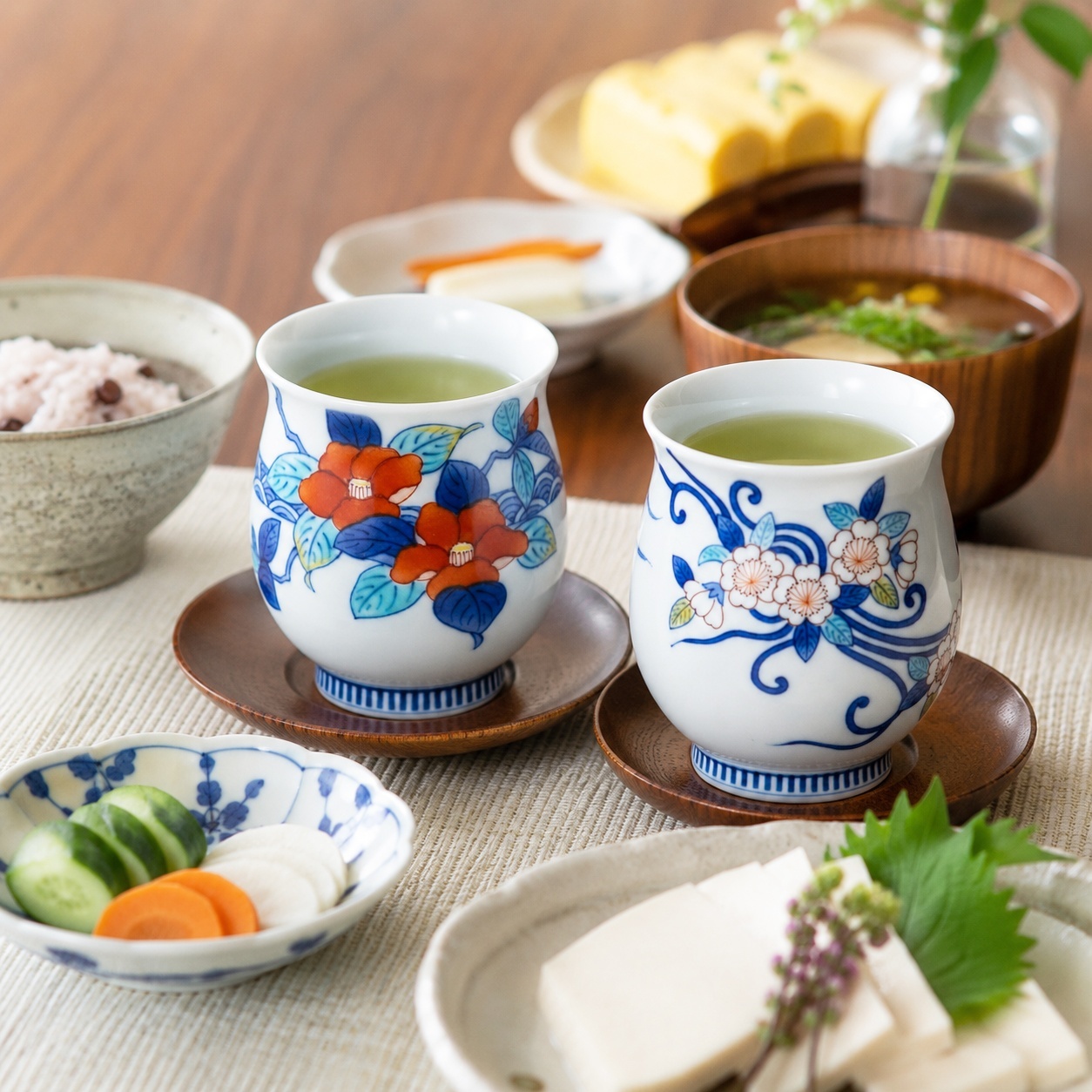
A Nabeshima-style teacup used at the dining table.
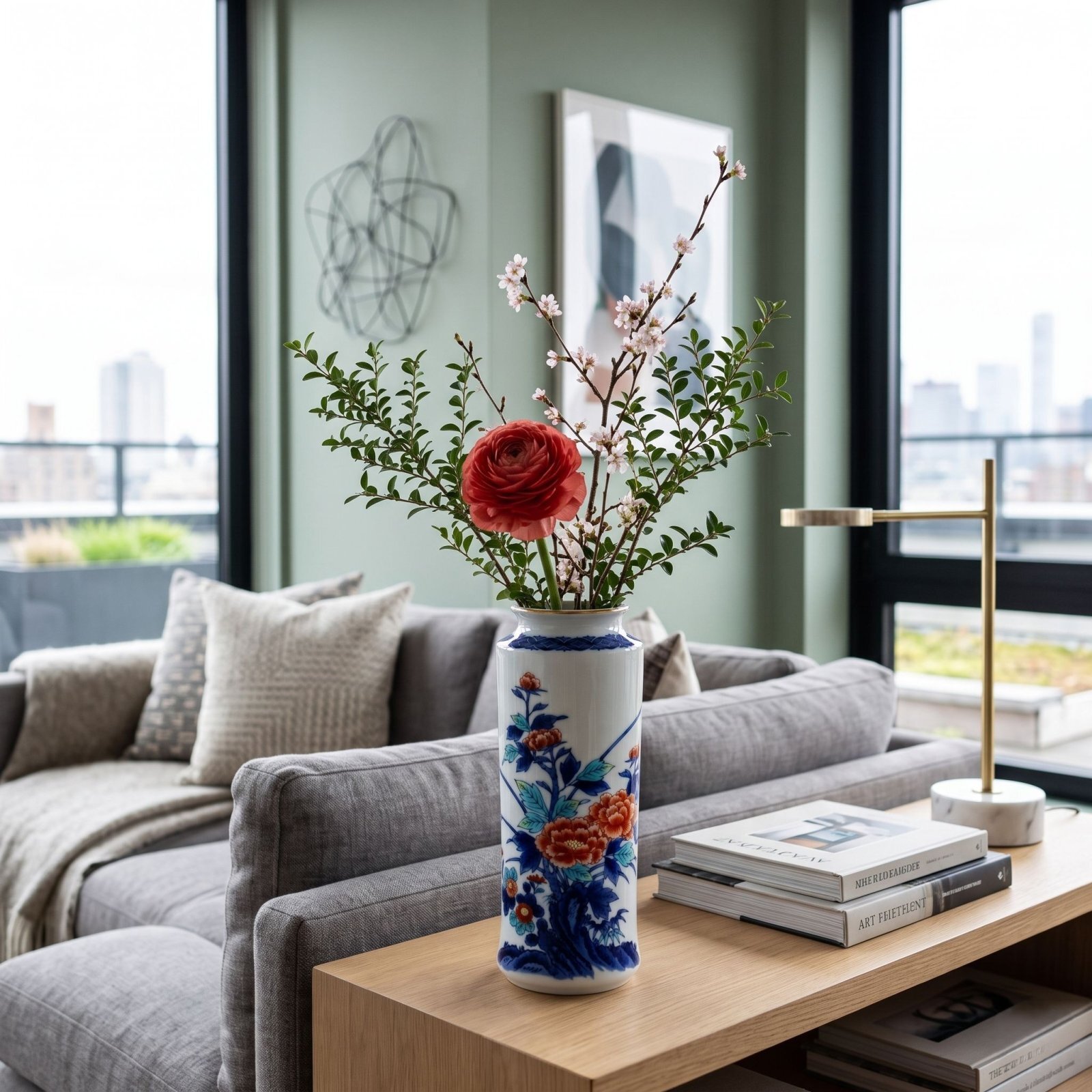
A Nabeshima-style vase incorporated into a contemporary interior.
Differences from Ko-Imari and Kakiemon Styles
Among the three major styles of Arita ware, Ko-Imari is known for lavish decoration using akae enamels and gold, while Kakiemon is distinguished by refined designs that make effective use of white porcelain space.
Nabeshima differs from both in its emphasis on the perfection and dignity expected of presentation ware. Rather than competing in splendor, it seeks harmony throughout the entire vessel—from its form and patterns to the finishing of the underside.
A simple way to understand the distinction is: Ko-Imari emphasizes “splendor,” Kakiemon the “beauty of white space,” and Nabeshima the “dignity of presentation ware.”
Summary | Nabeshima Style: Arita Porcelain Refined to the Highest Level
Nabeshima style is a major tradition associated with Arita porcelain, rooted in presentation wares produced at the official kiln of the Nabeshima domain. Crafted with exceptional skill at the domain kiln in Okawachiyama, these pieces were used as prestigious gifts for the shogun’s household and feudal lords.
Iro-Nabeshima, Sometsuke Nabeshima, comb-patterned foot rings, and carefully balanced compositions all reveal an aesthetic of meticulous craftsmanship. Its great appeal lies not merely in decoration, but in the quiet, poised dignity that defines Nabeshima style.
Nabeshima-Style Ware at Japanese Pottery
At Japanese Pottery, we introduce refined Arita and Imari ware in the Nabeshima tradition, including Iro-Nabeshima, Sometsuke Nabeshima, vases, and teacups. Enjoy the poised beauty of Nabeshima style at the dining table or as part of your interior décor.
Visit Japanese Pottery