Japanese pottery ceramics souvenir in Tokyo Japan
Font size:
Shopping Cart
-
Your cart is empty.
Categories
Shop Manager Profile
Arita Ware Encyclopedia
We introduce the history, styles, techniques, and motifs of Arita ware from the perspective of a specialist retailer.
What Is Kakiemon Style? The Beauty of White Space in Arita Porcelain

A coffee cup and saucer made by the Kakiemon kiln. The generous white space and delicate painting are particularly striking.
Kakiemon style is one of the signature decorative styles of Arita porcelain. It features elegantly painted birds, flowers, and plants, while allowing the beauty of the white porcelain and its open spaces to shine. Unlike the richly ornamented Ko-Imari style, which often uses abundant overglaze colors and gold, Kakiemon style finds quiet elegance and dignity even in the areas deliberately left undecorated.
What Is Kakiemon Style?
Kakiemon style developed as a form of polychrome porcelain in Arita during the Edo period. Building on the akae overglaze-enamel techniques and artistic sensibility associated with the first Sakaida Kakiemon, the style became known for refined decoration that makes effective use of white porcelain.
Its appeal goes beyond the beauty of individual motifs. Rather than filling every surface with patterns, flowers, birds, and plants are arranged against areas of unpainted white porcelain, creating a sense of calm and visual depth.
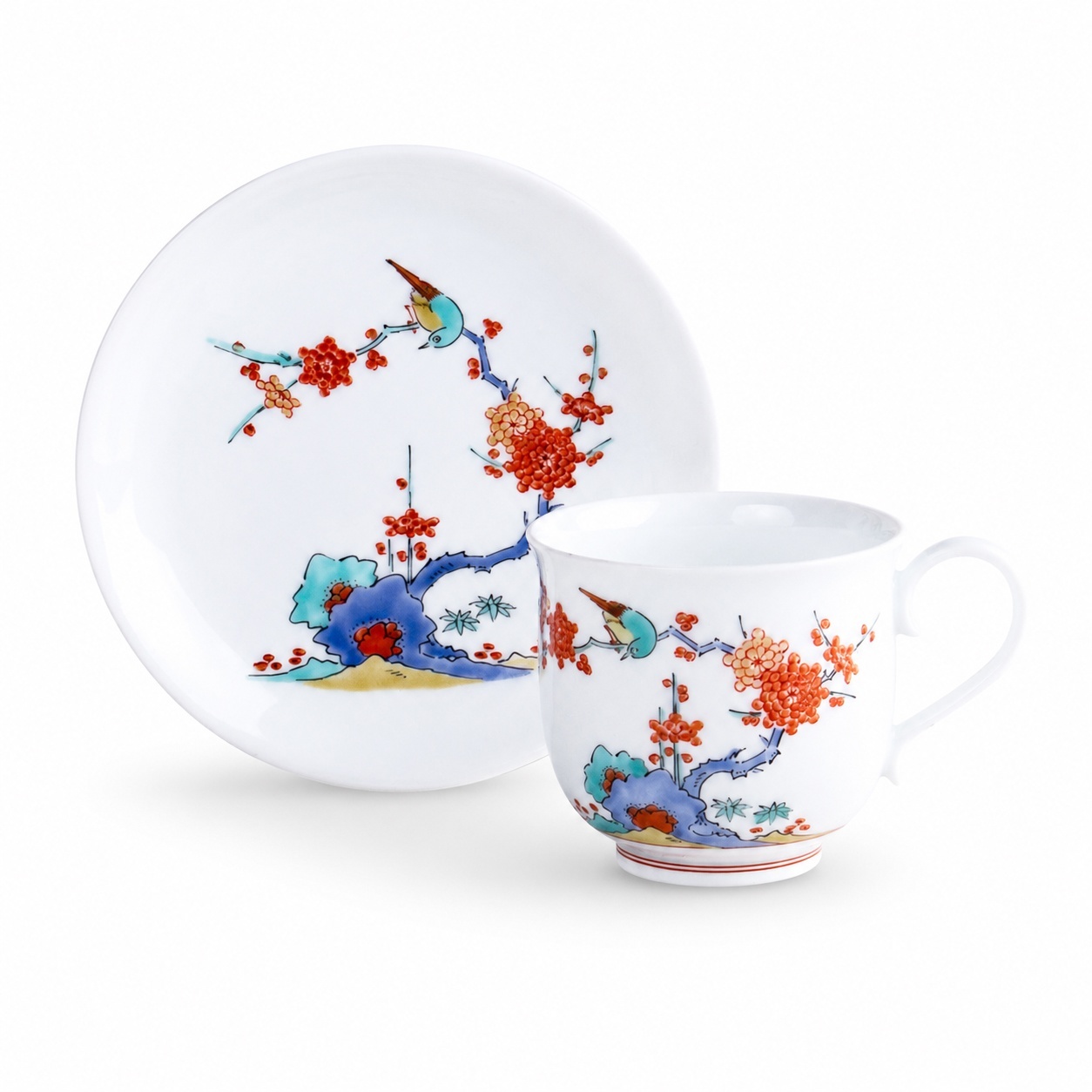
Detail of the designs on a Kakiemon cup and saucer. The balance between painted motifs and white space is central to the style.
The First Sakaida Kakiemon and the Origins of Akae
The name Kakiemon comes from the first Sakaida Kakiemon, who is traditionally credited as one of the earliest Japanese potters to perfect akae, the technique of decorating porcelain with overglaze enamels.
According to tradition, the name “Kakiemon” was inspired by the beautiful red of a ripe persimmon that he succeeded in reproducing on porcelain. The story is still told today as a symbol of the distinctive red associated with Kakiemon ware.
Yet Kakiemon style is not defined by red alone. Although its overglaze palette includes red, green, yellow, and blue, the decoration remains restrained, allowing the beauty of the white porcelain to stand out.
Kakiemon Kiln vs. Kakiemon Style
The terms “Kakiemon kiln” and “Kakiemon style” are often confused. The Kakiemon kiln refers to the pottery associated with the Sakaida Kakiemon family, while Kakiemon style describes a decorative tradition inspired by its aesthetic.
As a result, Kakiemon-style porcelain is also produced by Arita kilns other than the Kakiemon kiln. This article distinguishes works made by the Kakiemon kiln from Kakiemon-style pieces produced elsewhere.

A mark on the underside of a piece made by the Kakiemon kiln.
Key Characteristics of Kakiemon Style
The Beauty of White Space
The most important characteristic of Kakiemon style is its use of white space. Rather than covering the entire surface with decoration, substantial areas of white porcelain are left open, with flowers, plants, and birds arranged within the composition.
This open space makes the painted motifs stand out and gives the piece an elegant, tranquil appearance. Kakiemon style considers not only what to paint, but also where to leave the porcelain unpainted.
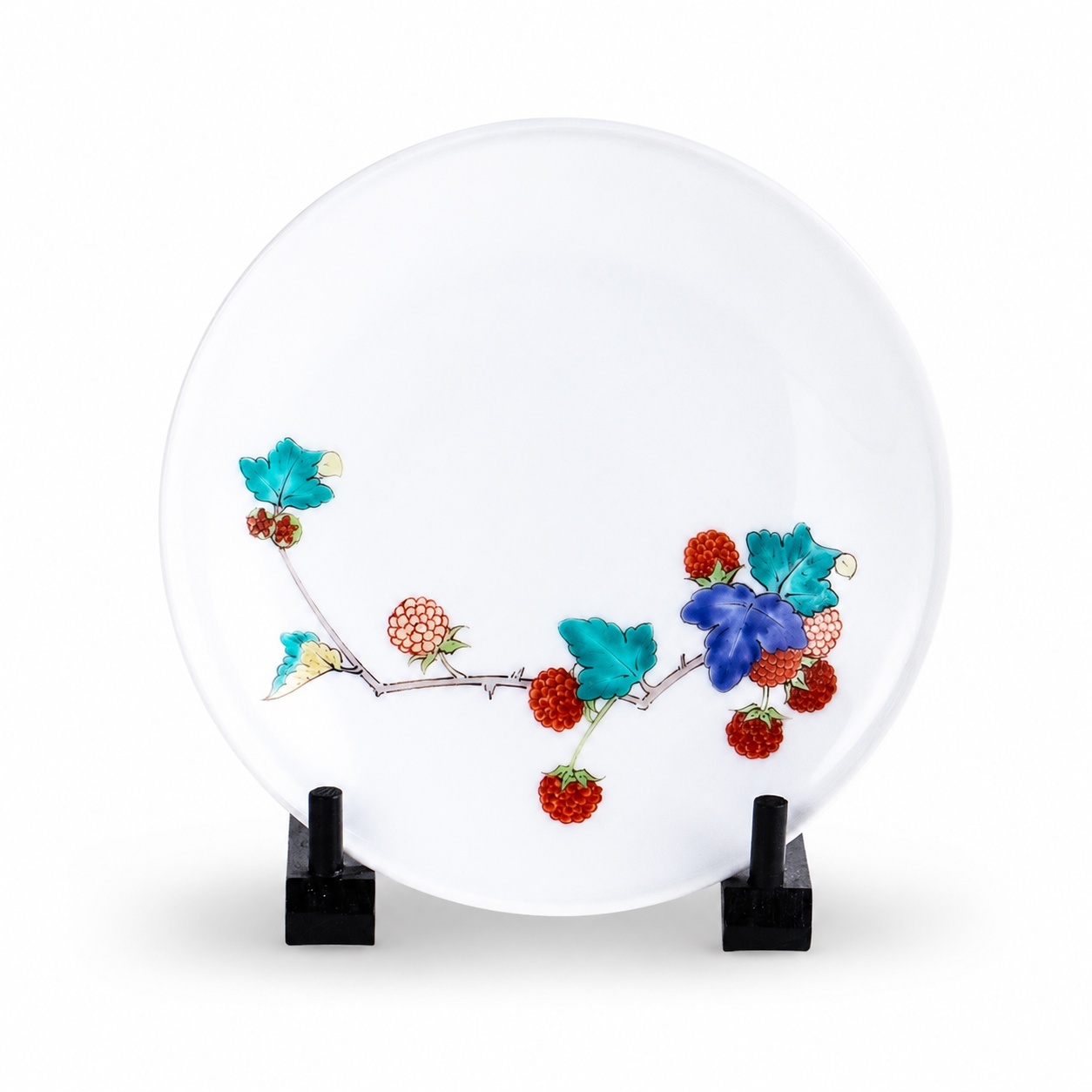
A decorative plate from the Kakiemon kiln that makes generous use of white space.
Asymmetrical Compositions
In Kakiemon style, motifs are sometimes placed deliberately off-center rather than arranged symmetrically. This creates a natural sense of movement and lingering visual interest.
These relaxed, organic compositions can make flowers and birds seem almost alive on the porcelain surface.
Floral and Bird Motifs
Bird-and-flower and botanical motifs are common in Kakiemon style. Flowers, birds, branches, and plants are delicately painted against the white porcelain background.

A Kakiemon-style vase decorated with birds and flowers.
How Kakiemon Differs from Ko-Imari Style
Arita porcelain is often described in terms of three major styles: Ko-Imari, Kakiemon, and Nabeshima. All three are celebrated traditions, but their visual character differs considerably.
Ko-Imari style is known for lavish decoration using colorful akae enamels and gold, often covering much of the vessel. Kakiemon style, by contrast, uses carefully placed floral and bird motifs and broad areas of white porcelain to create a quieter, more refined beauty.
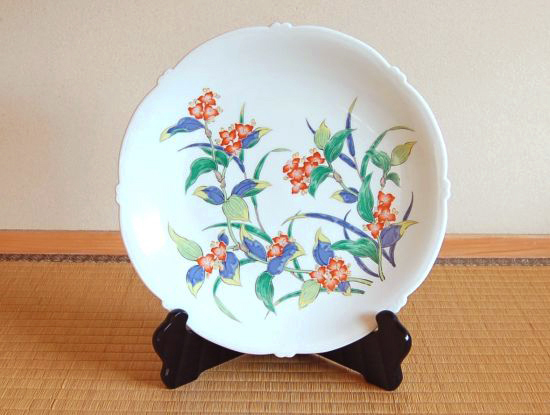
A Kakiemon-style decorative plate with an elegant balance of painted motifs and white space.
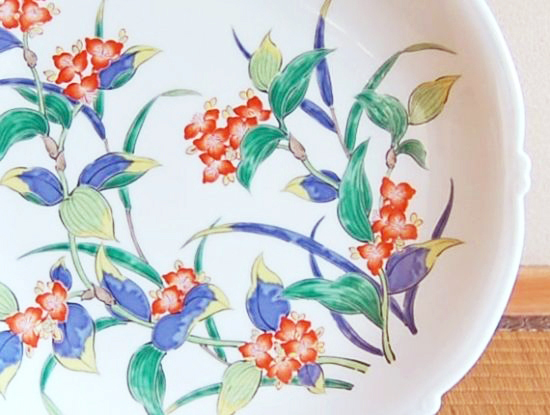
Close-up of the painted design, showing its carefully considered placement.
Kakiemon Style in Europe
During the Edo period, Arita porcelain was exported overseas through the port of Imari. Kakiemon-style polychrome porcelain was particularly admired in Europe for its refined beauty and generous use of white space.
Favored by European royalty and aristocrats, Kakiemon style is also said to have influenced later European porcelain. Its appeal lay not simply in luxury, but in the harmony between decoration and open space.
Kakiemon Style Today
Kakiemon style remains an important part of Arita porcelain today. Alongside works from the Kakiemon kiln itself, other potteries produce pieces inspired by the same aesthetic.
The Kakiemon aesthetic can be found in forms suited to modern life, including coffee cups, shochu glasses, incense burners, vases, and decorative plates. Its ability to complement both Japanese and Western interiors is another part of its appeal.
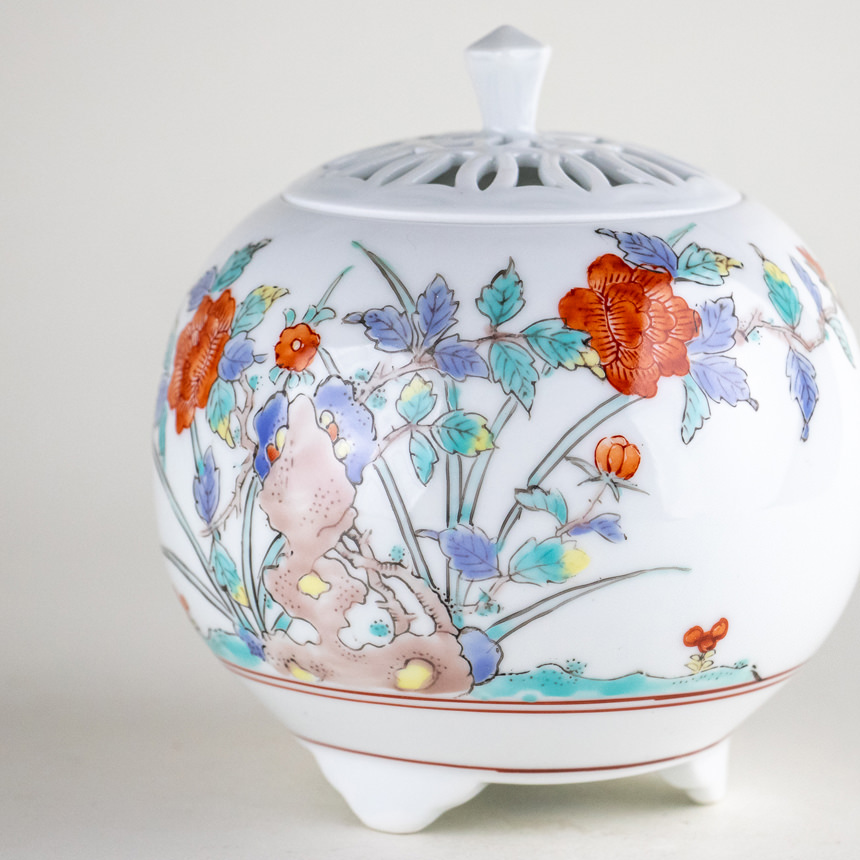
A Kakiemon-style incense burner.
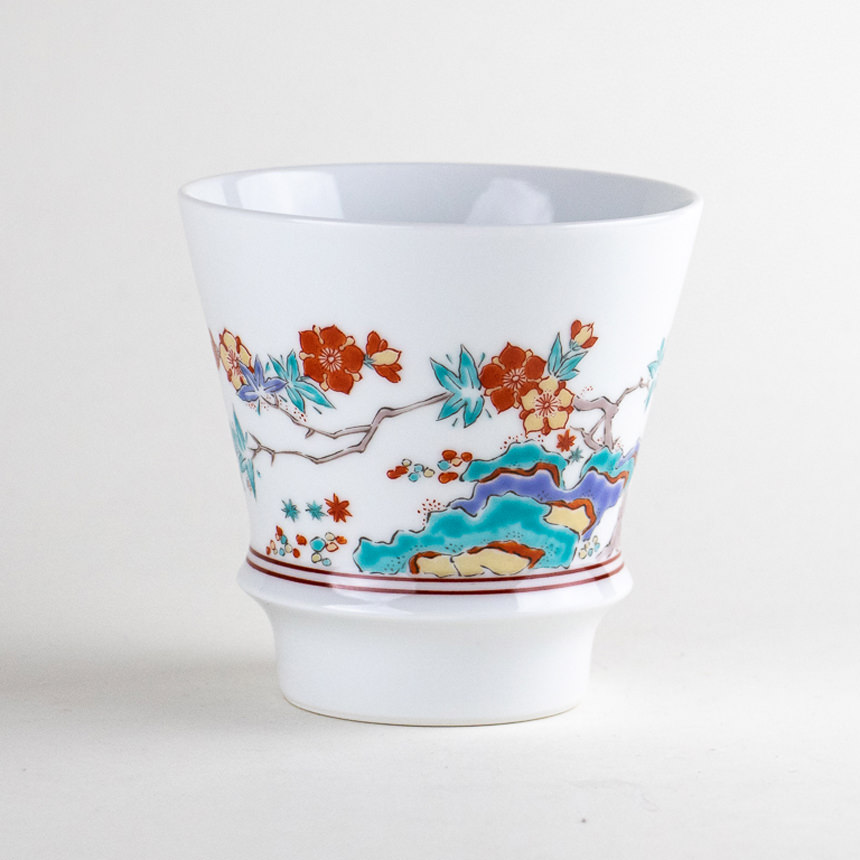
A Kakiemon-style shochu glass.
Enjoying Kakiemon Style in Everyday Life
Kakiemon-style porcelain is not only for display; it can also be enjoyed in daily life. Its white space and refined painting bring a subtle sense of elegance to a table or interior.
Decorative without being overwhelming, these pieces fit naturally into modern homes and can make everyday moments feel a little more special.
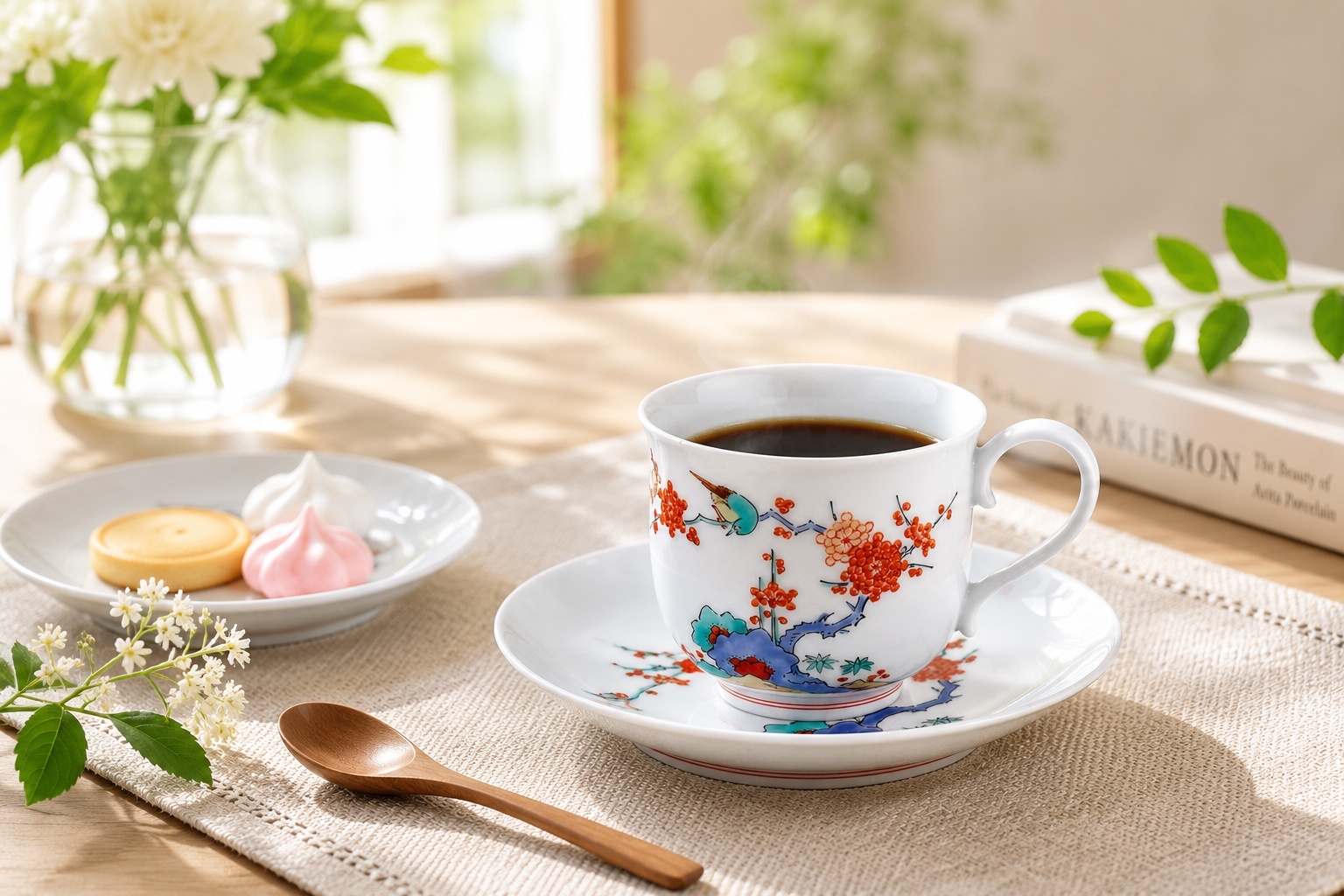
Tea time with a Kakiemon-style coffee cup.
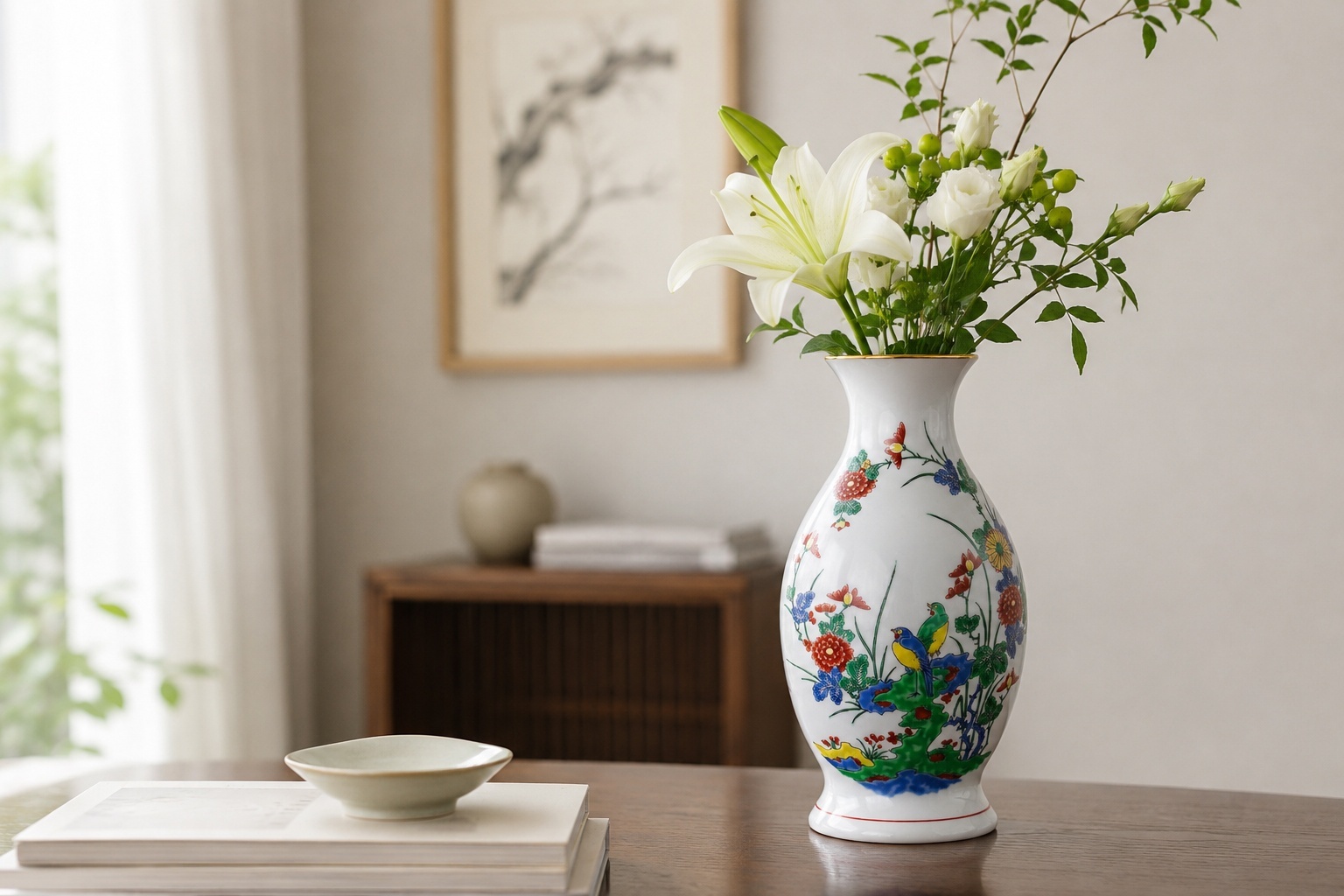
A Kakiemon-style vase displayed in a living space.
Conclusion: Kakiemon Style Turns Empty Space into Beauty
Kakiemon style is a major Arita porcelain tradition that uses the beauty of white space and elegantly painted birds, flowers, and plants. Rooted in the overglaze-enamel techniques and artistic vision associated with the first Sakaida Kakiemon, it was highly regarded overseas during the Edo period.
While Ko-Imari style celebrates lavish ornamentation, Kakiemon style emphasizes tranquility, open space, and refinement. Appreciating the unpainted white porcelain as much as the painted designs reveals the full beauty of this tradition.
Explore Kakiemon-Style Arita Ware
Our shop introduces pieces from the Kakiemon kiln as well as Arita porcelain inspired by Kakiemon aesthetics. Discover elegant tableware and decorative pieces that bring the beauty of white porcelain and delicate painting into your home.
Visit Our Japanese Pottery Shop