Japanese pottery ceramics souvenir in Tokyo Japan
Font size:
Shopping Cart
-
Your cart is empty.
Categories
Shop Manager Profile
Arita Ware Encyclopedia
Explore the history, styles, techniques, and motifs of Arita ware, explained by a specialist retailer.
What Is Ko-Imari Style? The Opulent Decorative Tradition of Arita Ware
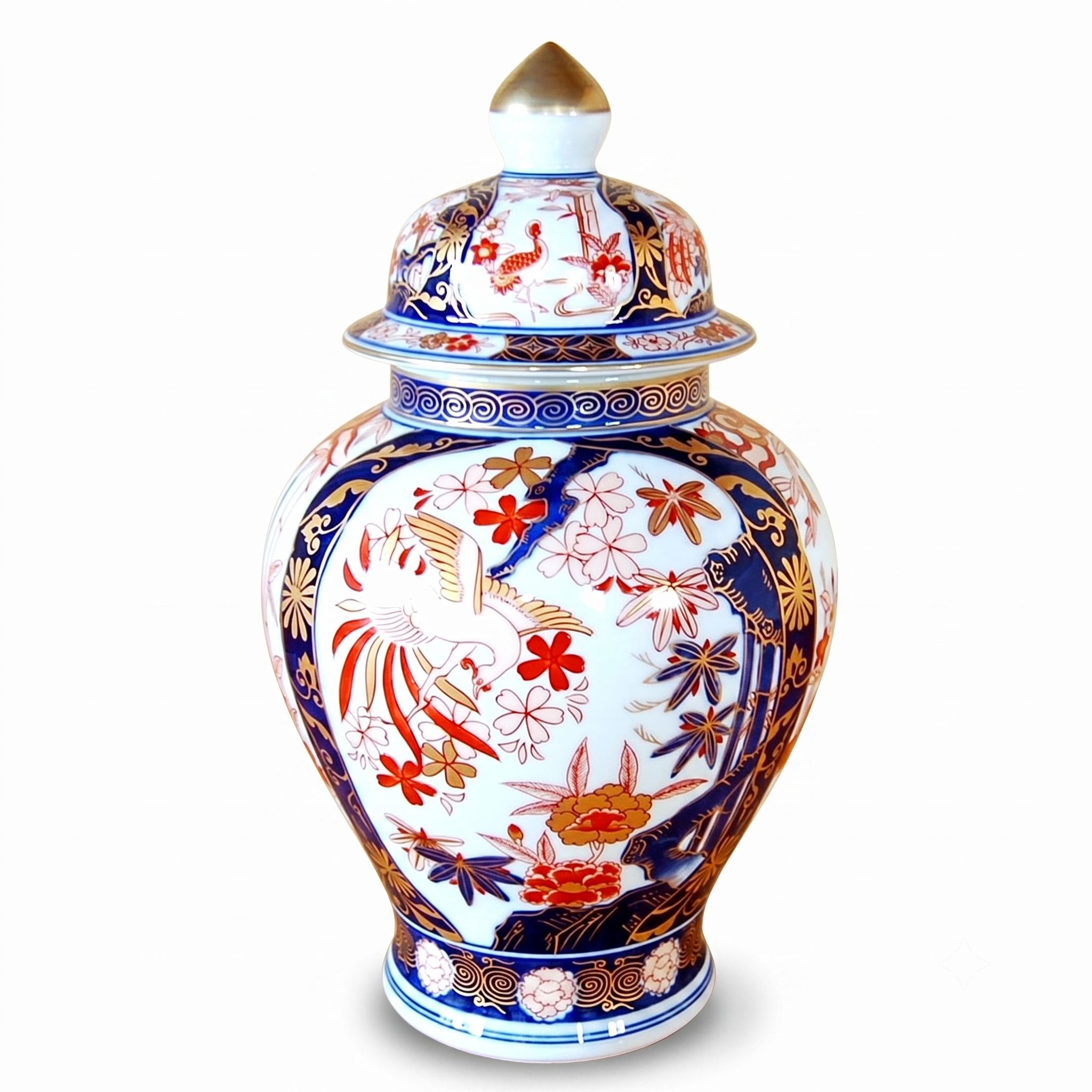
A lidded jar in Ko-Imari style, combining blue-and-white painting, colorful overglaze enamels, and gold decoration.
Ko-Imari style is one of the three major styles of Arita ware. It is known for its lavish combination of cobalt-blue underglaze designs, colorful Akae overglaze painting, and brilliant gold decoration. Dense compositions, auspicious motifs, and striking contrasts of red, blue, and gold are its hallmarks. This article focuses on Ko-Imari as a decorative style carried forward in contemporary Arita ware.
What Is Ko-Imari Style?
Ko-Imari is one of the best-known decorative styles in contemporary Arita ware. The three major styles are Ko-Imari, Kakiemon, and Nabeshima.
Of the three, Ko-Imari is especially ornate. On a white porcelain base, cobalt-blue underglaze painting, vivid Akae enamels, and gold accents come together to cover the surface with elaborate designs.
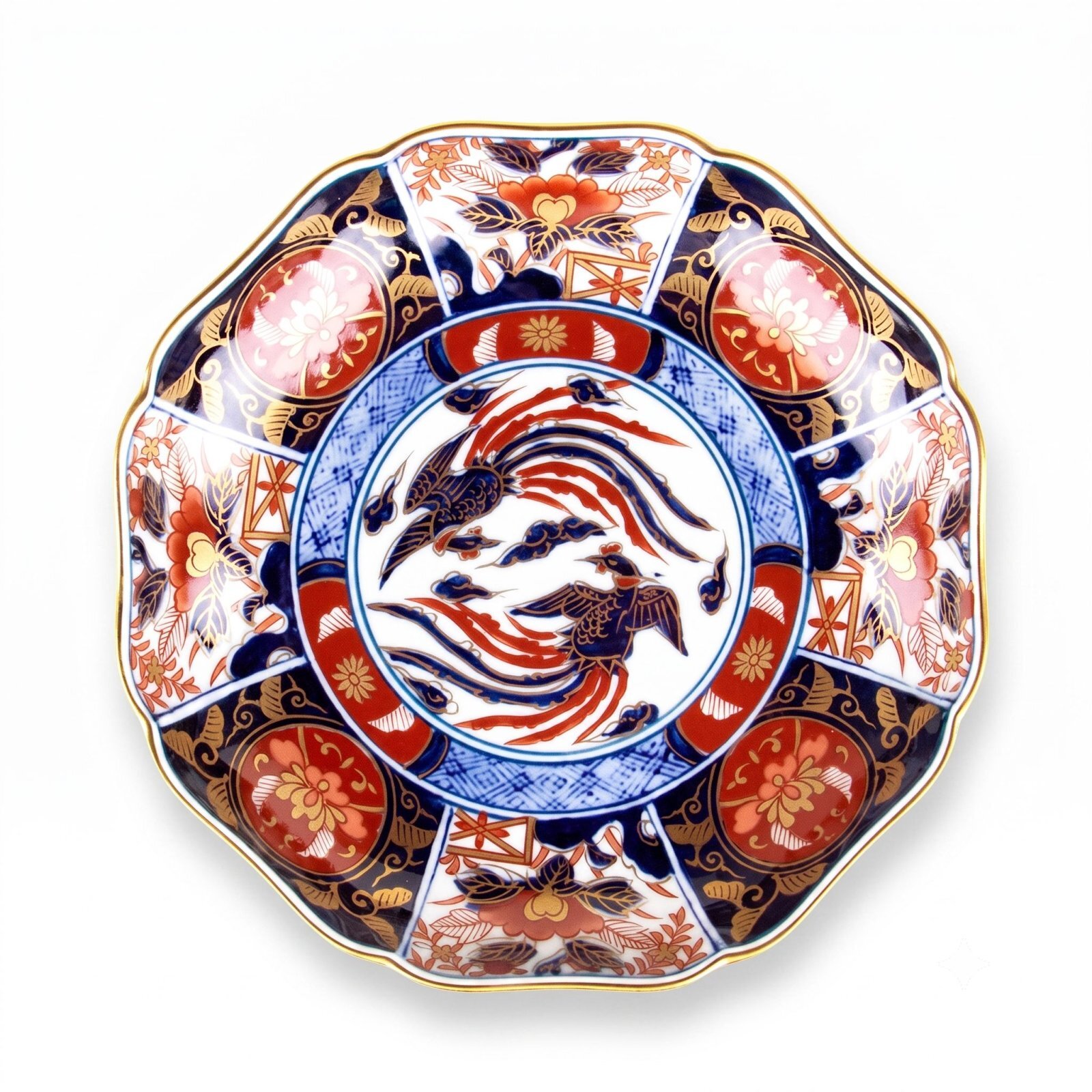
A decorative plate in Ko-Imari style, featuring a striking combination of red, blue, and gold.
The Difference Between Ko-Imari and Ko-Imari Style
The terms “Ko-Imari” and “Ko-Imari style” are often confused.
As an antique category, Ko-Imari generally refers to porcelain made in Arita during the Edo period and shipped through the port of Imari. Ko-Imari style, by contrast, describes a decorative tradition that carries the elaborate designs of Edo-period Imari porcelain into the present.
Therefore, the word “Ko-Imari” in a modern product name does not necessarily indicate an Edo-period antique. It often describes contemporary Arita ware made in Ko-Imari style.
This article discusses the Ko-Imari decorative style found in modern Arita ware, rather than antique Ko-Imari porcelain.
The Historical Origins of Ko-Imari Style
The roots of Ko-Imari style lie in the flourishing culture of the Edo period. During the Genroku era in particular, prosperous merchant culture and the tastes of feudal lords encouraged demand for luxurious tableware, helping richly colored porcelain with Akae enamels and gilding to develop.
Ko-Imari's appeal goes beyond visual extravagance. Blue-and-white painting, colorful enamels, gold decoration, and auspicious motifs work in harmony to create pieces suited to celebrations and formal settings.
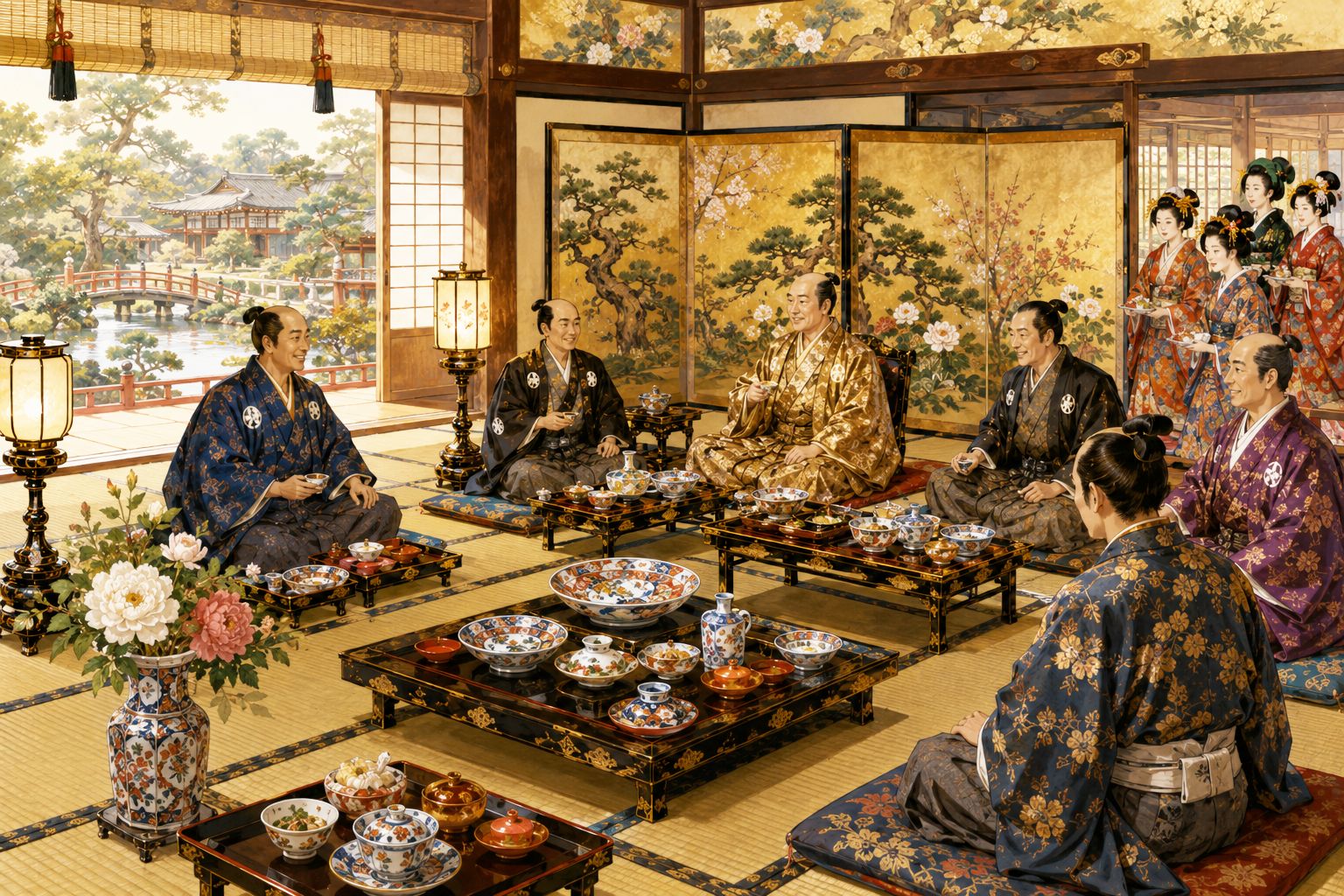
An illustration inspired by a lavish Genroku-period banquet, evoking the splendor of Ko-Imari style.
Five Distinctive Features of Ko-Imari Style
Knowing a few defining characteristics makes Ko-Imari style easier to recognize. Here are five key features.

A decorative plate illustrating five hallmarks of Ko-Imari style: underglaze blue, Akae enamels, gilding, auspicious motifs, and an all-over composition.
1. Cobalt-Blue Underglaze Painting
Cobalt-blue underglaze painting, known as Sometsuke, provides an important visual anchor in Ko-Imari designs. The blue lends depth and balance to the vivid colors of Akae and the brilliance of gold.
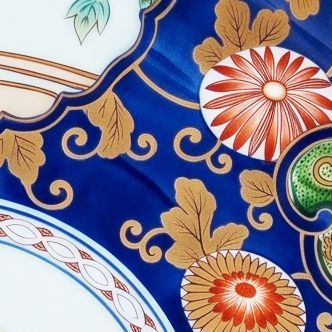
Cobalt-blue Sometsuke gives structure and contrast to the elaborate Ko-Imari composition.
2. Vivid Akae Overglaze Colors
Akae is central to the brilliance of Ko-Imari style. Bright overglaze enamels, often emphasizing red, give the porcelain a festive and lively appearance.
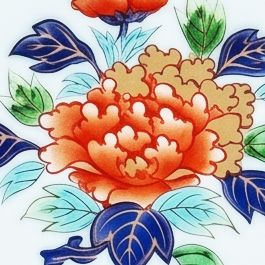
The vivid colors of Akae are one of the defining attractions of Ko-Imari style.
3. The Brilliance of Gold Decoration
Gold decoration lends porcelain a luxurious, special character. Combined with Akae and Sometsuke, it creates the sumptuous appearance associated with Ko-Imari style.

Gold accents are a hallmark of Ko-Imari's opulent decoration.
4. Auspicious Motifs
Ko-Imari designs frequently incorporate symbols of good fortune, including peonies, chrysanthemums, birds, phoenixes, scrolling vines, and collections of treasures. Such motifs express wishes for prosperity, longevity, and happiness.
The motifs vary from piece to piece, but their combination with rich colors helps create Ko-Imari's celebratory character.
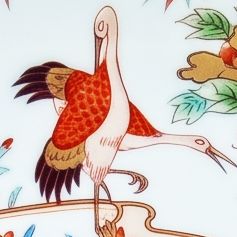
A bird motif. Auspicious imagery is common in Ko-Imari decoration.
5. Elaborate All-Over Compositions
A major feature of Ko-Imari style is its tendency to fill the porcelain surface with intricate patterns rather than leave large areas blank. Designs extend across the center, rim, and surrounding panels, revealing different details from different angles.
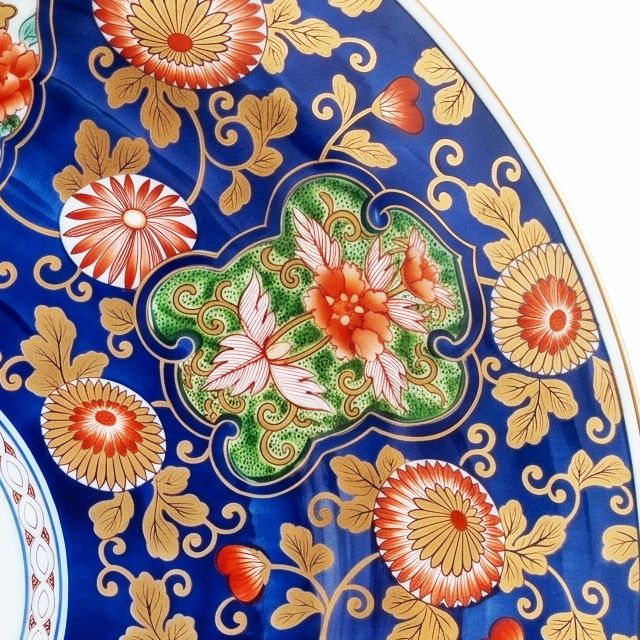
Rich patterns fill the surface, creating the distinctive splendor of Ko-Imari style.
How Ko-Imari Beauty Spread Around the World
During the Edo period, porcelain made in Arita was transported through the port of Imari to destinations throughout Japan and overseas. Known abroad as “Imari” porcelain, it became highly prized in Europe.
Elaborate Ko-Imari pieces with Akae colors and gold decoration were treasured in European palaces and aristocratic homes. This international admiration is one reason the style retains its special status today.
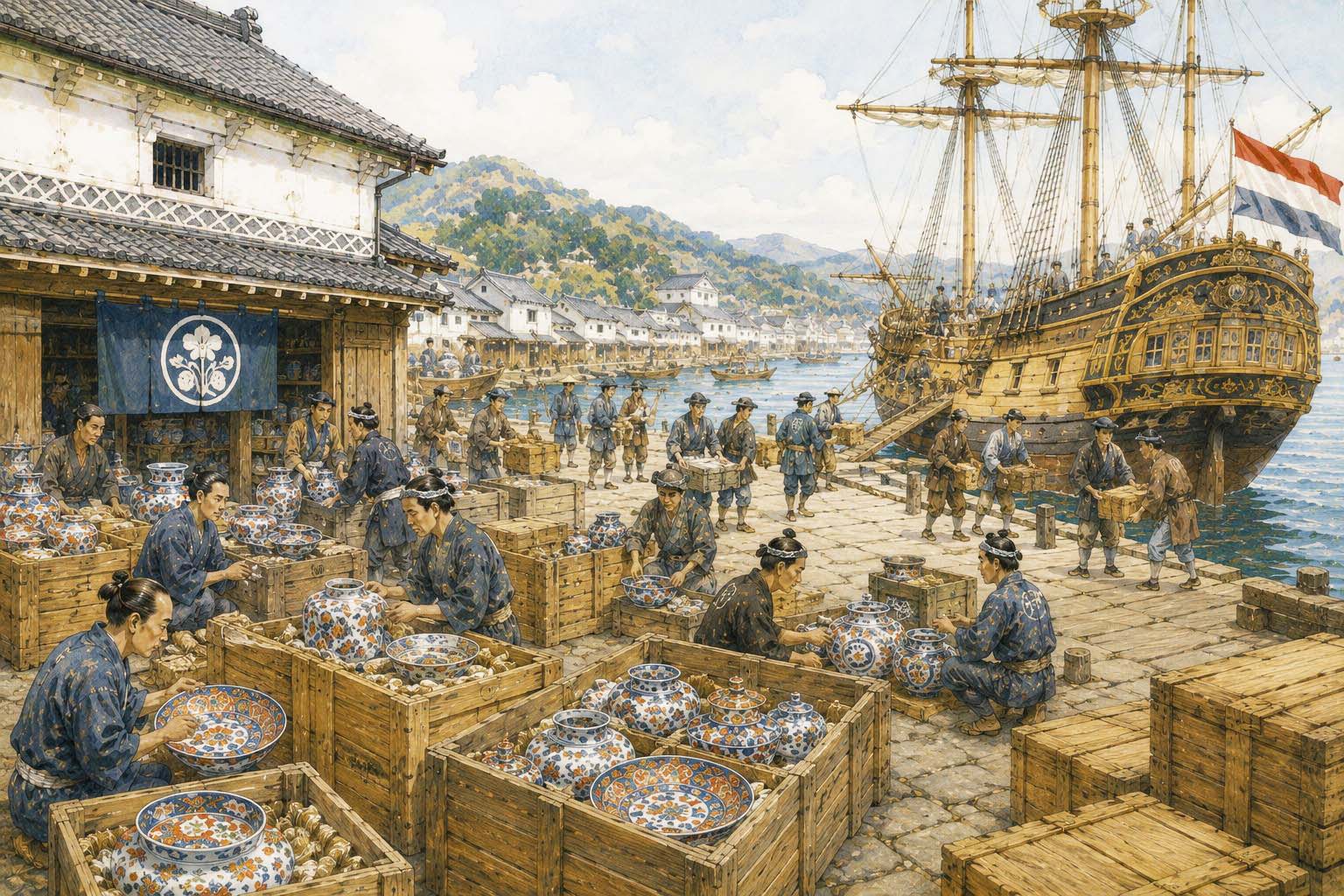
An illustration of porcelain being shipped from Imari to Japan and overseas.
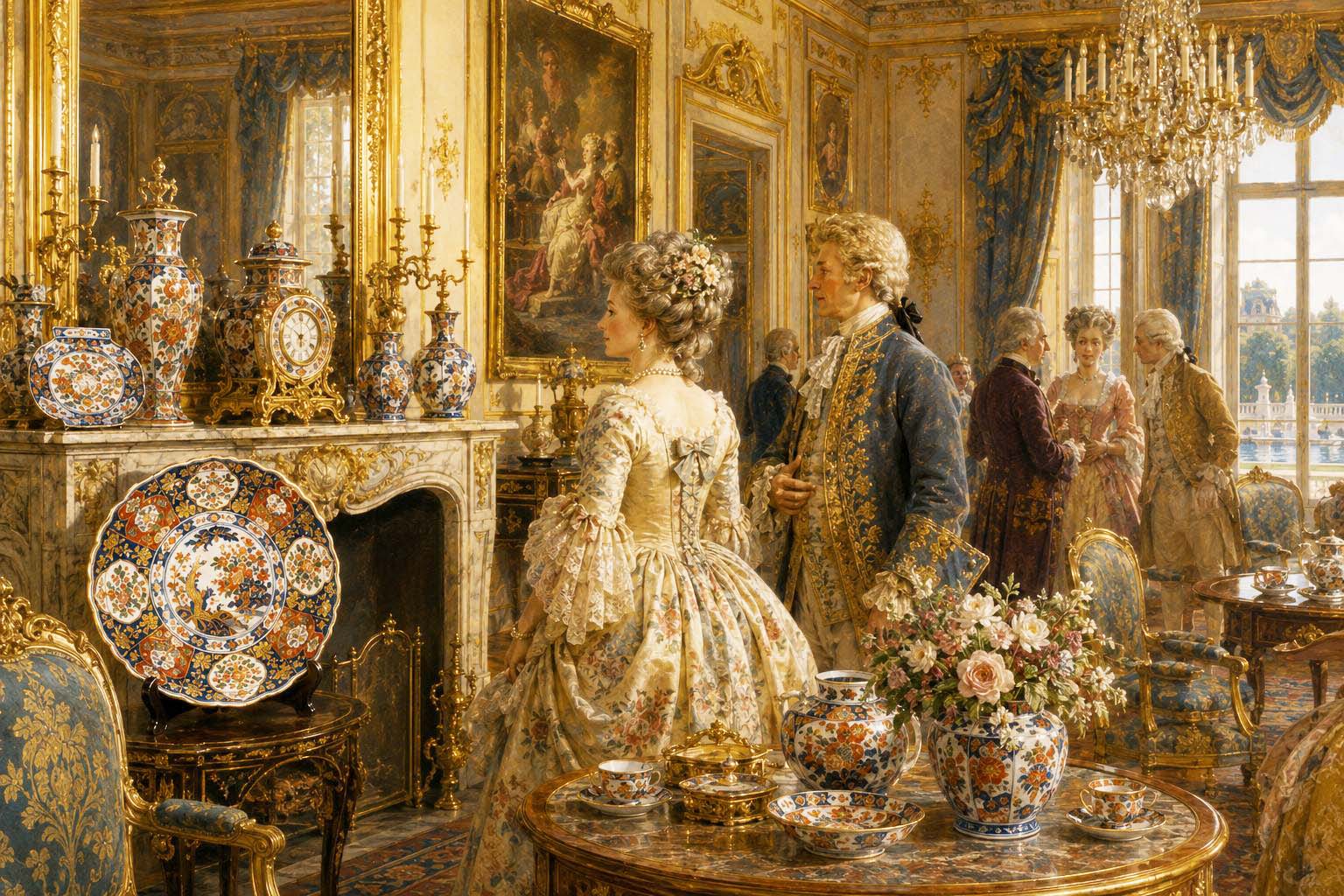
An illustration evoking Ko-Imari porcelain admired by European aristocrats.
Ko-Imari, Kakiemon, and Nabeshima: How Do They Differ?
The three major styles of Arita ware embody different ideas of beauty: Ko-Imari favors lavish decoration, Kakiemon celebrates open white space, and Nabeshima is distinguished by the refined dignity of porcelain made for presentation to the ruling elite.
| Style | First Impression | Main Characteristics | Aesthetic Appeal |
|---|---|---|---|
| Ko-Imari Style | Lavish and ornate | Combines blue underglaze painting, Akae enamels, and gilding in richly decorated compositions | Festive splendor suited to celebrations |
| Kakiemon Style | Elegant and graceful | Uses white space with restrained floral and bird motifs | Beauty of open space and quiet elegance |
| Nabeshima Style | Precise and dignified | Developed as presentation porcelain, with meticulously balanced forms and patterns | Refinement and exceptional craftsmanship |
Ko-Imari Style in Contemporary Arita Ware
Ko-Imari continues to be a representative design tradition of Arita ware. Its motifs appear on vases, decorative plates, bowls, coffee cups, and many other pieces.
Modern Ko-Imari style preserves a decorative vocabulary rather than one fixed production method. Techniques differ between pieces; here, our focus is on the visual characteristics of the style.

A vase decorated in Ko-Imari style.
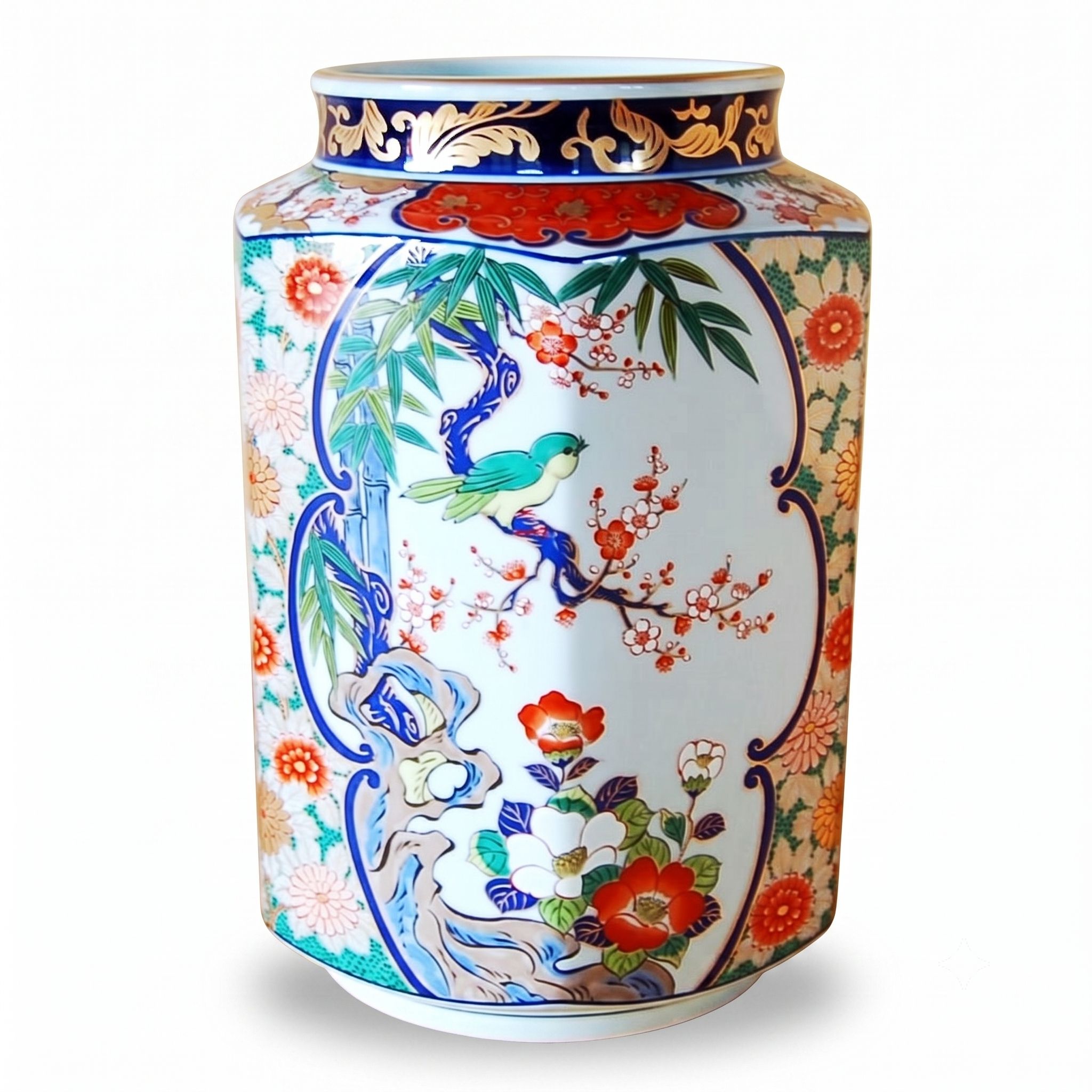
Rich decorative patterns carried forward into contemporary porcelain.
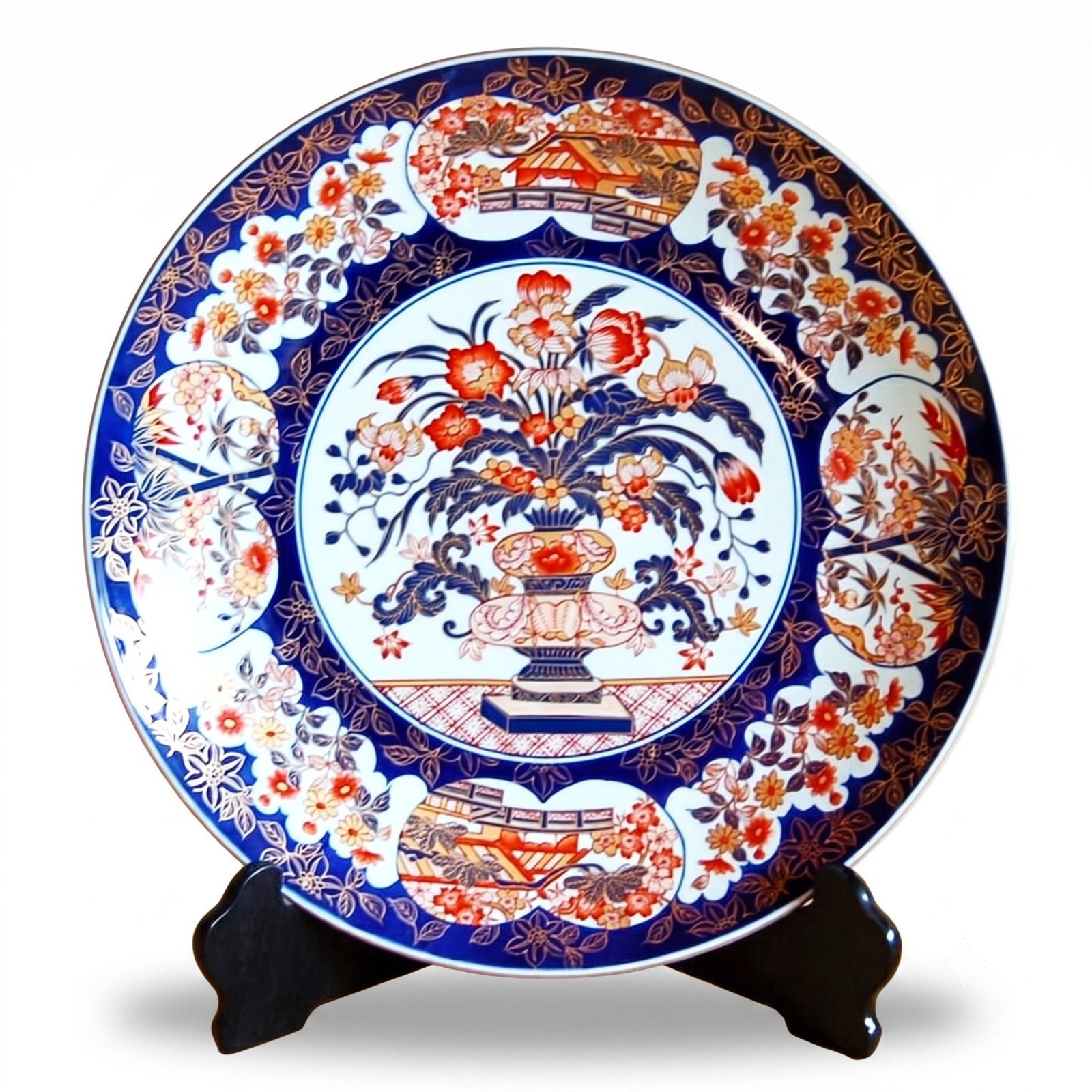
A decorative plate in Ko-Imari style.
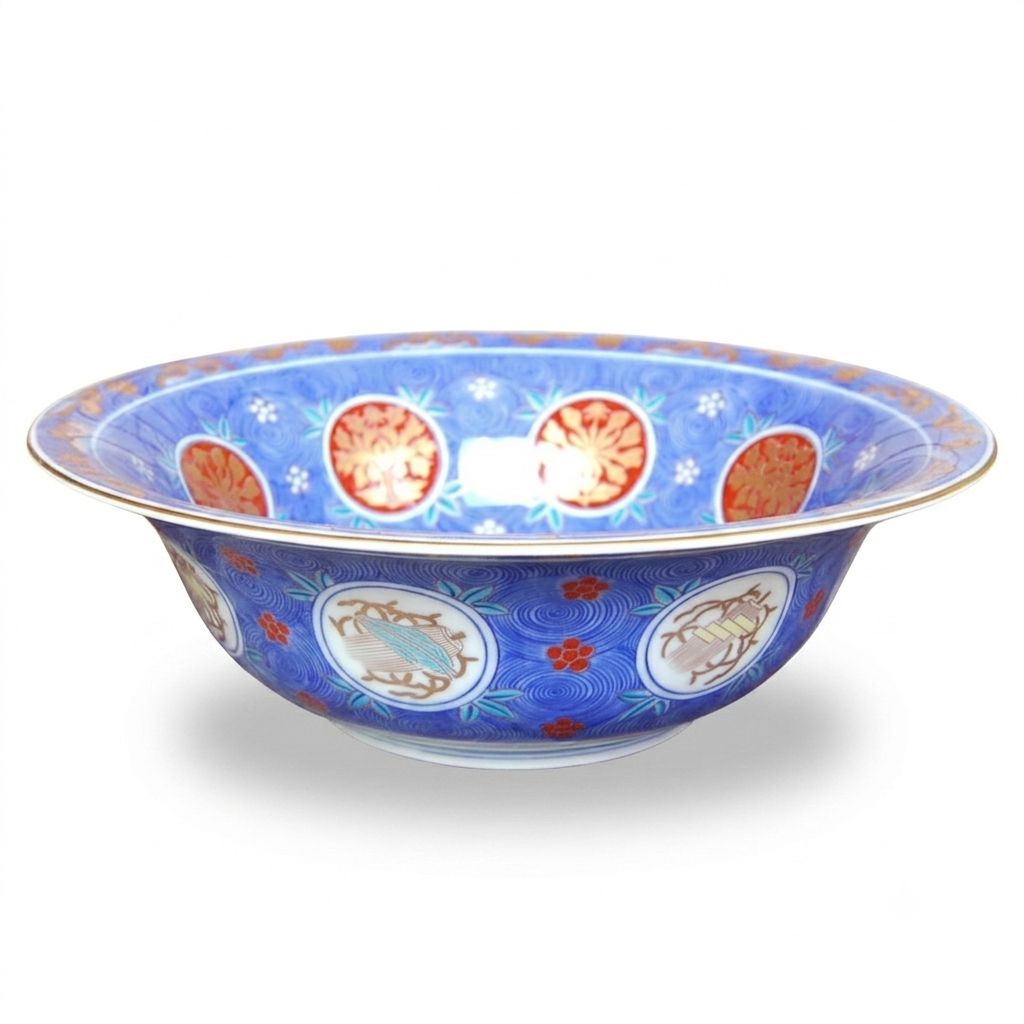
A large serving bowl in Ko-Imari style.
Ko-Imari Style in Modern Interiors and Everyday Life
Ko-Imari style looks striking not only in traditional Japanese rooms but also in contemporary interiors. Decorative plates and jars add a vivid focal point to a space.
Coffee cups and tableware in this style can also bring a special touch to daily life. The brilliant reds, blues, and golds are particularly well suited to New Year celebrations and festive meals.

A Ko-Imari decorative plate displayed in a modern interior.

A coffee cup and saucer that complement a contemporary setting.
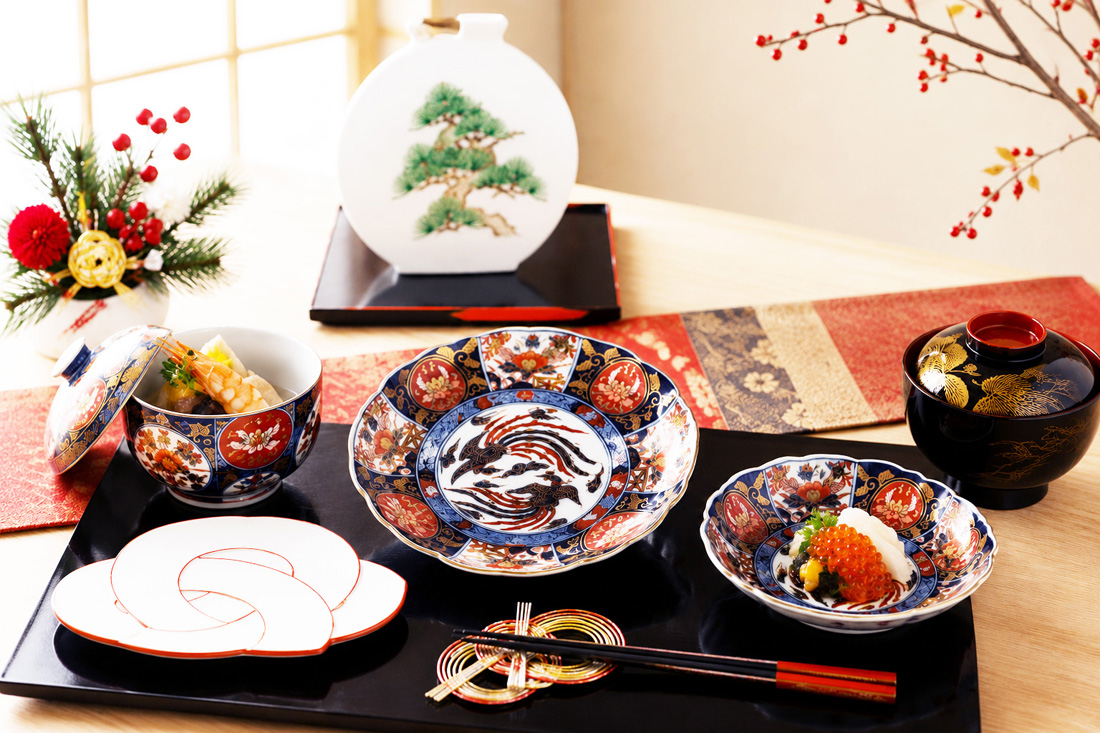
Ko-Imari tableware is ideal for New Year and other celebratory meals.
Conclusion: Enjoying the Splendor of Ko-Imari Style
Ko-Imari style is an opulent Arita ware tradition combining blue-and-white painting, Akae overglaze colors, and gold decoration. Auspicious motifs and richly filled compositions give it a festive presence suited to special occasions and elegant settings.
Unlike antique Ko-Imari porcelain, contemporary Ko-Imari style refers to designs inspired by the Edo-period tradition. Understanding how Ko-Imari, Kakiemon, and Nabeshima differ offers a deeper appreciation of the beauty and diversity of Arita ware.