Japanese pottery ceramics souvenir in Tokyo Japan
Font size:
Shopping Cart
-
Your cart is empty.
Categories
Shop Manager Profile
Arita Ware Dictionary
Explore the history, styles, techniques, and motifs of Arita ware, explained clearly from the perspective of a specialist pottery shop.
What Is Ko-Imari? Arita Porcelain That Traveled the World During the Edo Period
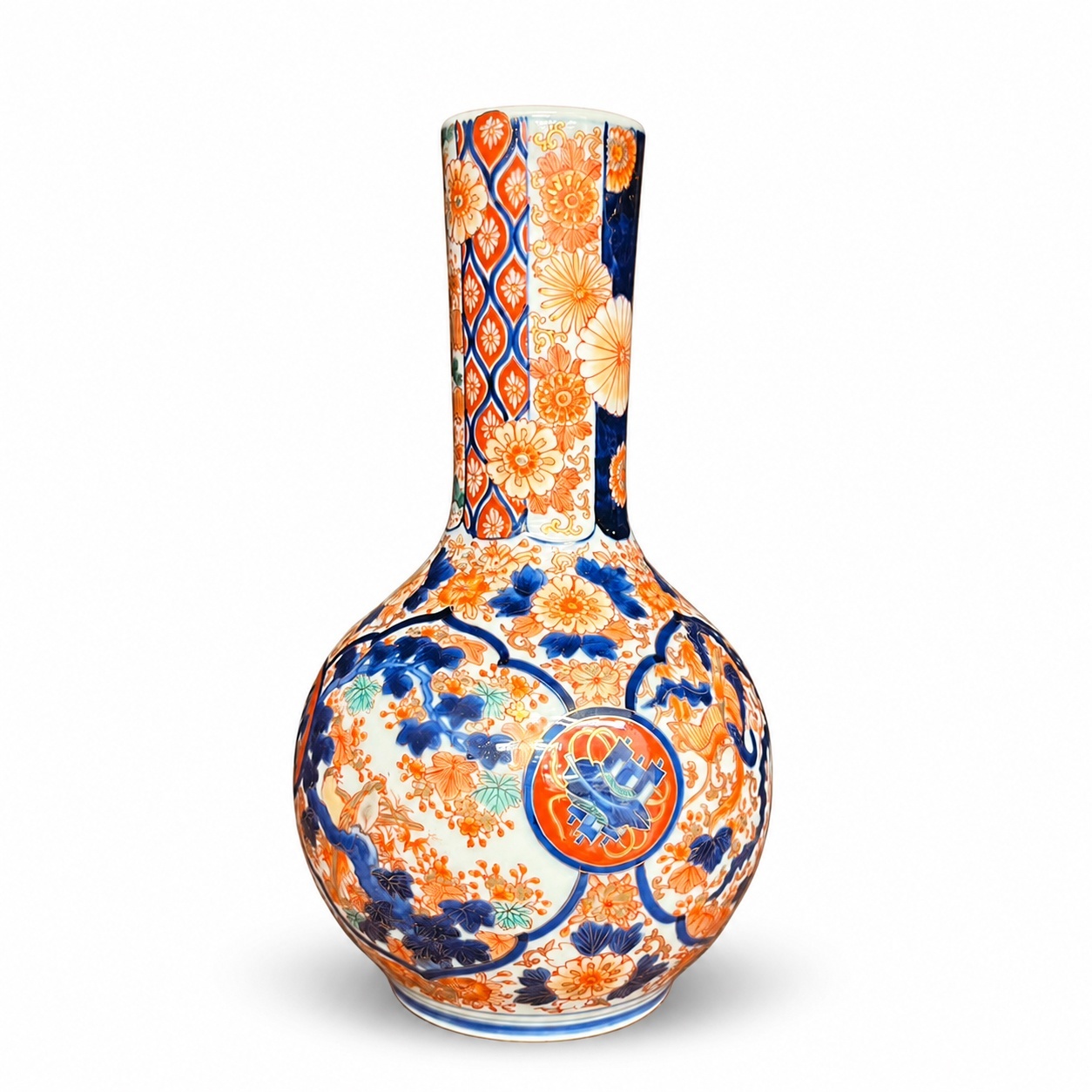
A Ko-Imari vase decorated with both underglaze blue and overglaze enamels.
Ko-Imari generally refers to porcelain made in Arita during the Edo period (1603–1868) and shipped through the port of Imari. Although its name includes “Imari,” much of this porcelain was actually produced in Arita, Saga Prefecture. Because Arita porcelain was transported through Imari to destinations in Japan and overseas, it became known internationally as “Imari.”
Ko-Imari: Arita Porcelain from the Edo Period
Rather than referring primarily to pottery made in the town of Imari, the term Ko-Imari is commonly used for porcelain produced in Arita during the Edo period.
Japan's first porcelain was produced in Arita around 1616. Over time, artisans developed a wide range of decorative techniques, including Sometsuke (underglaze blue), Akae (overglaze enamels), Some-Nishiki (a combination of the two), and gold decoration. Today, many of these Edo-period Arita porcelain pieces are classified as antiques and called Ko-Imari.

Illustration of pottery forming in an Arita workshop during the Edo period.
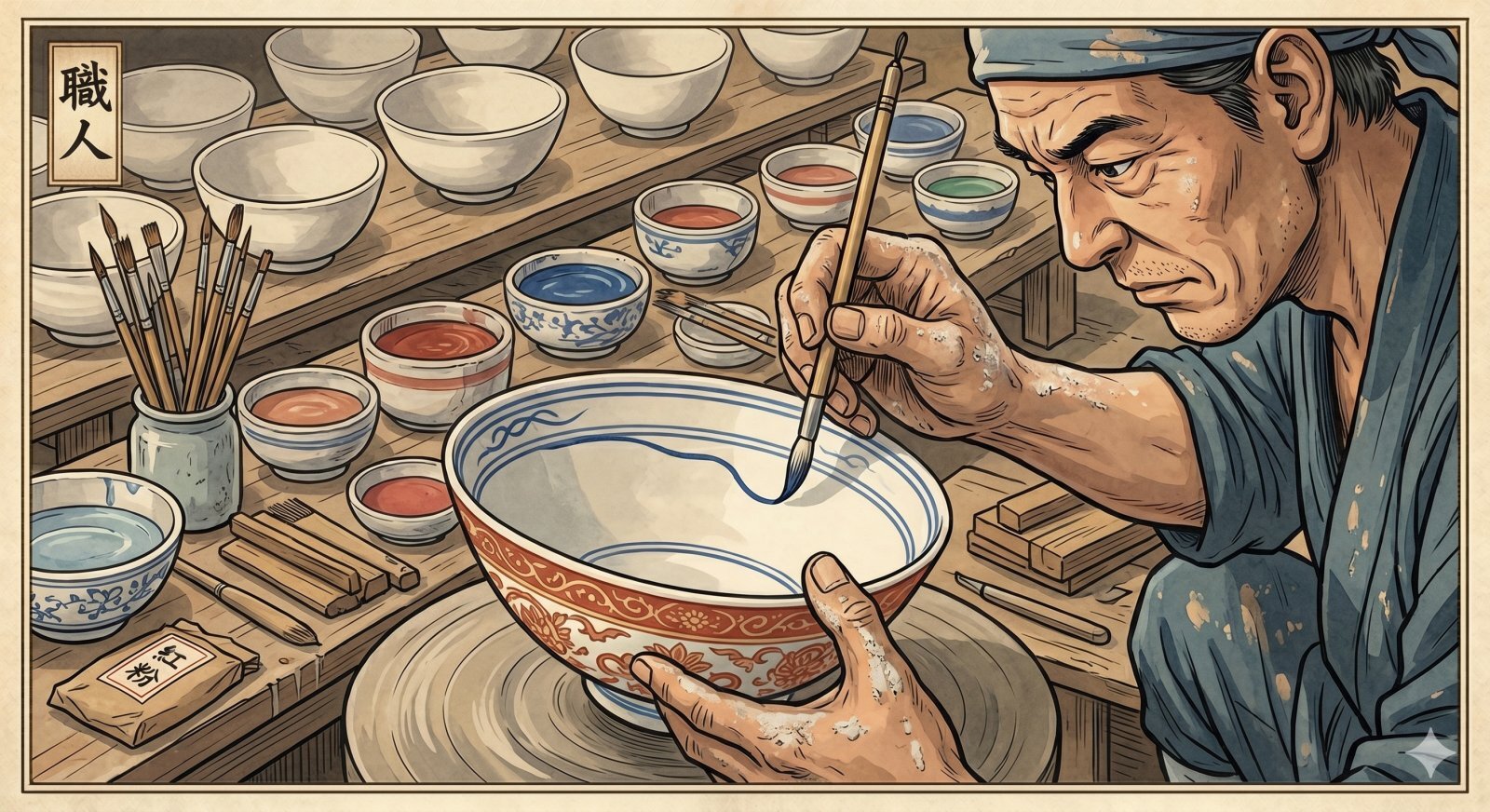
Illustration of the porcelain painting process.
Why Was Arita Porcelain Called “Imari”?
The relationship between Arita and Imari is essential to understanding Ko-Imari. Arita was the center of porcelain production, while Imari was the port from which the finished wares were shipped.
During the Edo period, porcelain made in Arita was transported to Imari Port and shipped to destinations throughout Japan. Some pieces were also exported overseas. Because these wares departed from Imari, they came to be known abroad as “Imari” porcelain.
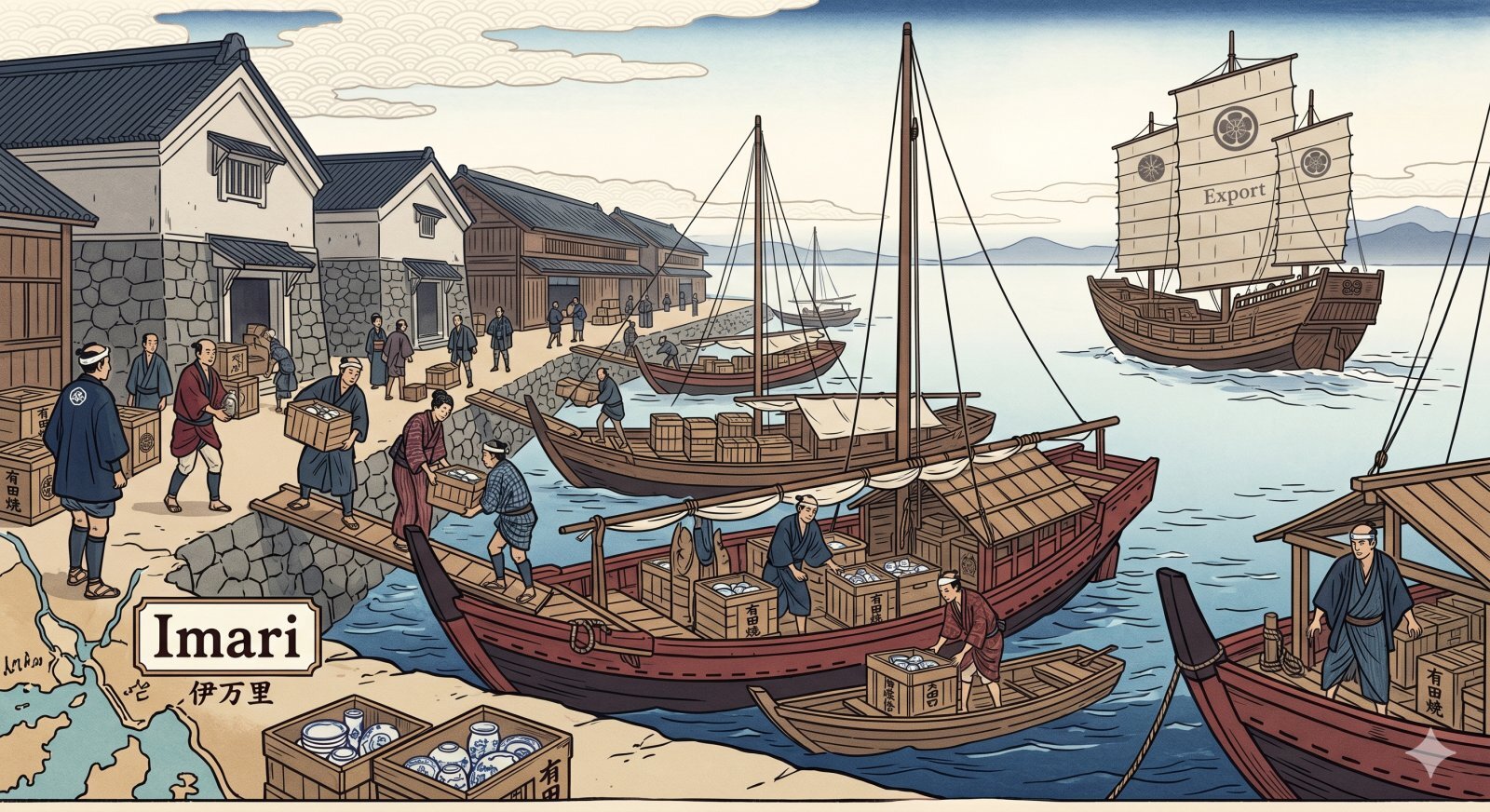
Illustration of Arita porcelain being transported to Imari Port.
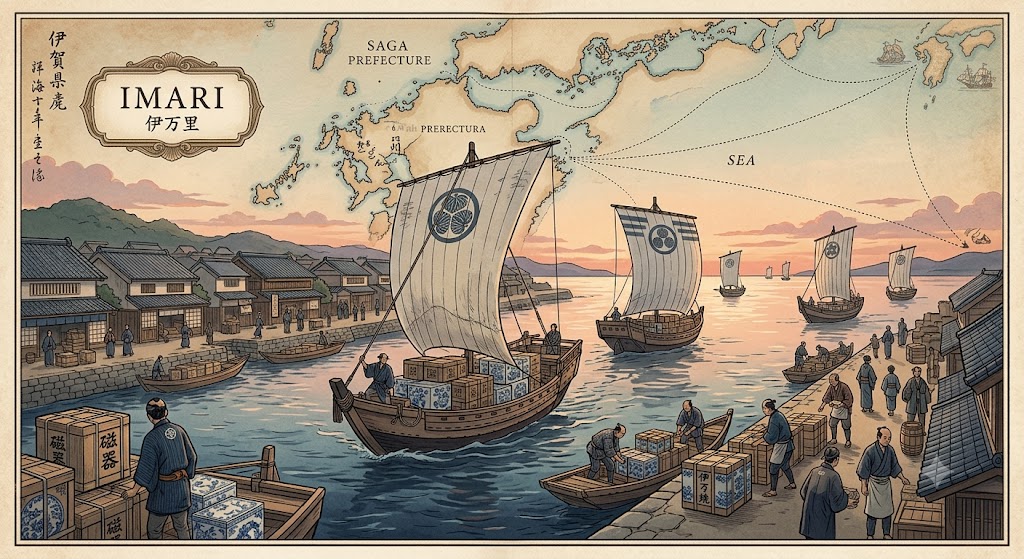
Illustration of porcelain being shipped from Imari Port to destinations in Japan and overseas.
Ko-Imari Was Highly Prized Overseas
During the Edo period, Arita porcelain was exported not only within Japan but also to foreign markets. Its beautiful white porcelain, cobalt-blue underglaze designs, colorful Akae enamels, and gold decoration were especially admired in Europe.
East Asian porcelain was exceptionally valuable in Europe at the time. Ko-Imari pieces were treasured as decorative objects in royal palaces, aristocratic residences, and wealthy households. These exports helped introduce Japanese Arita porcelain to the wider world.
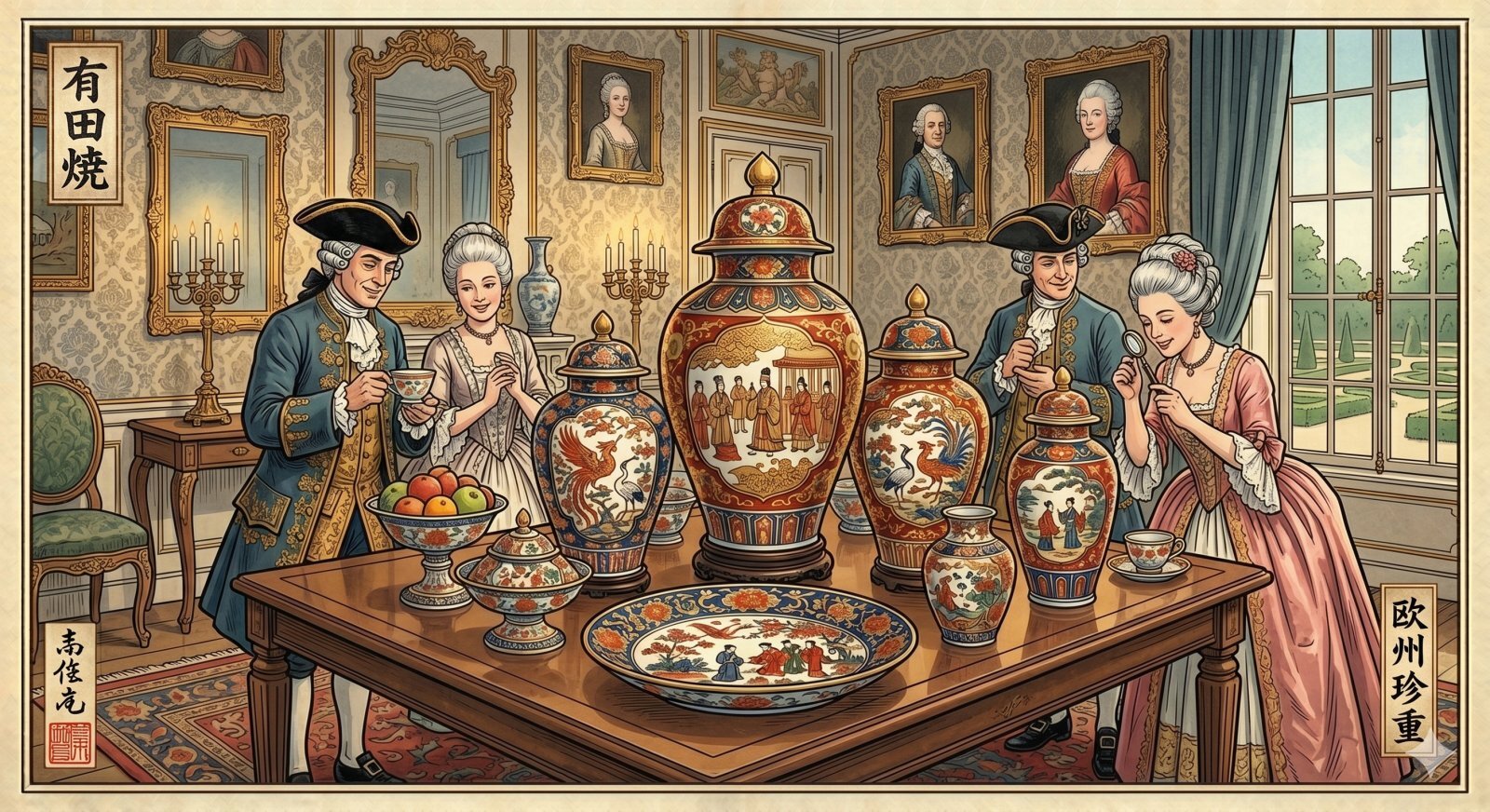
Illustration of Arita porcelain being admired in Europe.
The Main Decorative Types of Ko-Imari
Ko-Imari encompasses many decorative approaches, including Sometsuke, white porcelain, Akae, Some-Nishiki, and gilding. From restrained blue-and-white designs to richly colored pieces embellished with red and gold, a wide variety of works were produced for different periods and purposes.
Ko-Imari in Sometsuke (Underglaze Blue)
Sometsuke is a technique in which designs are painted using cobalt pigment, then covered with glaze and fired. The contrast of deep blue patterns against white porcelain is a hallmark of Arita ware and appears frequently in Ko-Imari pieces.
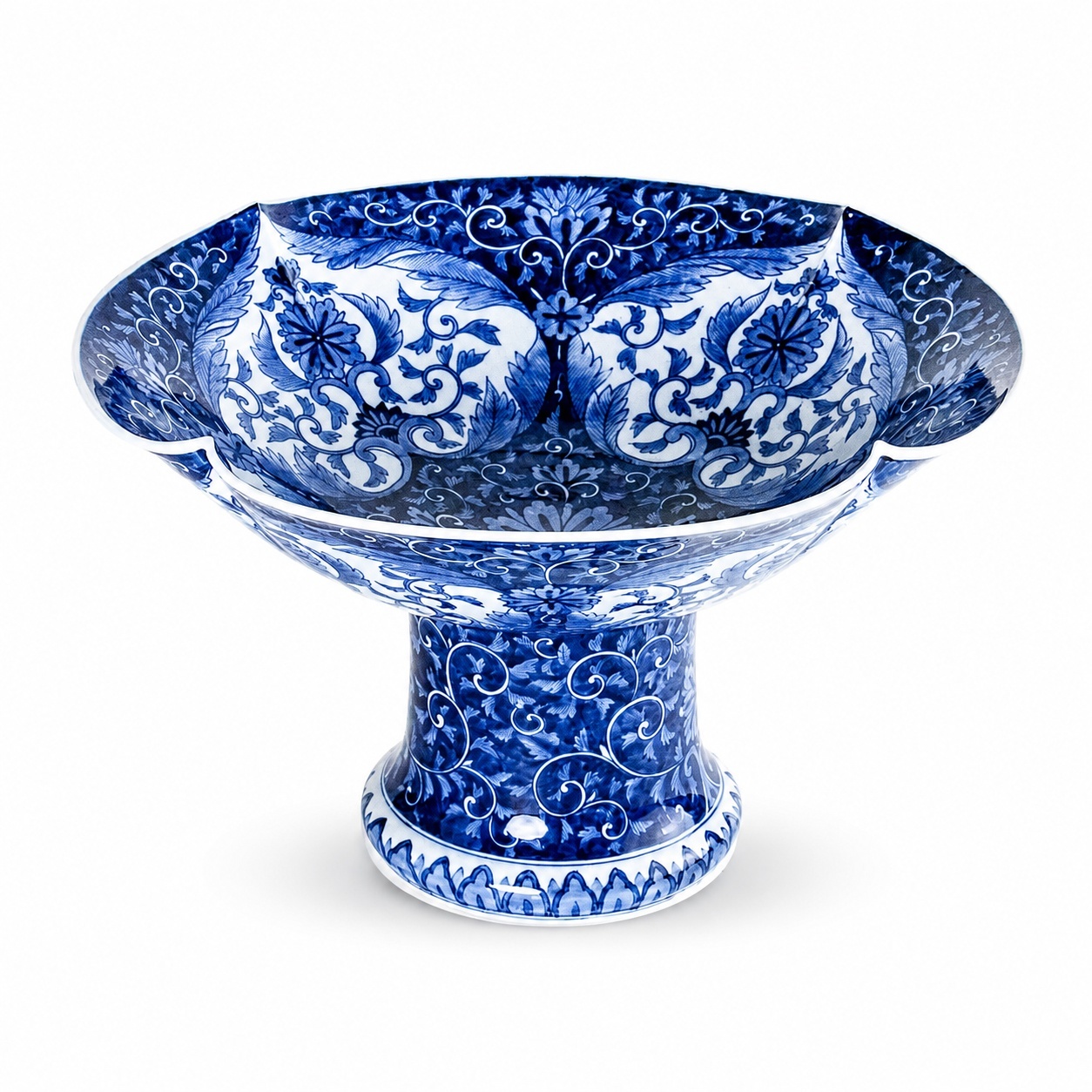
An impressive large Ko-Imari bowl on a raised foot, decorated in underglaze blue.
Ko-Imari in White Porcelain
One of Arita ware's defining qualities is its beautiful white porcelain body. Even without elaborate decoration, white porcelain draws attention to the elegance of its shape and the texture of the material itself.
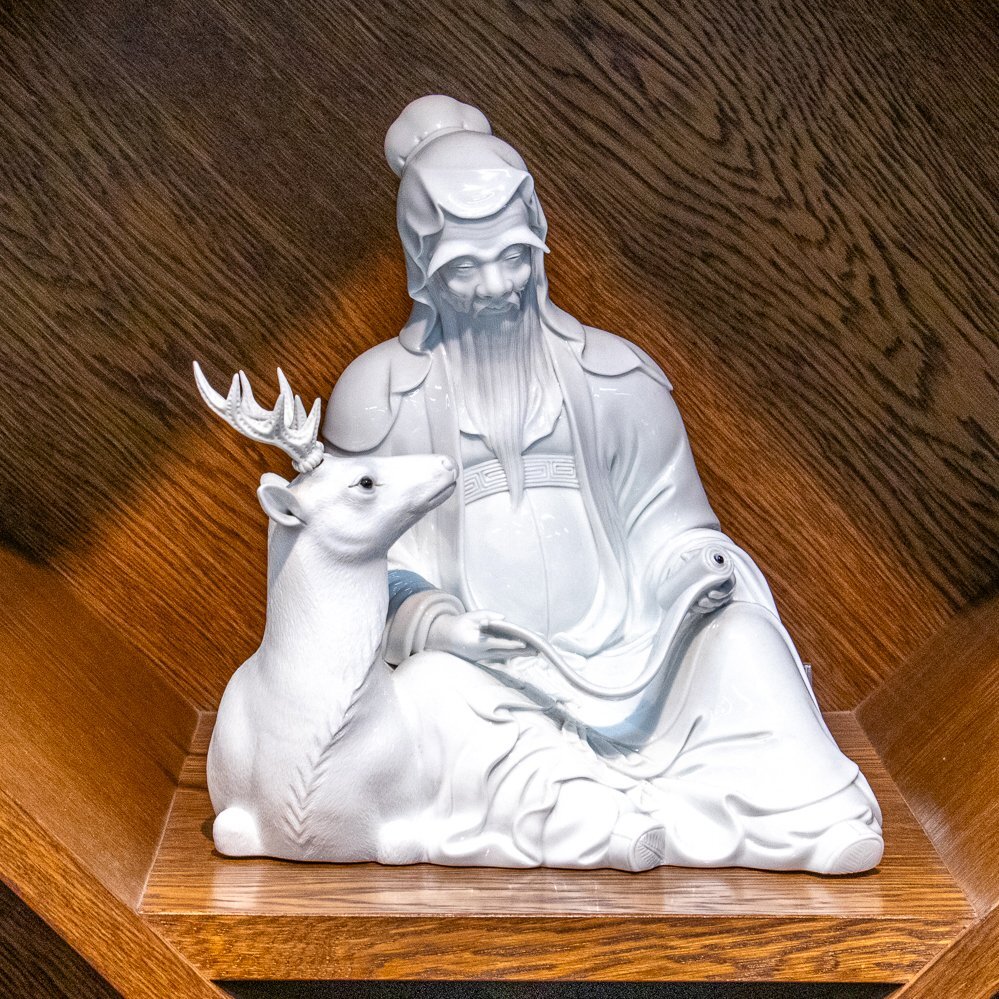
A Ko-Imari white porcelain figurine depicting a sage.
Ko-Imari with Akae and Some-Nishiki Decoration
Akae is a technique in which colored overglaze enamels are applied after the main firing and then fired again in a separate kiln. When Sometsuke underglaze blue is combined with Akae decoration, the result is called Some-Nishiki, bringing together the calm beauty of blue and the brilliance of colorful enamels.
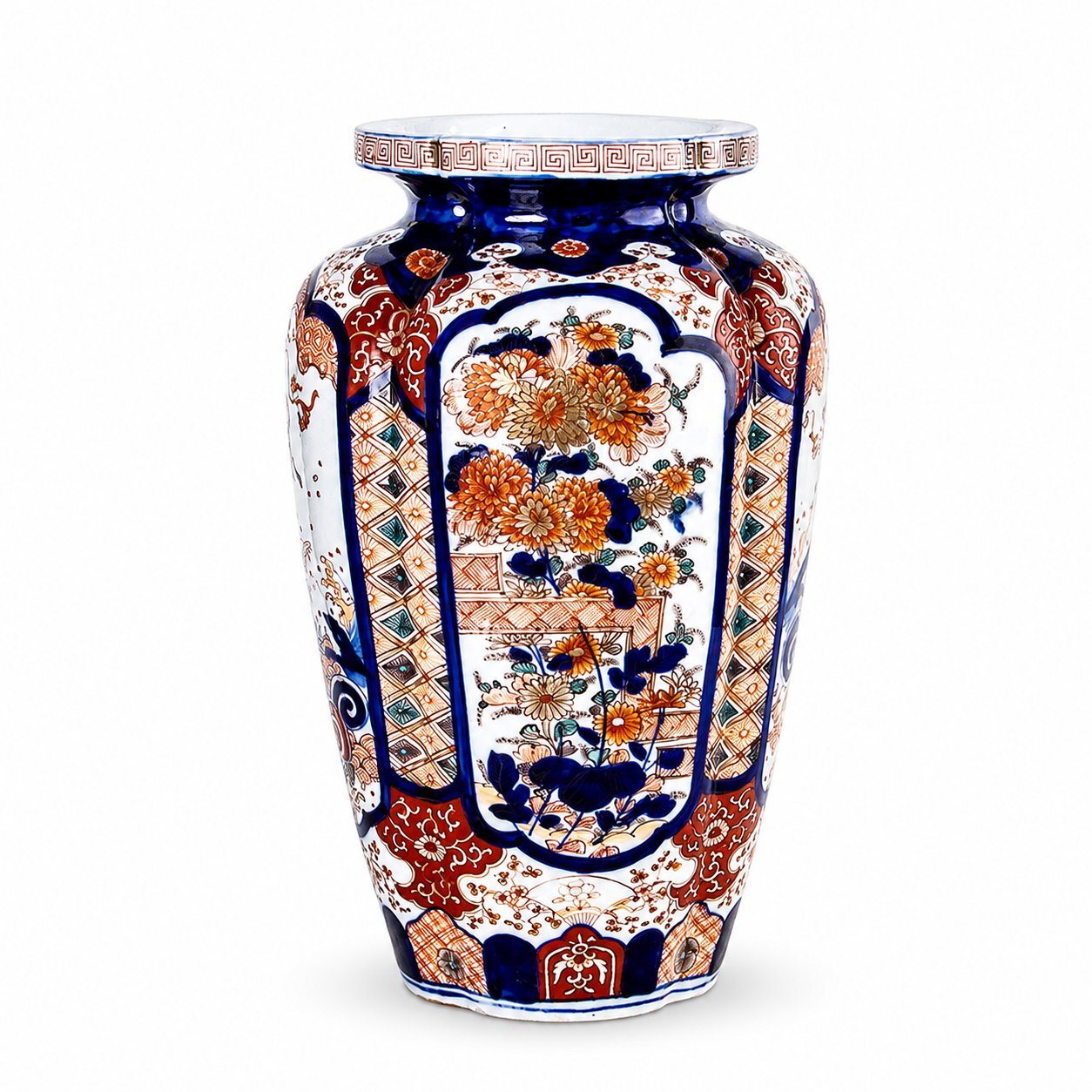
A Some-Nishiki vase decorated with chrysanthemum motifs.
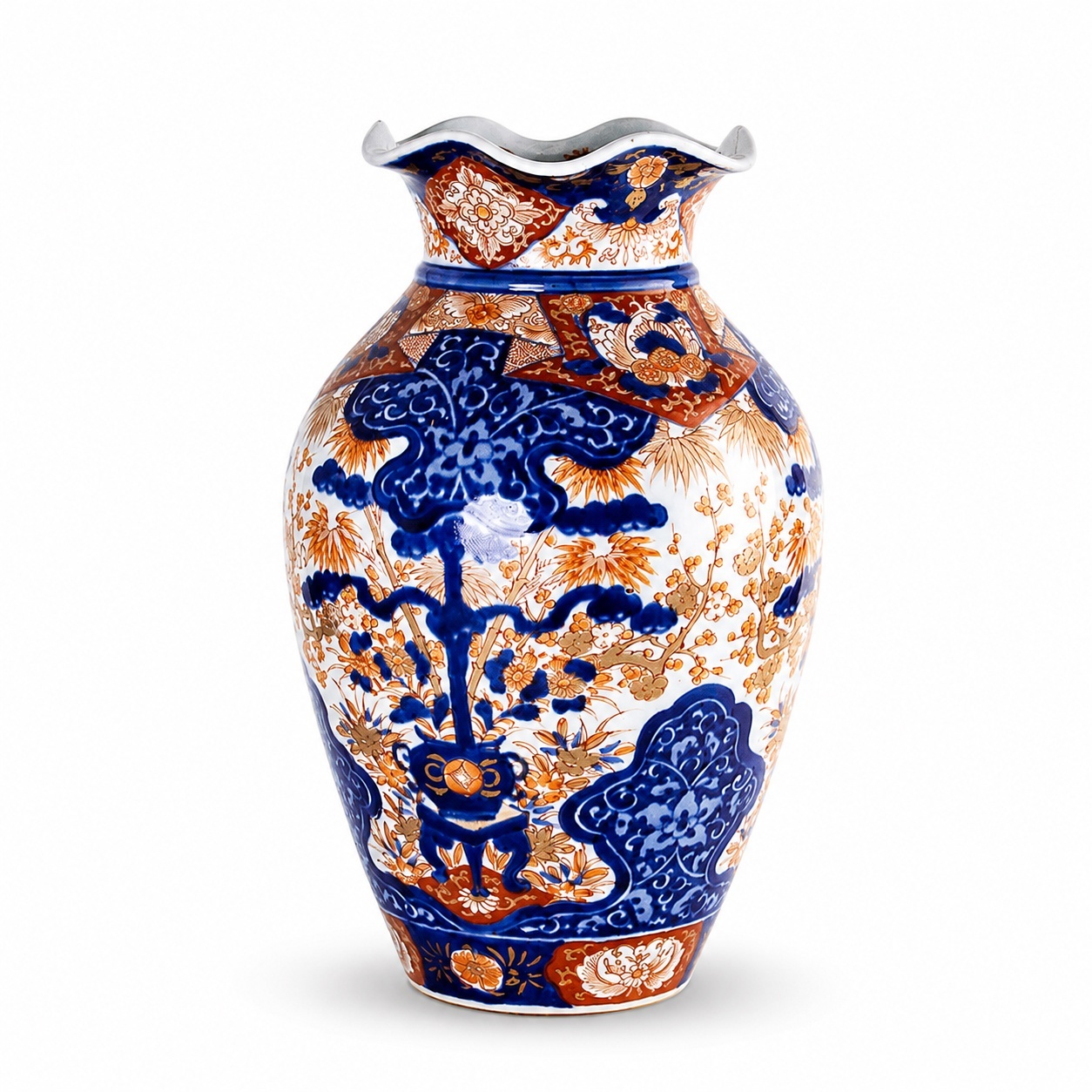
A vase combining elegant underglaze blue and colorful Akae enamels.
Ko-Imari Designs That Still Feel Relevant Today
Ko-Imari porcelain has an enduring appeal that feels at home even in contemporary interiors. Graceful shapes, thoughtful use of empty space, the combination of underglaze blue and colorful enamels, and the richness of gold decoration all remain attractive on today's tables and in modern living spaces.
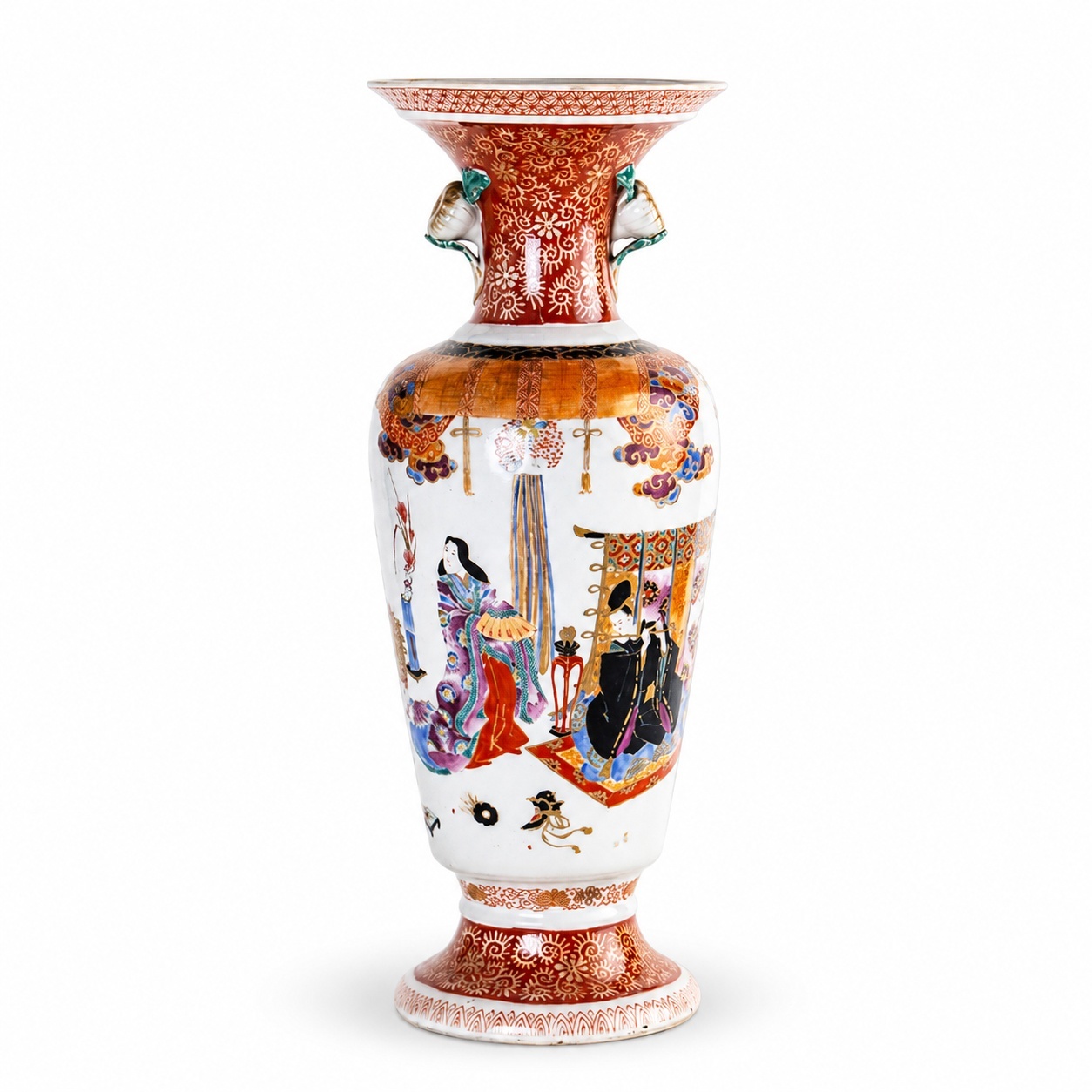
A Ko-Imari vase decorated with human figures.
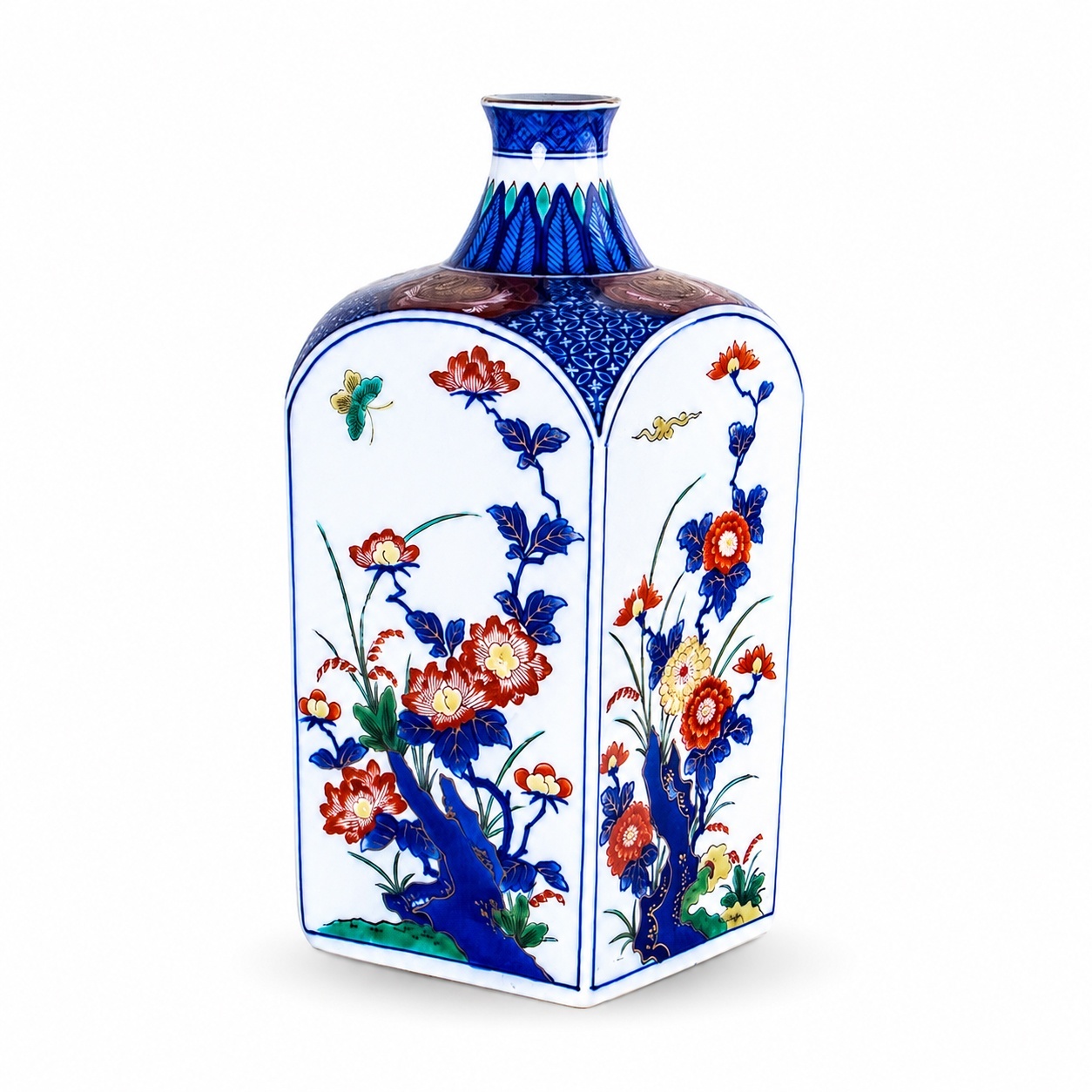
A square vase with floral motifs and a graceful use of white space.
Ko-Imari and Ko-Imari Style Are Not the Same Thing
This is an important distinction that is often misunderstood. In this article, “Ko-Imari” refers to antique porcelain made in Arita during the Edo period and shipped through Imari Port.
By contrast, contemporary Arita ware also includes a decorative tradition known as “Ko-Imari style.” This refers not to antique pieces themselves but to an ornate style featuring colorful Akae enamels and gold decoration.
The three major styles of Arita ware are often described as Ko-Imari, Kakiemon, and Nabeshima. Of these, Ko-Imari style is especially known for its richly colored patterns and frequent use of red enamels and gold.
When “Ko-Imari” appears in our product names, it often refers to contemporary Arita ware made in the Ko-Imari style, rather than an antique from the Edo period. Please keep this distinction in mind when browsing our collection.
What Can Kiln Names and Marks Tell Us?
Some older Arita and Imari porcelain pieces bear kiln names or other marks on their undersides. Such marks may offer clues about the kiln, period of production, or history of distribution.
However, a mark alone is not enough to establish a piece's age or authenticity. Its shape, painted decoration, porcelain body, glaze, and firing characteristics must all be considered together.
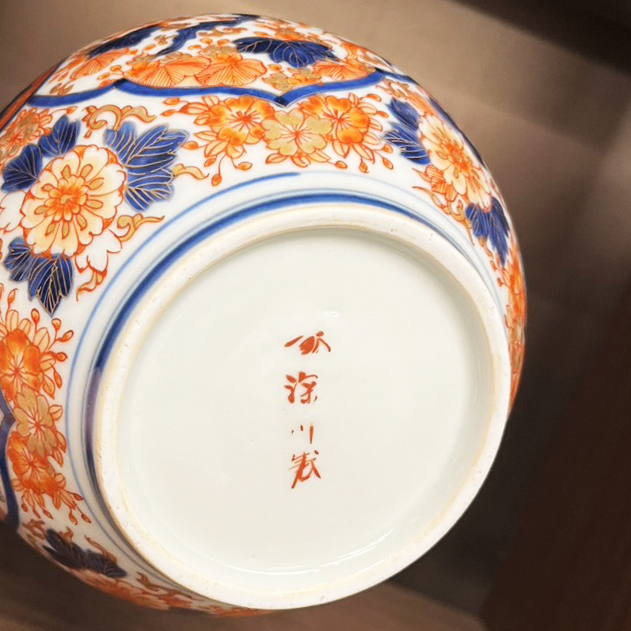
The “Fukagawa-sei” (深川製) mark on the underside of a vase.
Points to Remember When Examining Antique Ko-Imari
As a general rule, antique Ko-Imari refers to porcelain made during the Edo period. However, in the antiques trade, the term may sometimes include works from the late Edo to early Meiji periods, so the chronological boundary is not always rigid.
Pieces described as Ko-Imari include everyday tableware, objects preserved as works of art, and porcelain produced for export. Their value and appraisal can vary greatly depending on condition, age, decoration, and craftsmanship.
Conclusion: Ko-Imari Is an Important Part of Arita Ware's History
Ko-Imari refers to porcelain made in Arita during the Edo period and shipped through Imari Port to destinations in Japan and overseas. Despite the name “Imari,” much of it was actually Arita ware.
With its many forms of decoration—including Sometsuke, white porcelain, Akae, Some-Nishiki, and gold—Ko-Imari helped bring Japanese porcelain culture to international attention.
In contrast, “Ko-Imari style” in contemporary Arita ware describes a decorative tradition inspired by the elaborate patterns of historic Ko-Imari, not necessarily an antique object. Understanding this distinction offers a deeper appreciation of both historic Ko-Imari and modern Arita porcelain.
Ko-Imari Style at Our Arita Ware Shop
Our shop carries contemporary Arita ware inspired by traditional Ko-Imari designs, including Some-Nishiki, Akae, and gold-decorated pieces. Products with “Ko-Imari” in their names may be newly made porcelain in the Ko-Imari style rather than antique pieces.