Japanese pottery ceramics souvenir in Tokyo Japan
Font size:
Shopping Cart
-
Your cart is empty.
Categories
Shop Manager Profile
Arita Ware Encyclopedia
Explore the history, styles, techniques, and motifs of Arita ware, explained clearly from the perspective of a Japanese porcelain specialist.
The Three Major Styles of Arita Ware: Ko-Imari, Kakiemon and Nabeshima
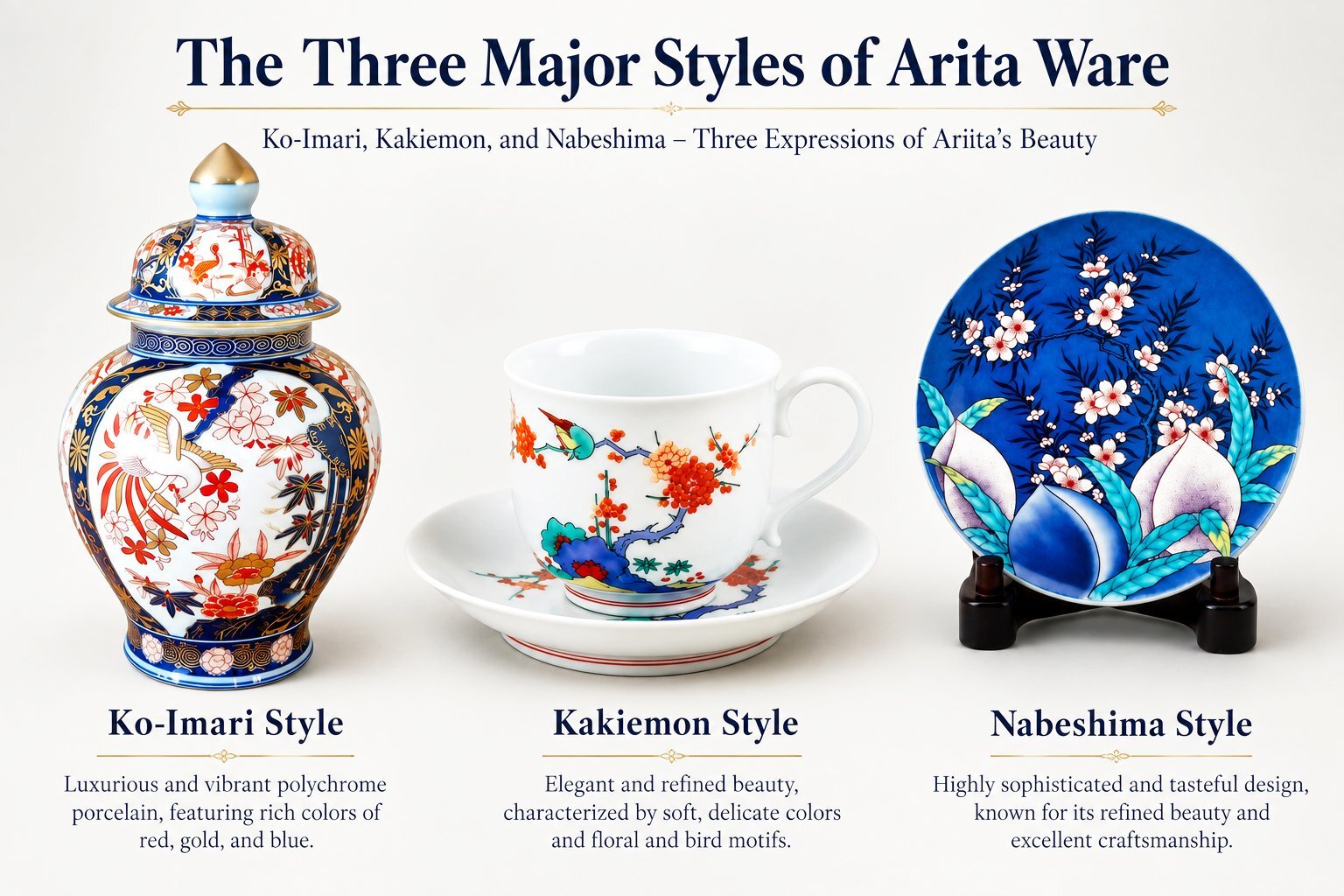
Ko-Imari, Kakiemon and Nabeshima: three traditional styles that represent Arita porcelain.
The three major styles of Arita ware are Ko-Imari, Kakiemon and Nabeshima. Although all belong to the tradition of Arita porcelain, they differ greatly in color, composition, purpose and aesthetic character. This guide explains their distinctive features and differences from the perspective of a specialist retailer.
What Are the Three Major Styles of Arita Ware?
Arita ware originated in Arita, Saga Prefecture, and is known as Japan’s earliest porcelain tradition. For more than 400 years, it has produced many outstanding works.
Over its long history, numerous techniques and designs developed. Among the best-known styles of Japanese porcelain are Ko-Imari, Kakiemon and Nabeshima.
Together, these are commonly called the three major styles of Arita ware. Each developed against the background of Arita porcelain production during the Edo period, yet each creates a very different impression.
How the Three Styles Developed
When porcelain production began in Arita in the early 17th century, ceramic techniques developed rapidly. Initially influenced by Chinese porcelain, Arita makers gradually incorporated Japanese aesthetic sensibilities, eventually creating richly colored overglaze-decorated porcelain.
The richly decorated Ko-Imari style, the elegant Kakiemon style with its generous use of open space, and the Nabeshima style produced at the domain’s official kiln as presentation wares each took shape around different purposes and aesthetic ideals.
The three styles are more than different patterns. Ko-Imari emphasizes splendor, Kakiemon celebrates open space and refinement, and Nabeshima embodies formality and exceptional craftsmanship. Each represents a distinct vision of beauty.
Comparing Ko-Imari, Kakiemon and Nabeshima
| Style | First Impression | Main Features | Aesthetic Character |
|---|---|---|---|
| Ko-Imari Style | Opulent and vibrant | Combines blue-and-white painting, colorful overglaze enamels and gilding in richly decorated compositions | Splendor suited to celebrations and formal settings |
| Kakiemon Style | Elegant and graceful | Uses the white porcelain surface as open space, with restrained floral and bird motifs | Beauty found in open space and tranquility |
| Nabeshima Style | Precise and dignified | Historically made as presentation wares, with meticulously balanced forms and patterns | Beauty of dignity and technical perfection |
What Is the Ko-Imari Style?
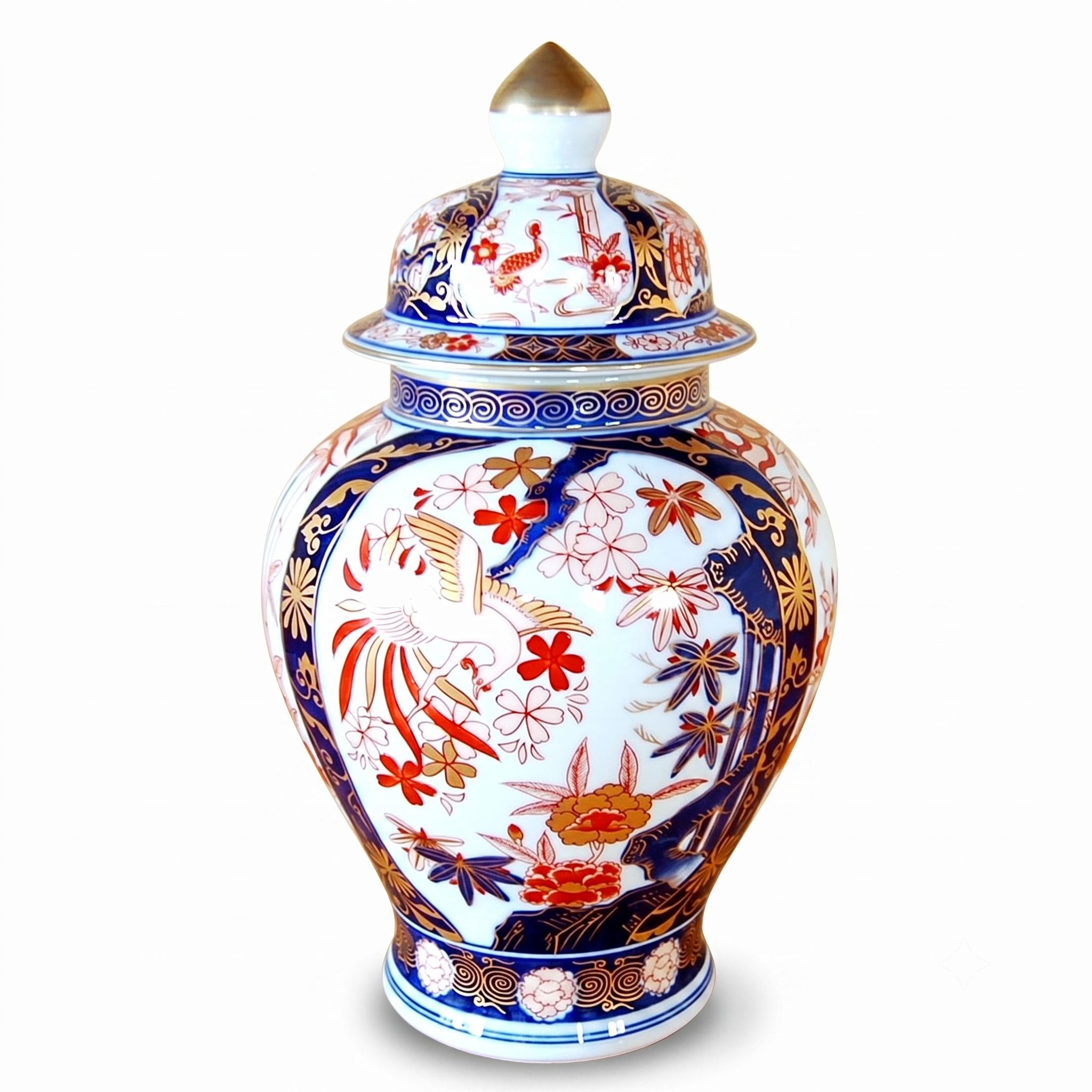
A covered Ko-Imari-style jar combining underglaze blue, colorful enamels and gilding.
Ko-Imari is a lavish decorative style combining the deep blue of sometsuke (underglaze blue), the vivid colors of akae (overglaze enamels) and the brilliance of gold.
Its compositions often cover much of the vessel with elaborate decoration and auspicious motifs. It is one of the most ornate of the three styles.
During the Edo period, porcelain in this tradition was exported to Europe, where it was prized as decoration for palaces and aristocratic residences. Its designs continue to influence contemporary Arita ware.
Learn More About Ko-Imari StyleWhat Is the Kakiemon Style?

A Kakiemon-style coffee cup with delicate flowers and birds set against generous white space.
Kakiemon-style porcelain is distinguished by its milky-white body and compositions that make thoughtful use of open space. Delicately placed flowers, plants and birds create a sense of calm elegance.
Where Ko-Imari often fills the surface with decoration, Kakiemon treats the undecorated space itself as part of the design. This appreciation of open space is a hallmark of Japanese aesthetics.
Kakiemon was also highly admired in Europe and became one of the most internationally recognized styles of Arita porcelain.
Learn More About Kakiemon StyleWhat Is the Nabeshima Style?
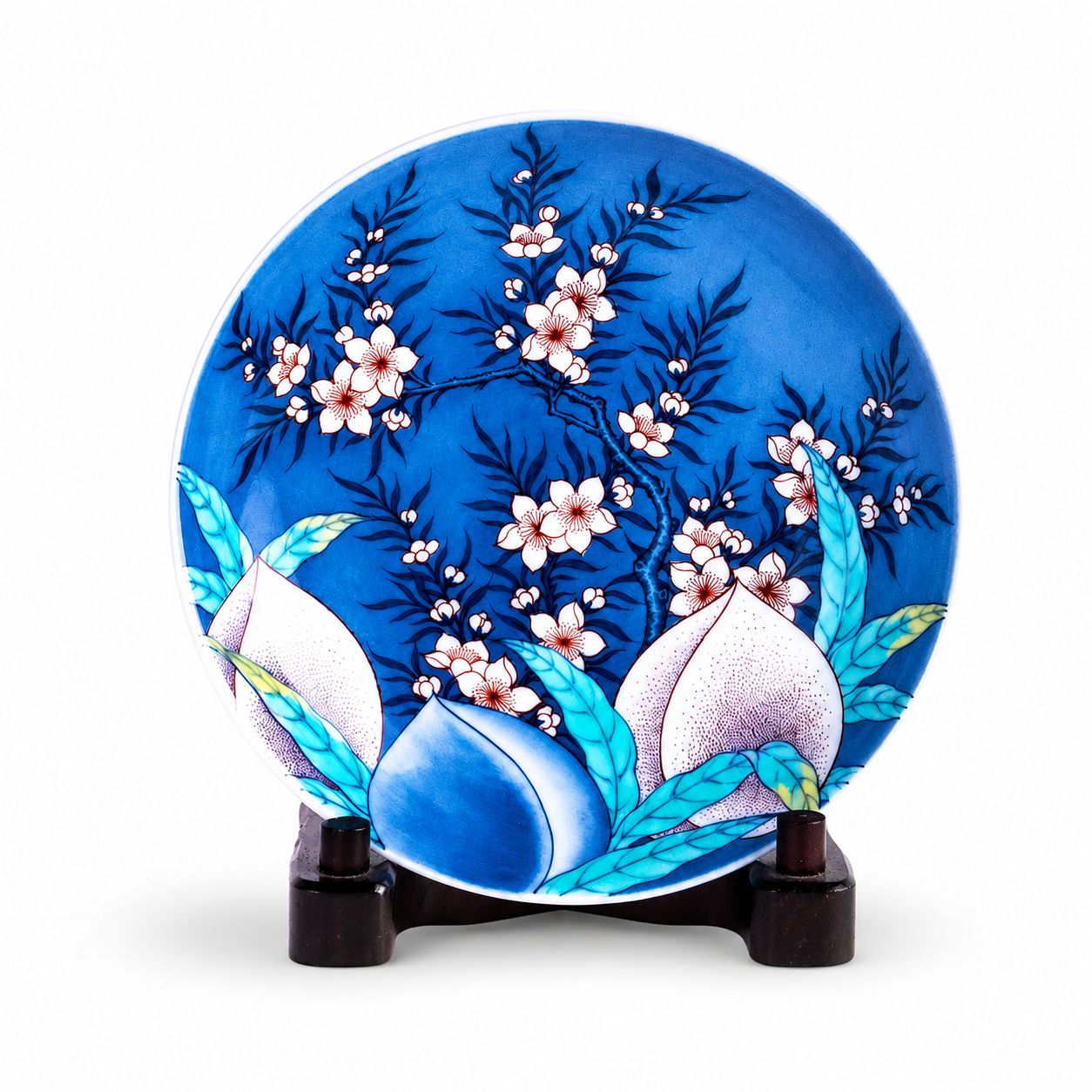
A Nabeshima-style decorative plate with a precise composition and dignified design.
Nabeshima is a prestigious porcelain style developed at the official kiln of the Nabeshima family, rulers of the Saga domain. Rather than being made for ordinary sale, these wares were produced as gifts for the shogunal family and other feudal lords.
Such a purpose demanded exceptional precision in shape, motifs and color placement. Balanced compositions, often combining underglaze blue with overglaze colors, convey sophistication, restraint and dignity.
Nabeshima remains especially esteemed as an expression of Arita porcelain craftsmanship and aesthetics at an exceptionally high level.
Learn More About Nabeshima StyleHow to Recognize the Three Styles
A useful first step in identifying these styles is to look at the overall impression of a piece.
| What to Look For | Likely Style |
|---|---|
| Rich decoration across the surface in red, blue and gold | Ko-Imari Style |
| Generous white space with restrained flowers and birds | Kakiemon Style |
| Precise, disciplined motifs with an overall sense of dignity | Nabeshima Style |
Why Understanding the Three Styles Matters
Learning about these styles is more than memorizing categories of ceramics. Each reflects its historical setting, intended use and the aesthetic ideals of its makers.
Ko-Imari reflects a taste for lavish decoration; Kakiemon reveals a delicate appreciation of unpainted space; and Nabeshima expresses the discipline and perfection expected of presentation wares.
Understanding these differences makes Arita porcelain even more rewarding to explore. Beyond color and shape, you begin to see the history and culture behind each piece.
Conclusion: Three Ways to Appreciate Arita Ware
The three major styles of Arita ware are Ko-Imari, Kakiemon and Nabeshima.
Ko-Imari is known for sumptuous decoration, Kakiemon for refined beauty that embraces open space, and Nabeshima for the dignified precision cultivated in presentation wares.
Knowing these styles offers a deeper understanding of Arita porcelain history and aesthetics. For newcomers, they provide an excellent introduction to the beauty and variety of Arita ware.