Japanese pottery ceramics souvenir in Tokyo Japan
Font size:
Shopping Cart
-
Your cart is empty.
Categories
Shop Manager Profile
Arita Ware Encyclopedia
Explore the history, styles, techniques, and patterns of Arita ware, explained by specialists in Japanese porcelain.
What Is Akae? The Colorful Overglaze Painting Technique of Arita Ware
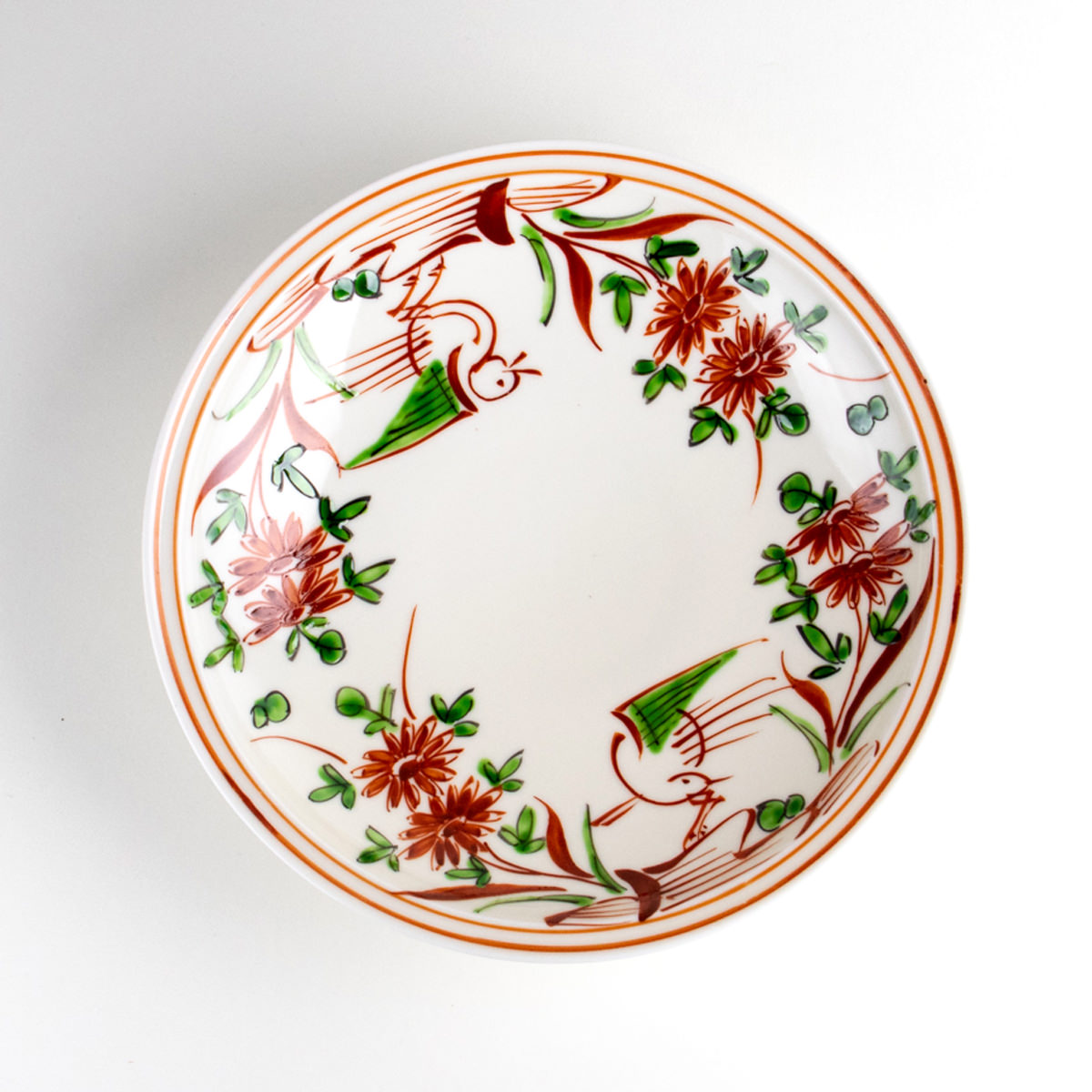
An Arita ware plate decorated with a colorful Akae Manreki design, a fine example of the vibrant beauty of Akae.
Akae is a decorative technique in which overglaze enamels are painted onto a ceramic piece after its main firing and then fixed in a separate firing in an enamel kiln. Although the name literally means “red painting,” Akae is not limited to red. The term also broadly covers colorful overglaze decoration in green, yellow, purple, gold, and other colors. In Arita ware, Akae is an important technique that adds a richness and brilliance of color not possible with blue-and-white underglaze decoration alone.
Akae: Painting on Top of the Glaze
Akae refers to decoration applied with colored enamels after a glazed ceramic piece has undergone its main firing. Because the colors are painted over the glaze, the technique is also known as uwae (overglaze decoration) or uwaetsuke (overglaze painting).
In the world of Arita ware, this type of decoration is also sometimes called nishiki. The term does not refer only to red, but more broadly to the richly colored designs painted over the glaze.
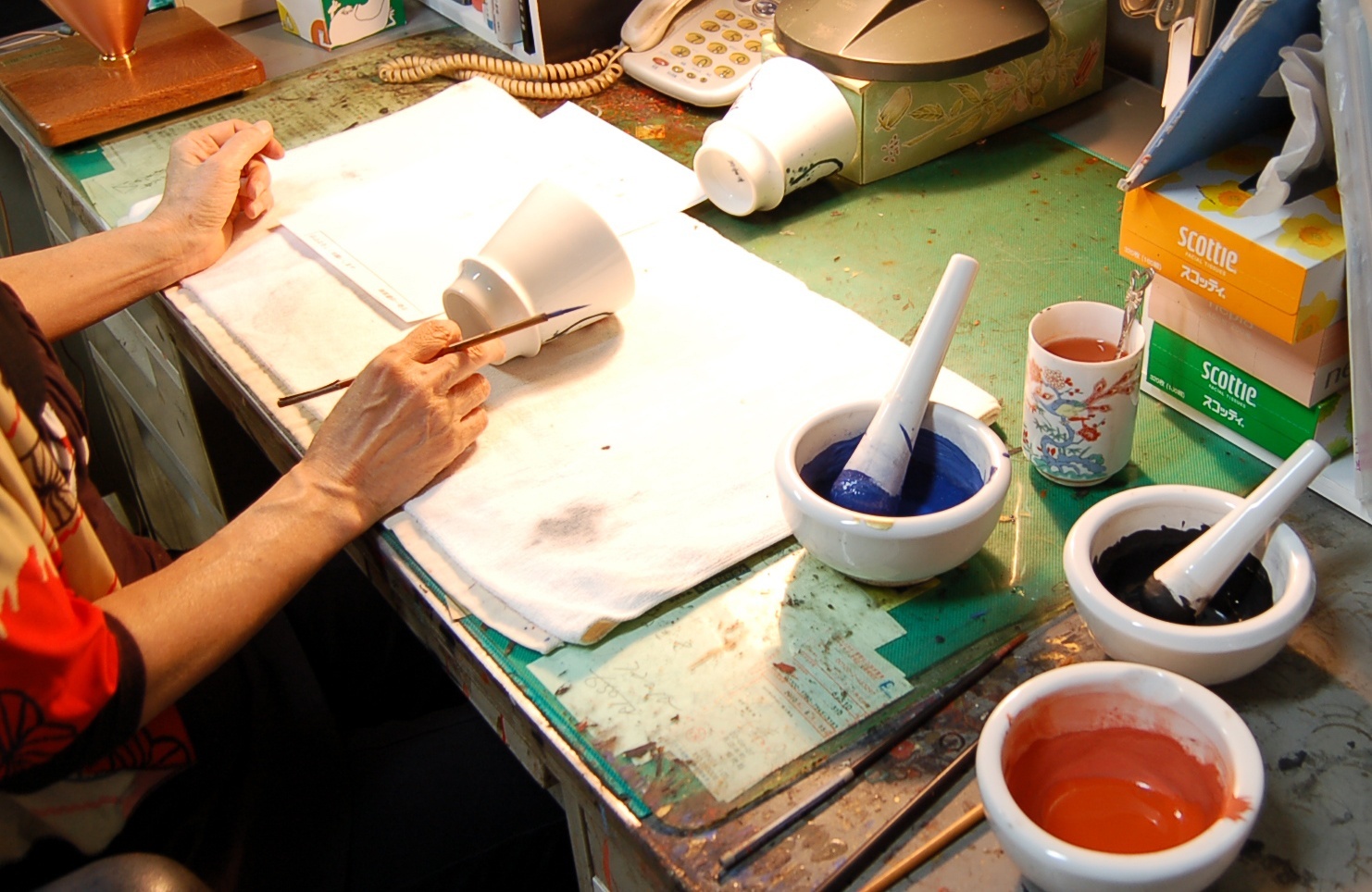
An artisan applying overglaze enamels to a piece after its main firing.
Akae Uses More Than Just Red
The name Akae may suggest pottery decorated entirely in red. In practice, however, artisans use many overglaze enamel colors, including green, yellow, and purple as well as red.
One of Akae’s greatest attractions is the vivid color it brings to white porcelain. Unlike the restrained indigo-blue tones of sometsuke, Akae lends tableware a bright, festive, and decorative character.
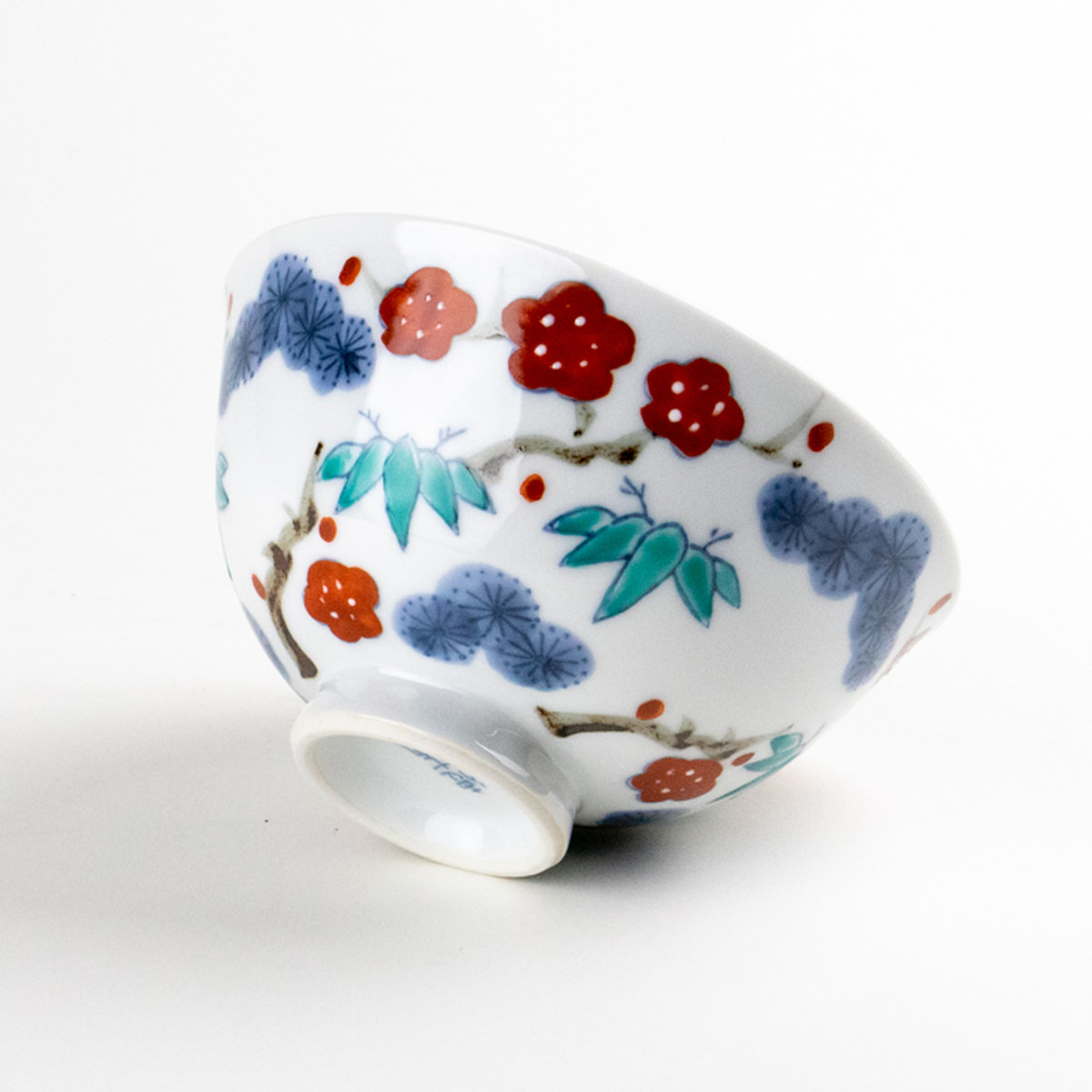
A rice bowl decorated in Akae with pine, bamboo, and plum motifs.
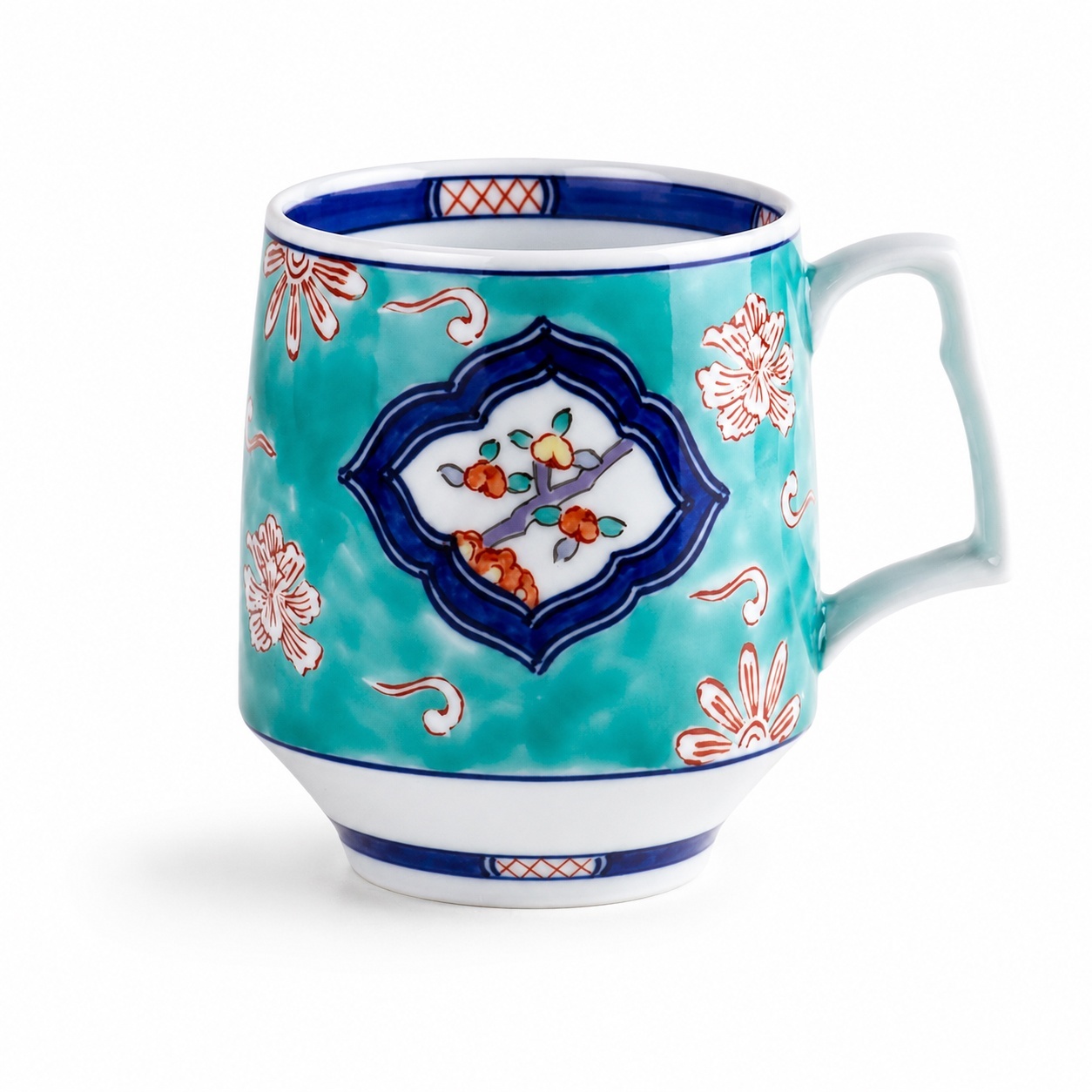
A mug decorated with green overglaze enamel.
Akae Pieces Are Fired Several Times
A piece decorated with Akae typically undergoes at least three firings: an initial bisque firing, a main firing after glazing, and a final firing in an enamel kiln to fix the overglaze colors.
A piece decorated only with sometsuke is generally finished after the bisque and main firings. Adding Akae requires at least one more firing, and sometimes two. This makes Akae ware more labor-intensive and time-consuming to produce.
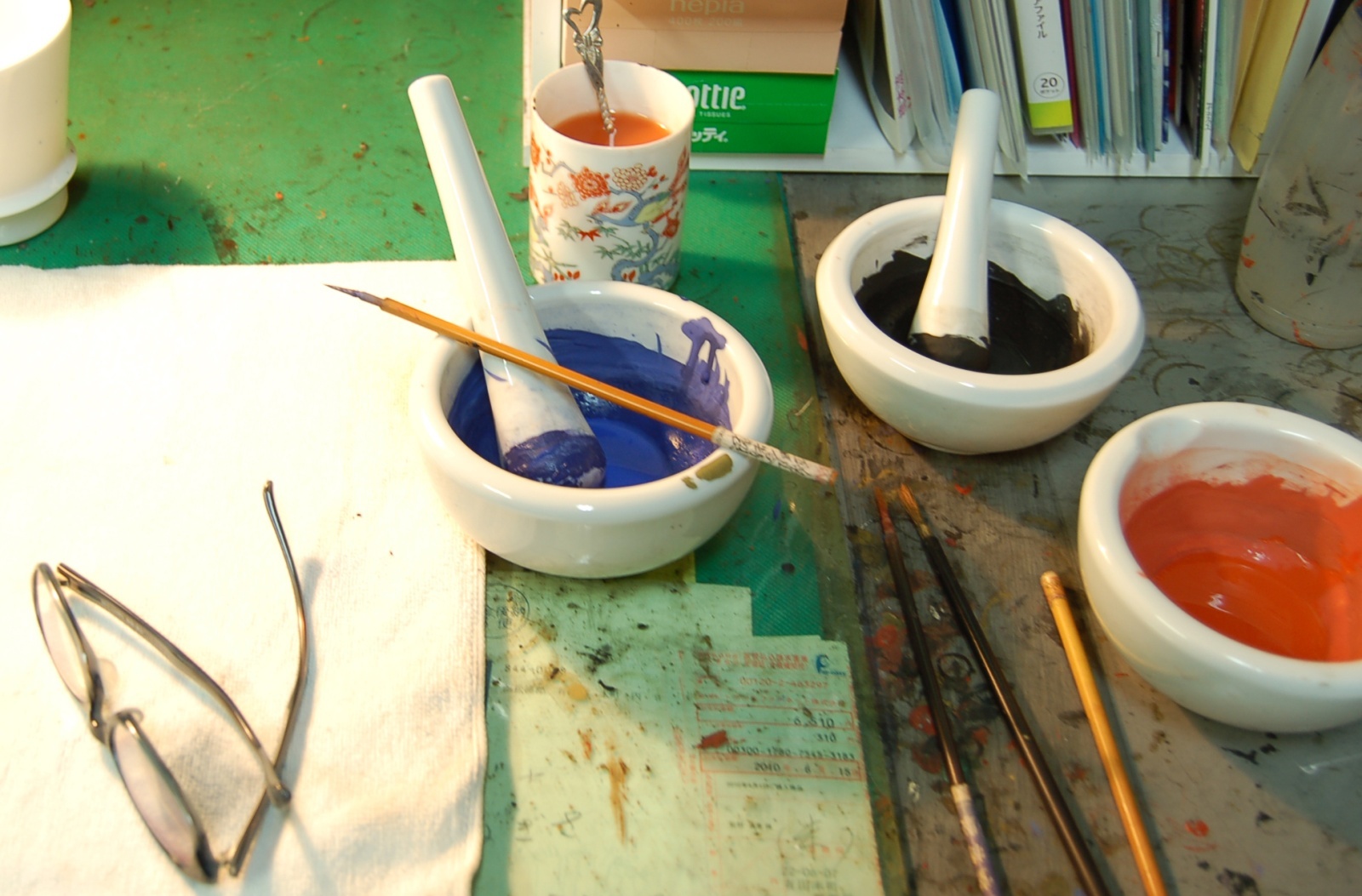
Overglaze enamel colors arranged at an Akae painting workstation.
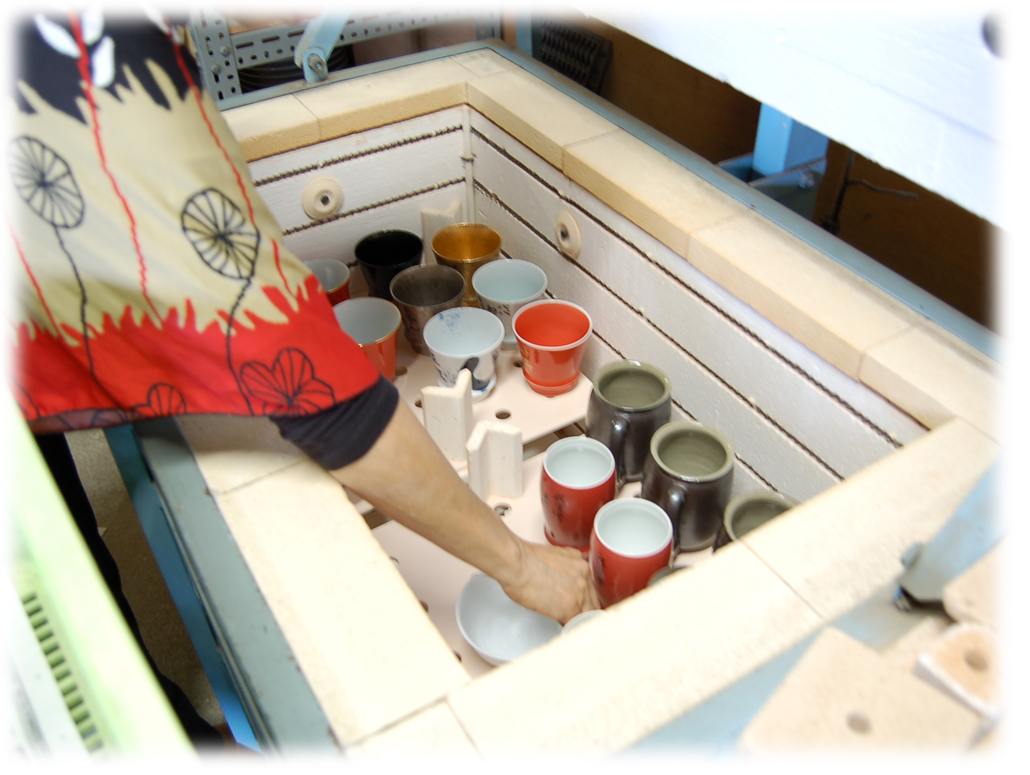
Loading decorated pieces into an enamel kiln.
Can Akae Colors Fade or Wear Away?
In Akae, colored enamels are fired onto the surface of the glaze. Unlike sometsuke designs, which lie beneath the glaze, the decorated areas may therefore have a slightly raised texture that can be felt by touch.
Over many years of use, repeated washing and friction may gradually wear some of the decoration. To help preserve delicate overglaze details, especially gold accents, avoid abrasive cleaners and vigorous scrubbing.
Akae has remained popular for centuries because of its rich palette and its ability to make a piece feel lively and elegant in ways that blue-and-white decoration alone cannot.
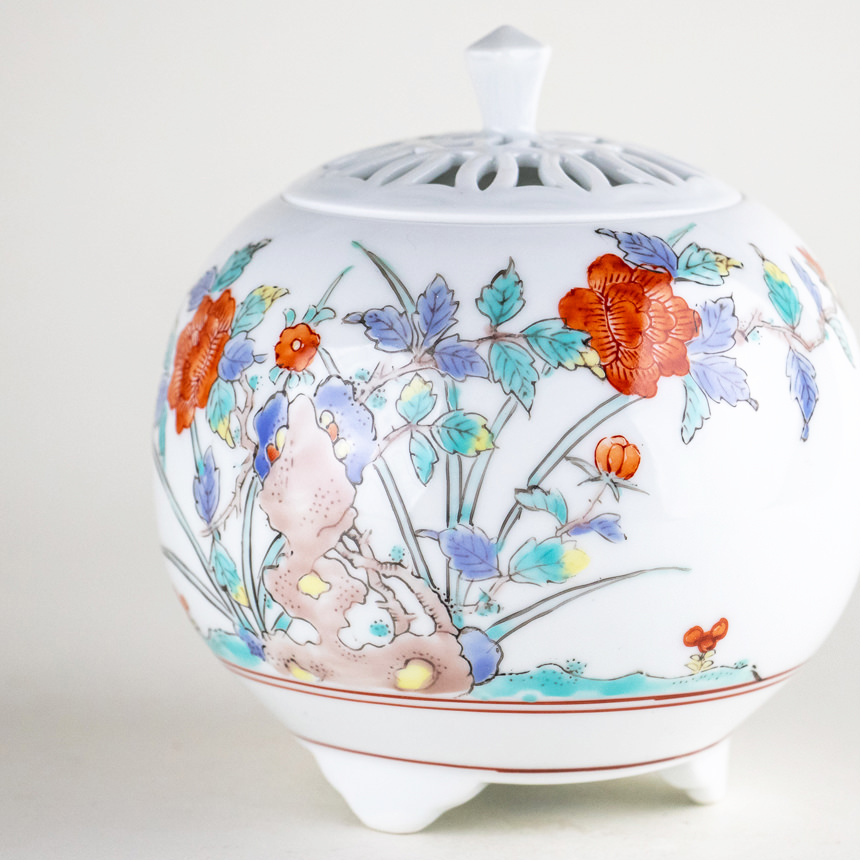
An incense burner with Akae floral decoration, showing the beautiful contrast between white porcelain and colorful enamels.
The Difference Between Sometsuke and Akae
Sometsuke is a blue-and-white underglaze technique. Designs are painted onto a bisque-fired piece using gosu, a cobalt-based pigment, before the piece is glazed and fired. Because the decoration lies beneath the glaze, it is highly resistant to wear during everyday use.
Akae, by contrast, uses colored enamels applied after the main firing and fixed in a separate enamel firing. Painting over the glaze allows artisans to use a broader range of colors, giving the finished piece a more colorful appearance.
Some-Nishiki: Combining Sometsuke and Akae
Pieces combining sometsuke underglaze blue with Akae overglaze decoration are called some-nishiki. Indigo-blue designs are complemented by red, green, yellow, gold, and other overglaze details to create intricate, colorful compositions.
Because some-nishiki requires both underglaze and overglaze painting, it calls for considerable skill and additional work. It is often seen on some of Arita ware’s most elaborately decorated pieces.

A some-nishiki rice bowl combining blue underglaze painting with colorful Akae decoration.
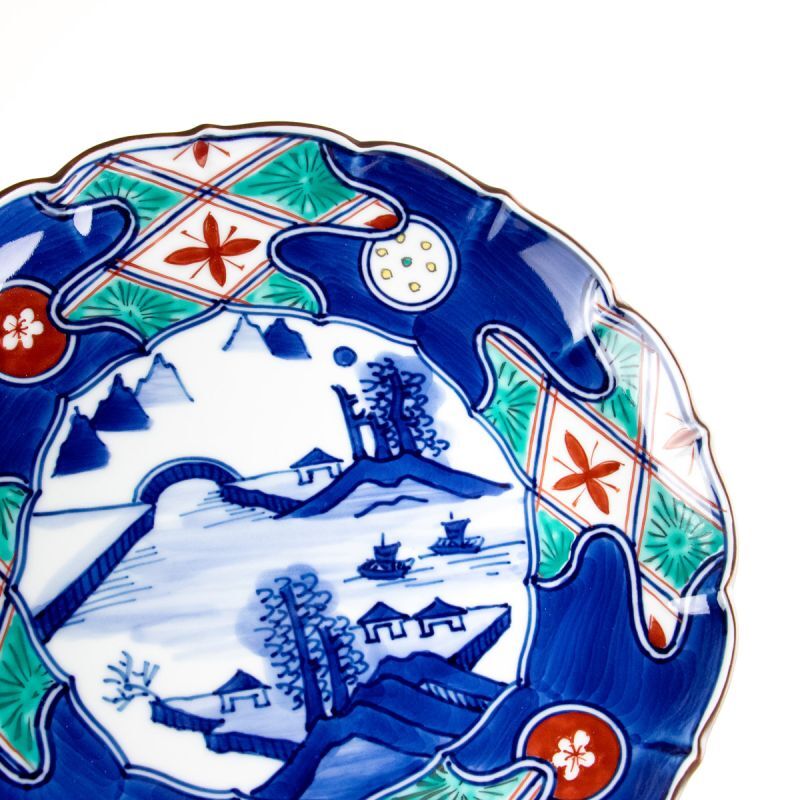
Close-up of a some-nishiki plate, highlighting the interplay of indigo blue and Akae colors.
Akae Enhanced with Gold Decoration
Akae pieces are sometimes embellished with gold decoration, known as kinsai. Gold accents add a luxurious touch and are often used on tableware for special occasions, gifts, and decorative plates.
During the period when Arita porcelain was exported overseas, richly decorated pieces featuring Akae enamels and gold were highly prized. Their vivid colors and gleaming details remain characteristic of Arita ware’s decorative tradition.
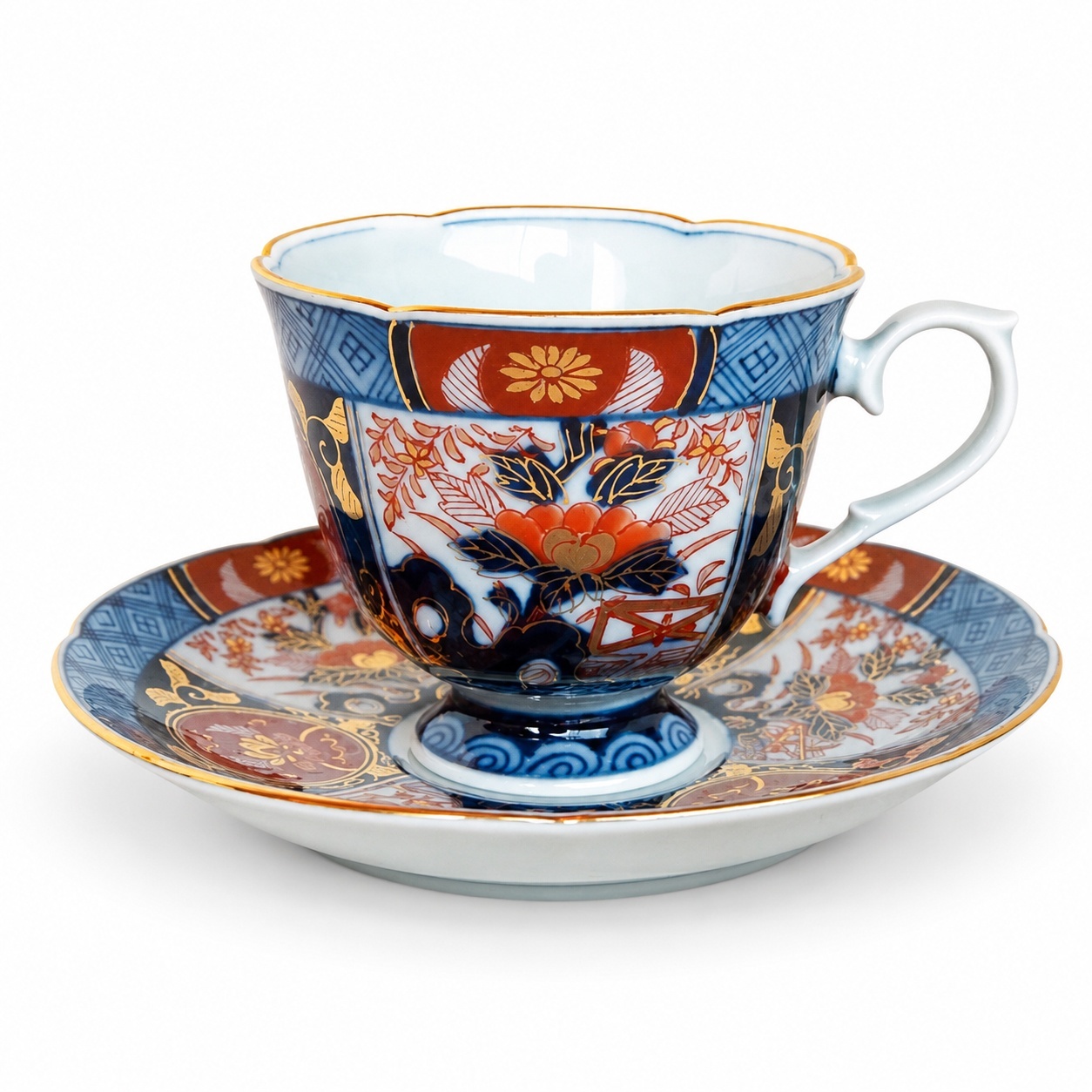
An elegant coffee cup decorated with sometsuke, Akae enamels, and gold accents.
Akae for the Modern Dining Table
Akae is not limited to ornate display pieces. Today, it is widely used on everyday tableware, including plates, rice bowls, small serving bowls, mugs, and curry plates.
Red and green accents can make food look more inviting and bring a cheerful touch to the table. Akae pieces pair well not only with Japanese dishes but also with Western meals and desserts.
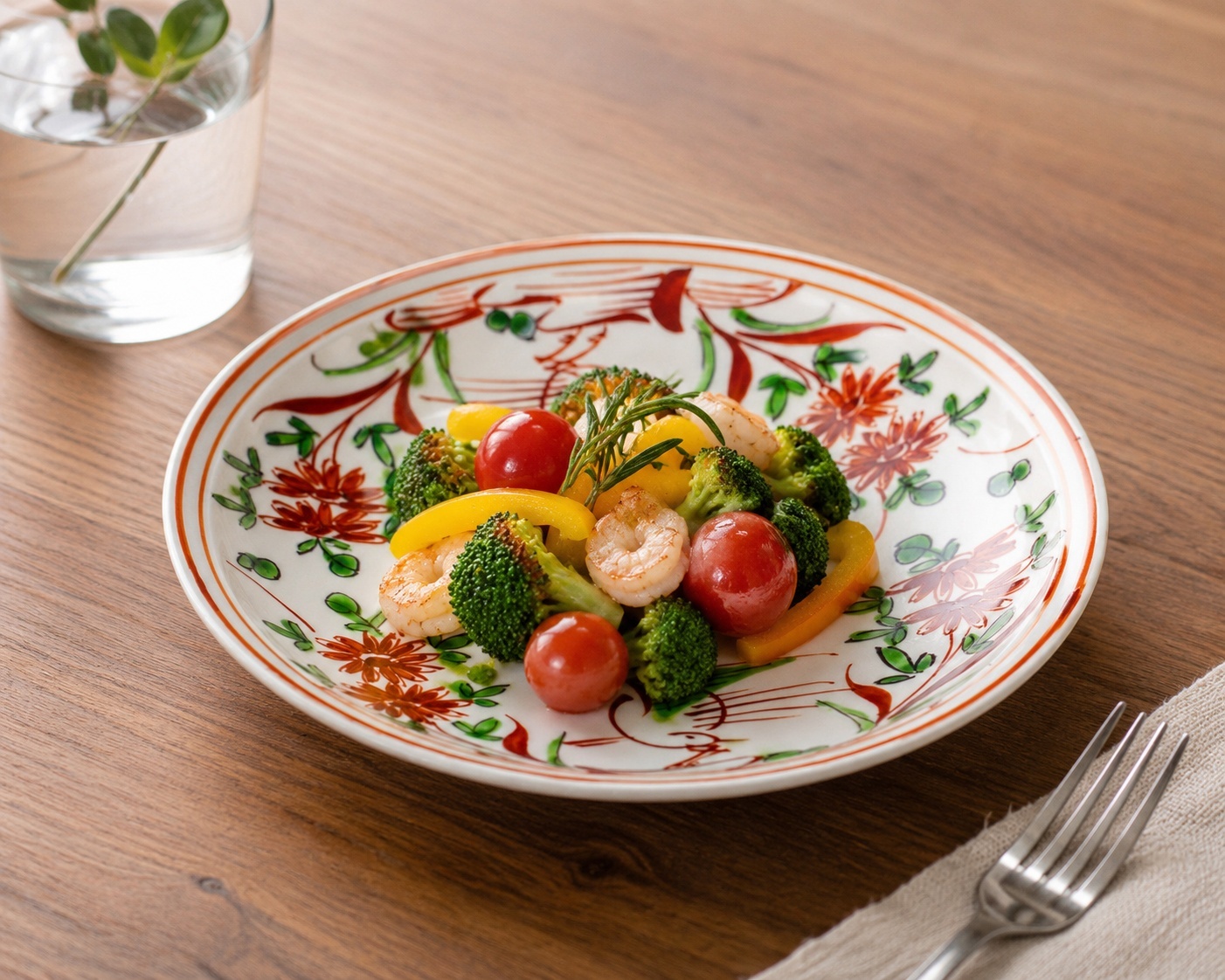
Food served in a bowl with an Akae Manreki design.
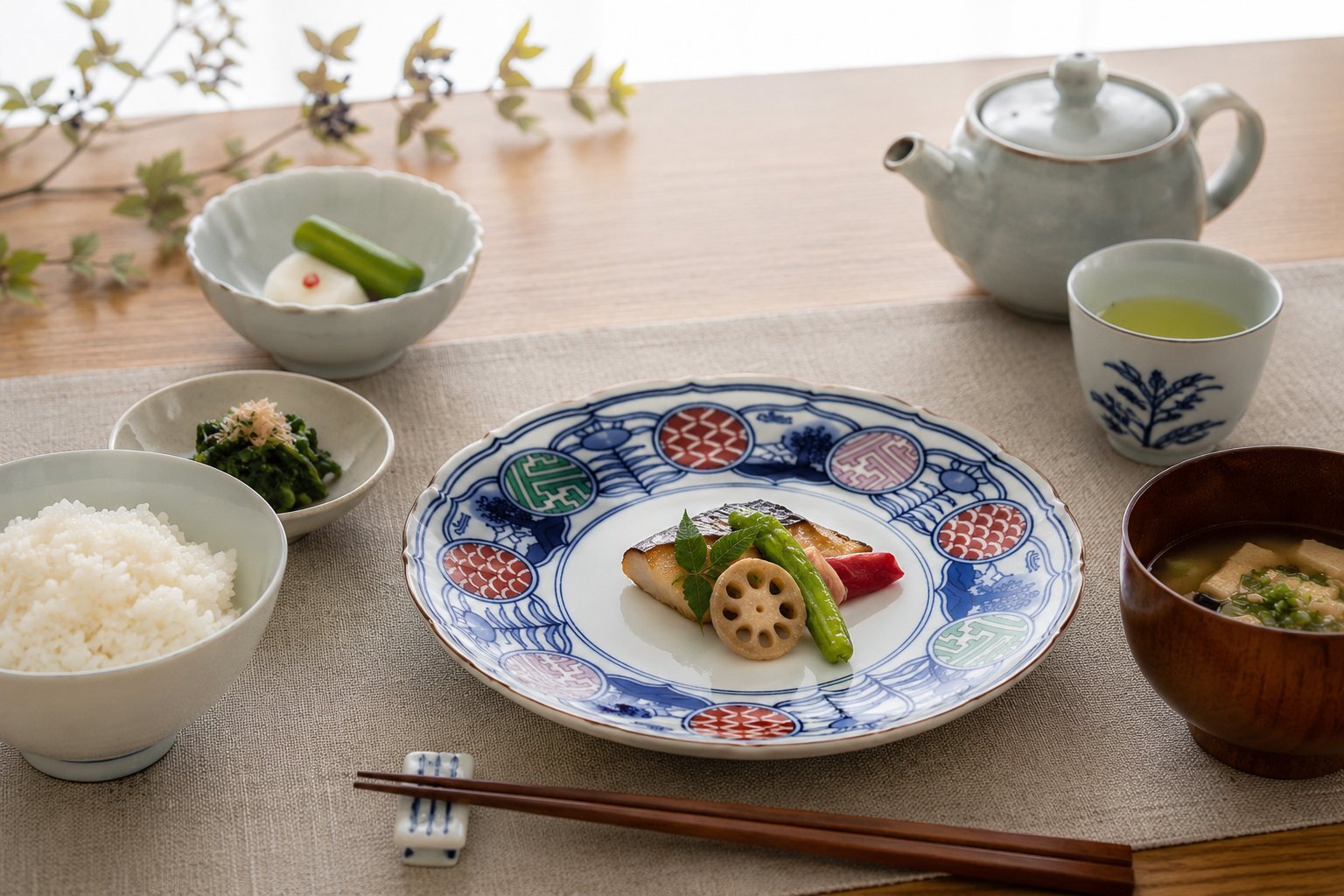
A main course presented on a some-nishiki plate.
Akae Looks Beautiful on Small Dishes, Too
The appeal of Akae is just as evident on small dishes as on large platters and display plates. Even a single Japanese sweet served on a colorful small plate can create a welcoming sense of hospitality.

A small plate decorated with Akae enamels.
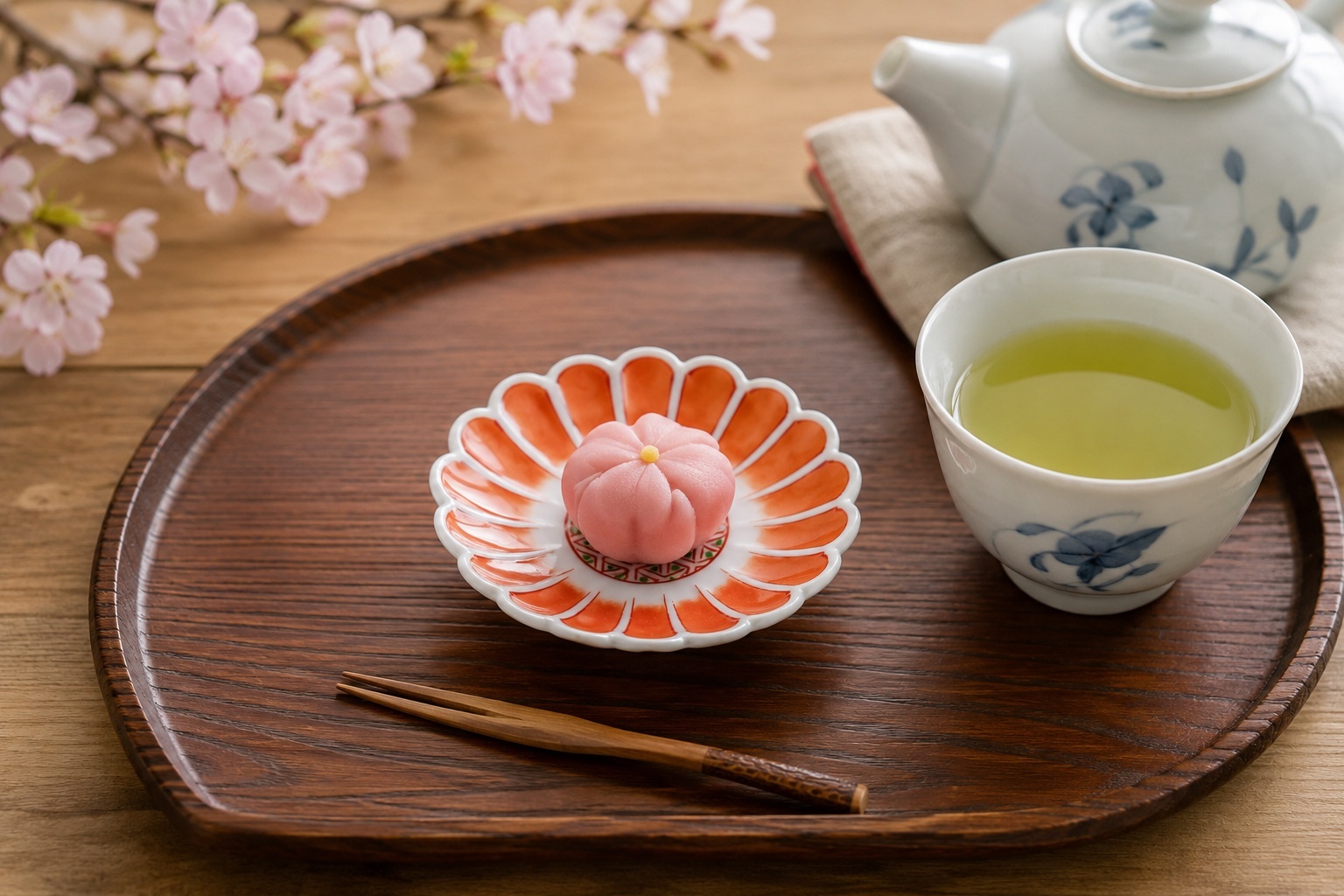
A Japanese sweet served on a small Akae plate.
Contemporary Akae Designs
Although Akae is a traditional technique, it also works beautifully with contemporary designs. Pieces accented with red and green are easy to incorporate into everyday dining and have a bright, approachable character.
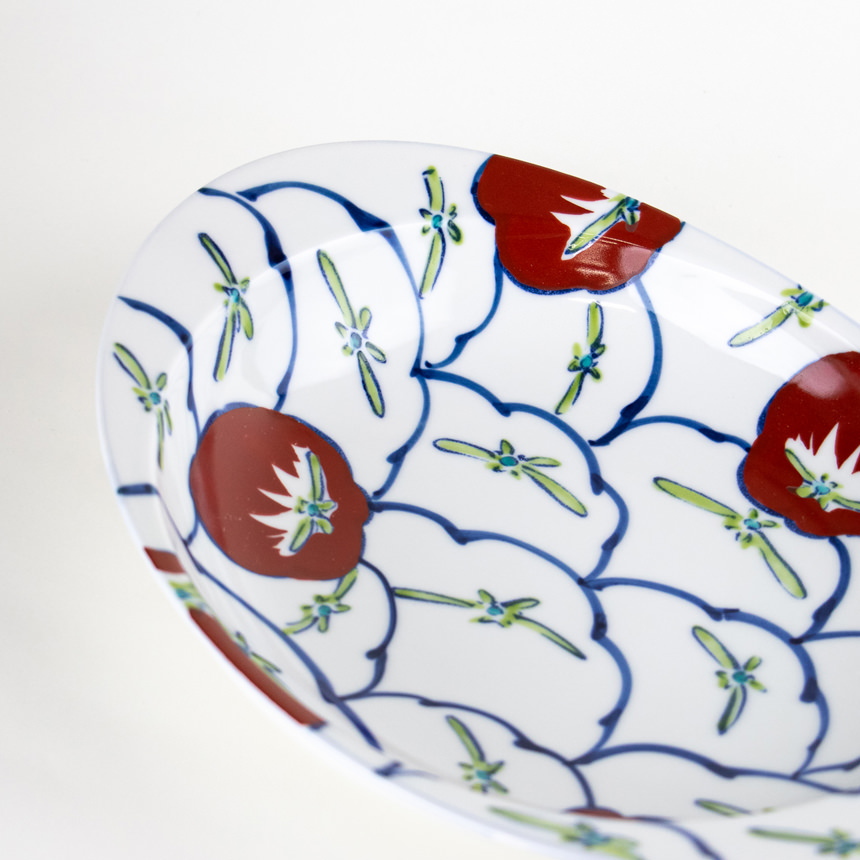
A curry plate featuring a striking red tomato design.
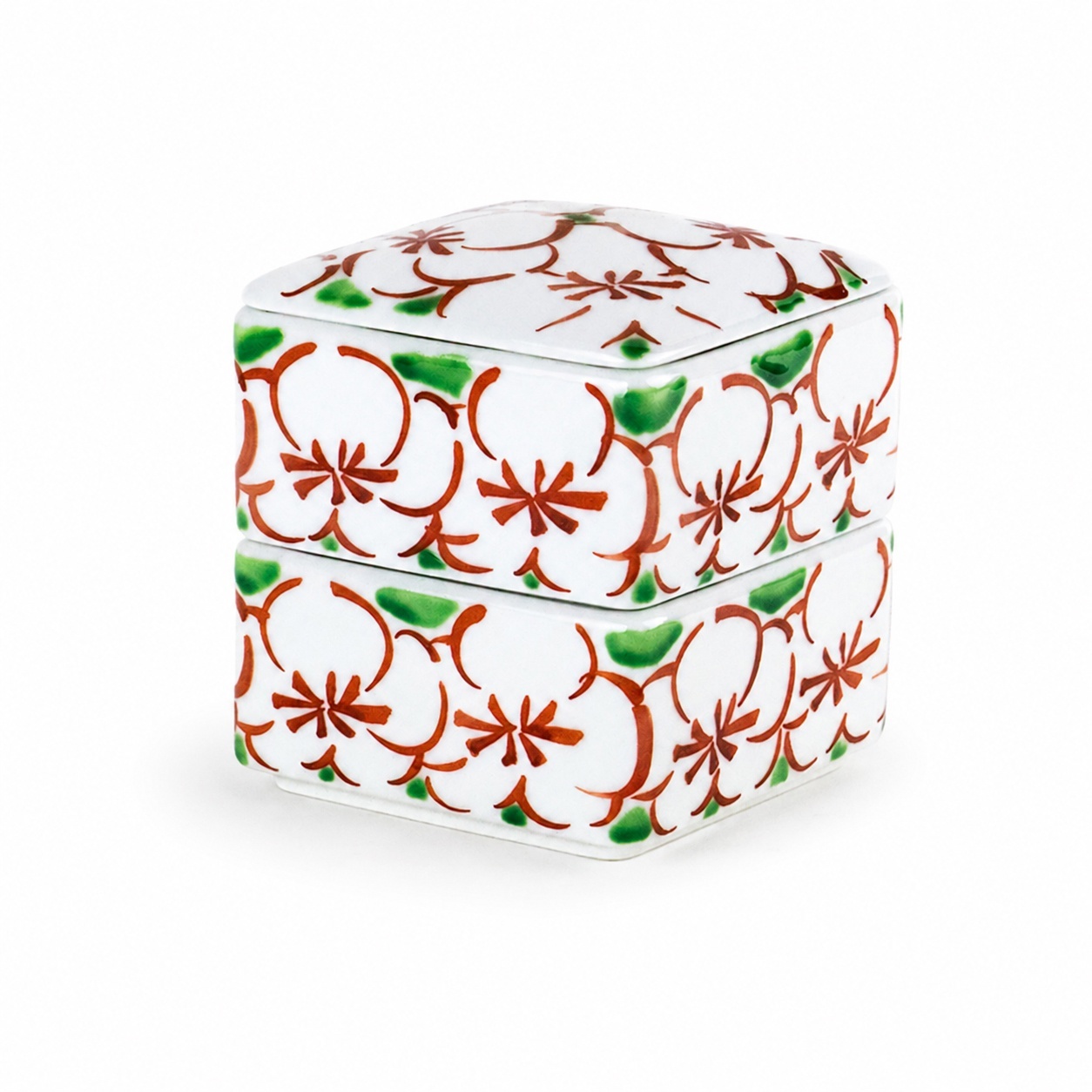
A two-tiered bowl decorated with red and green overglaze enamels.
Summary: Akae Brings Color to Arita Ware
Akae is an overglaze decoration technique in which colored enamels are applied after the main firing and fixed in an enamel kiln. Despite its name, it encompasses a wide range of colors, including red, green, yellow, purple, and gold.
While sometsuke offers the quiet beauty of indigo blue, Akae adds brightness and rich color. Some-nishiki combines the two for an especially expressive style characteristic of Arita ware. Whether used for everyday dining or given as a gift, Akae porcelain brings a festive touch to daily life.
Explore Akae Arita Ware
Discover Arita porcelain decorated with Akae Manreki patterns, pine-bamboo-plum motifs, some-nishiki designs, and gold accents, from everyday tableware to gifts and decorative pieces.
Explore Japanese Pottery