Sometsuke Tako-Karakusa Sansui Large Vase by Kinsai Fujii [217100]
Price: 660,000JPY
Weight: 7360g
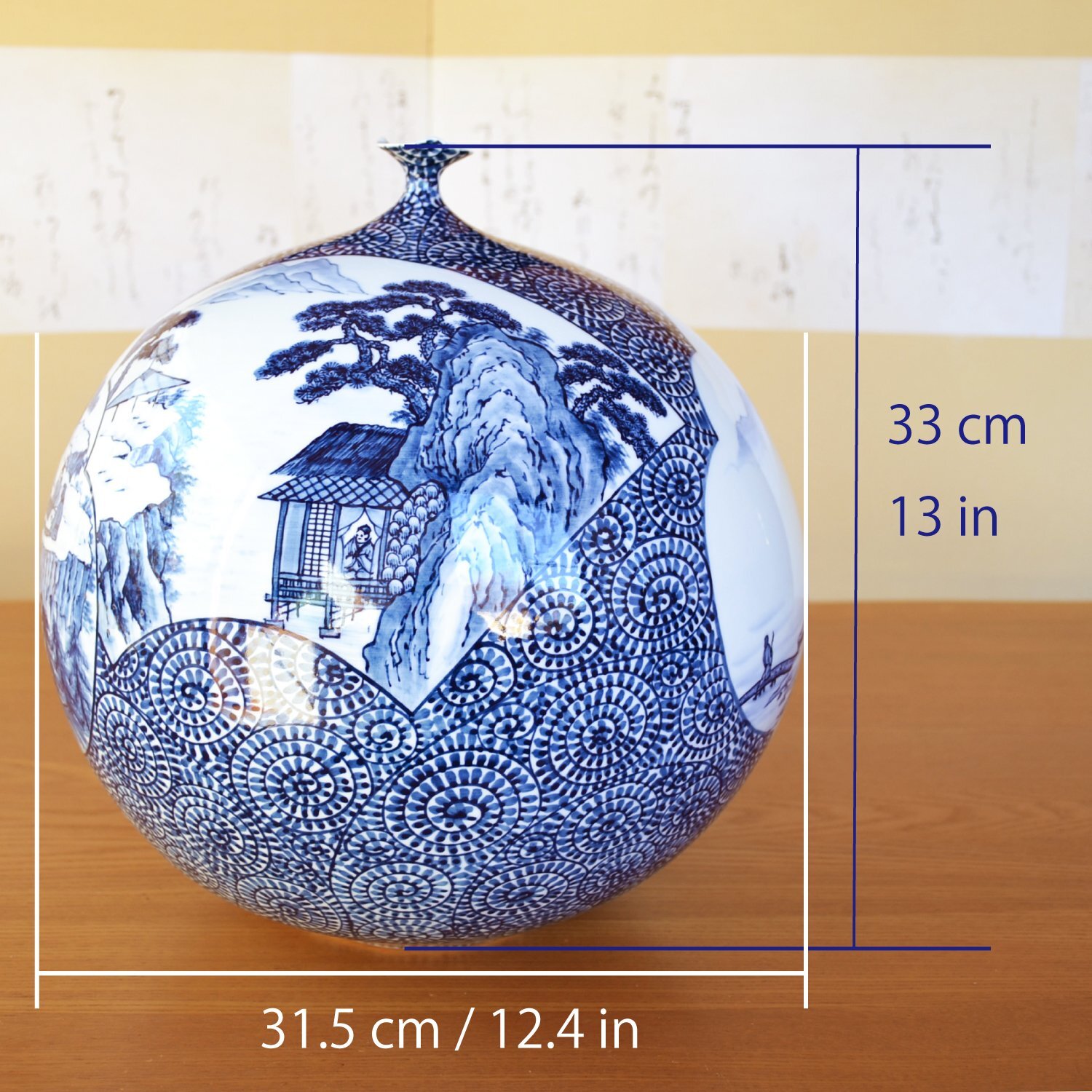
Width: 31.5 cm / Height: 33 cm
Width: 12.4 in / Height: 13 in
-----------------------
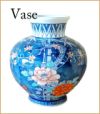
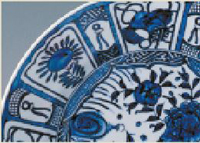
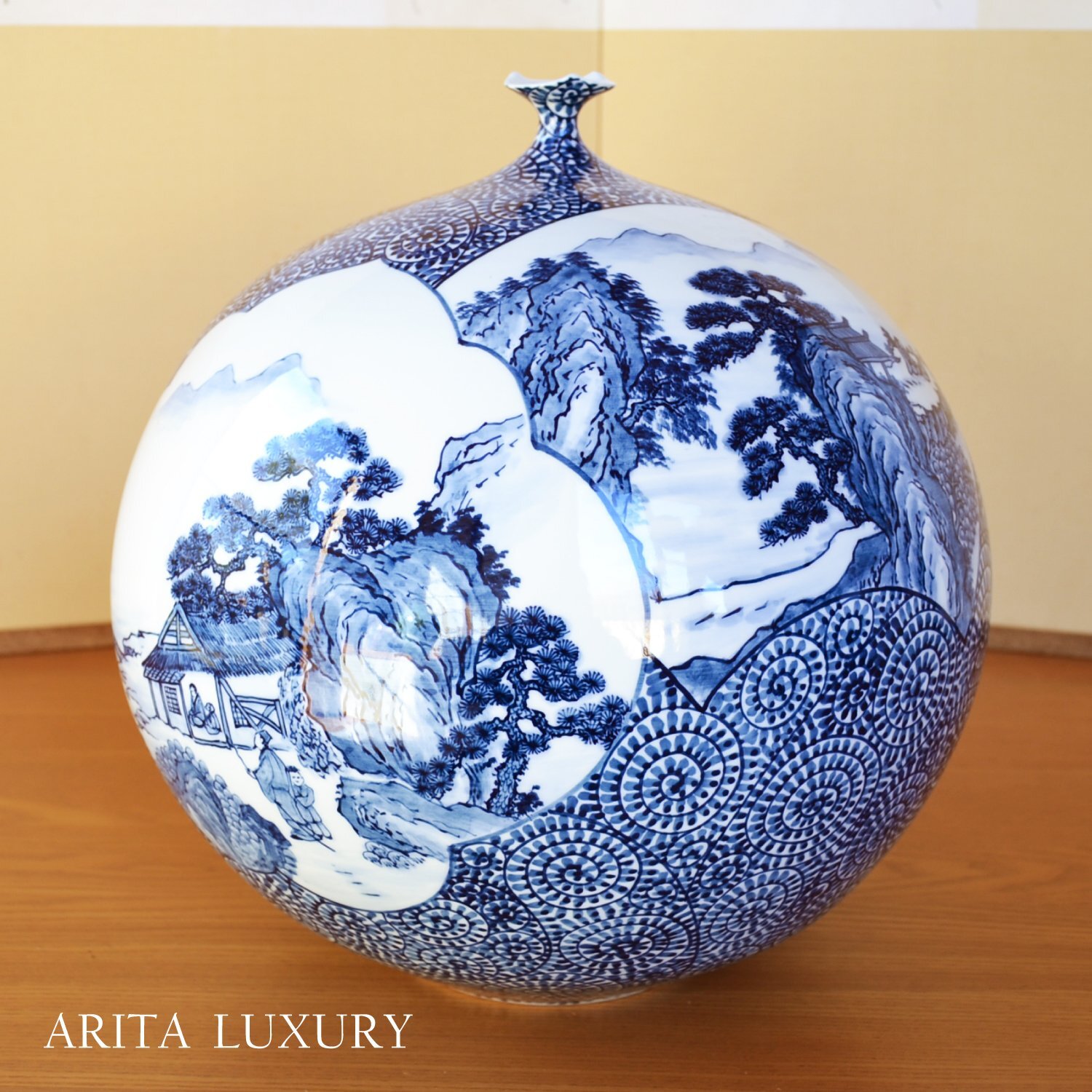
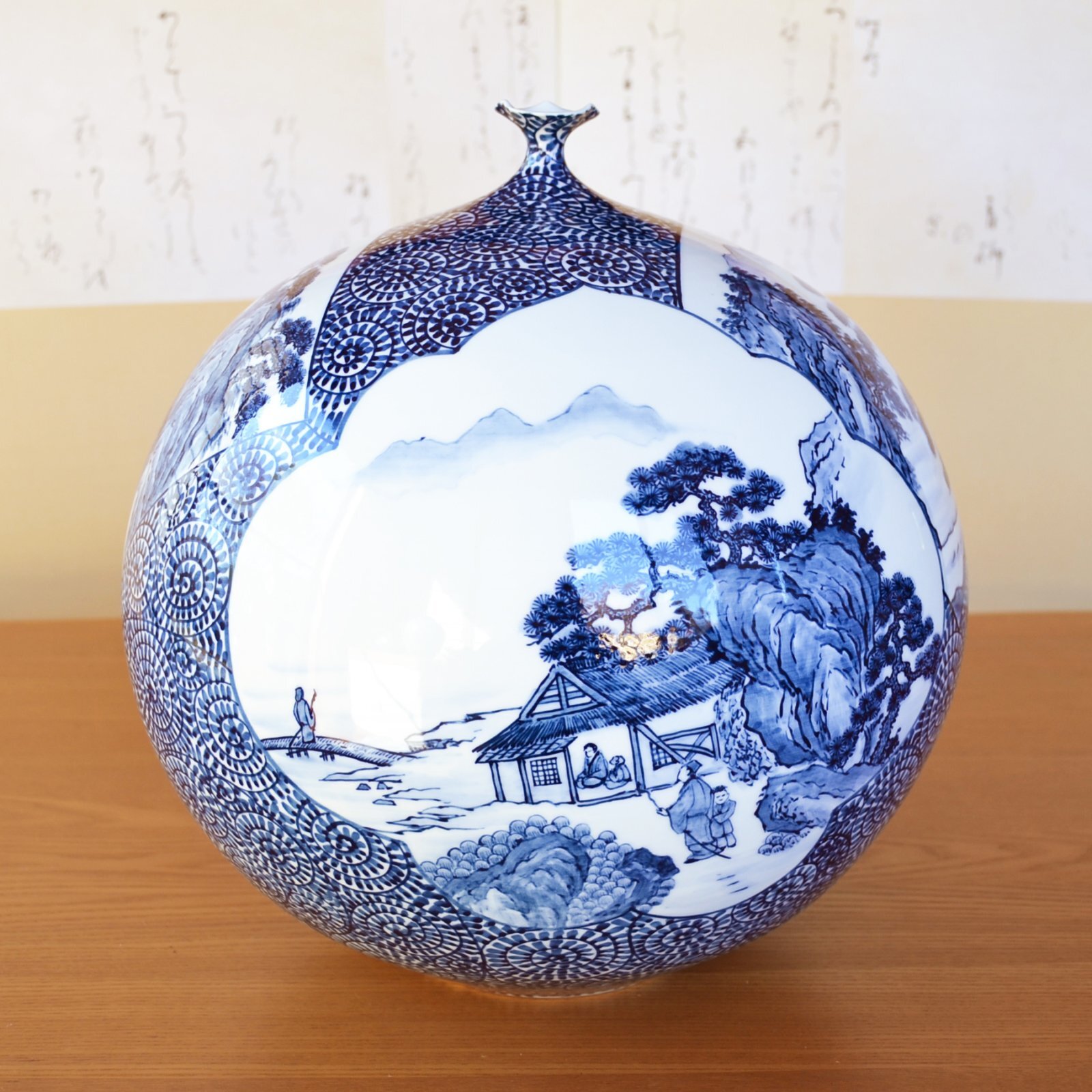
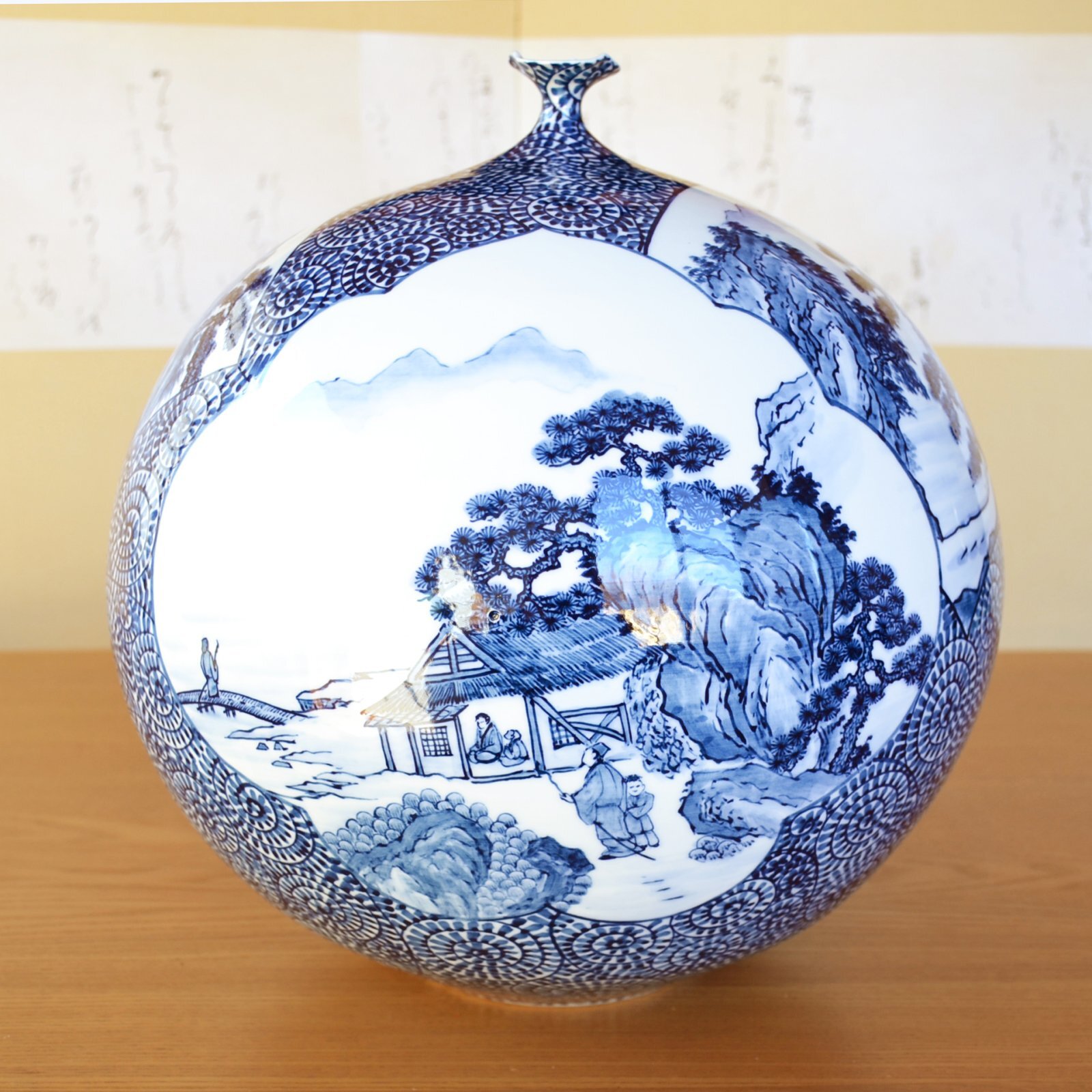
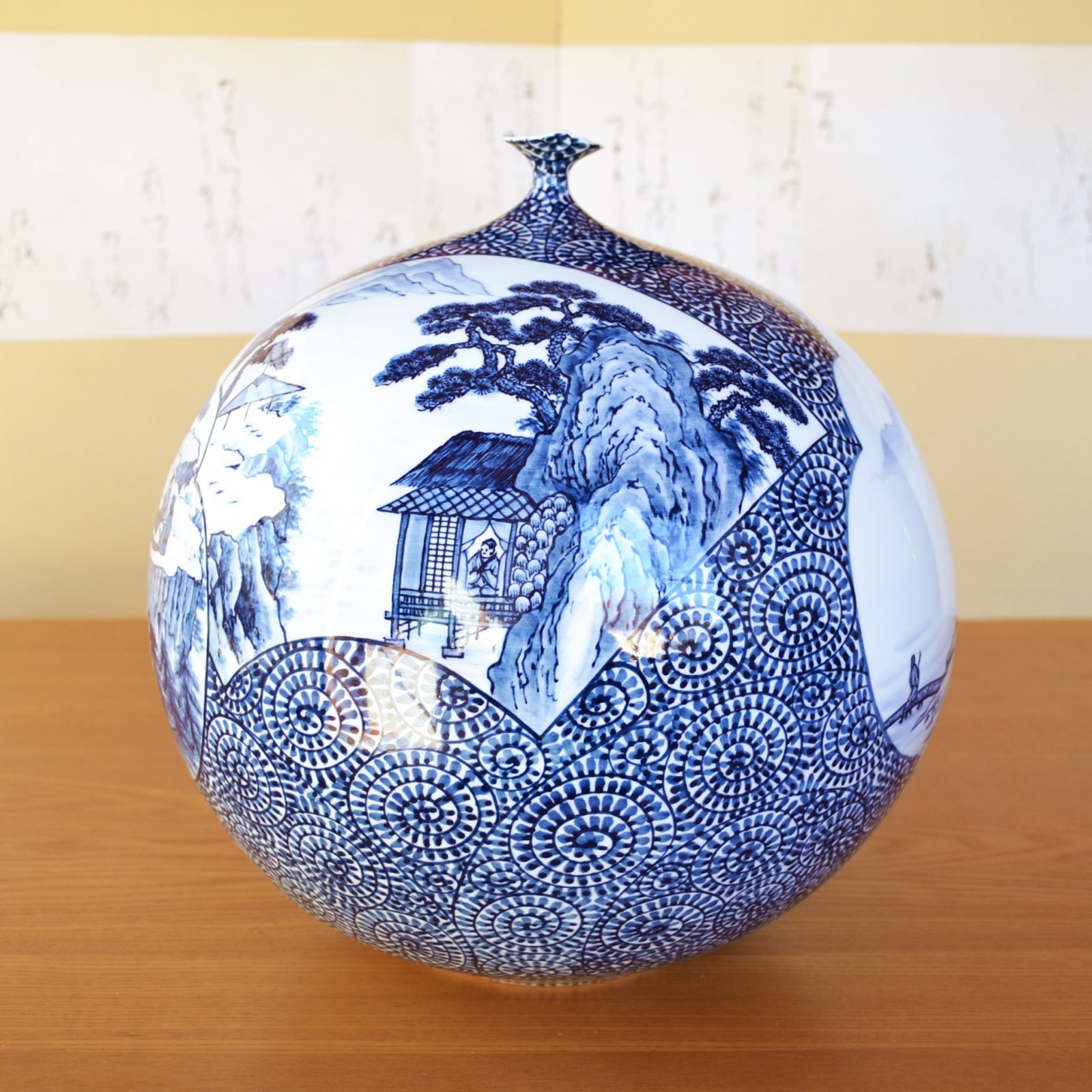
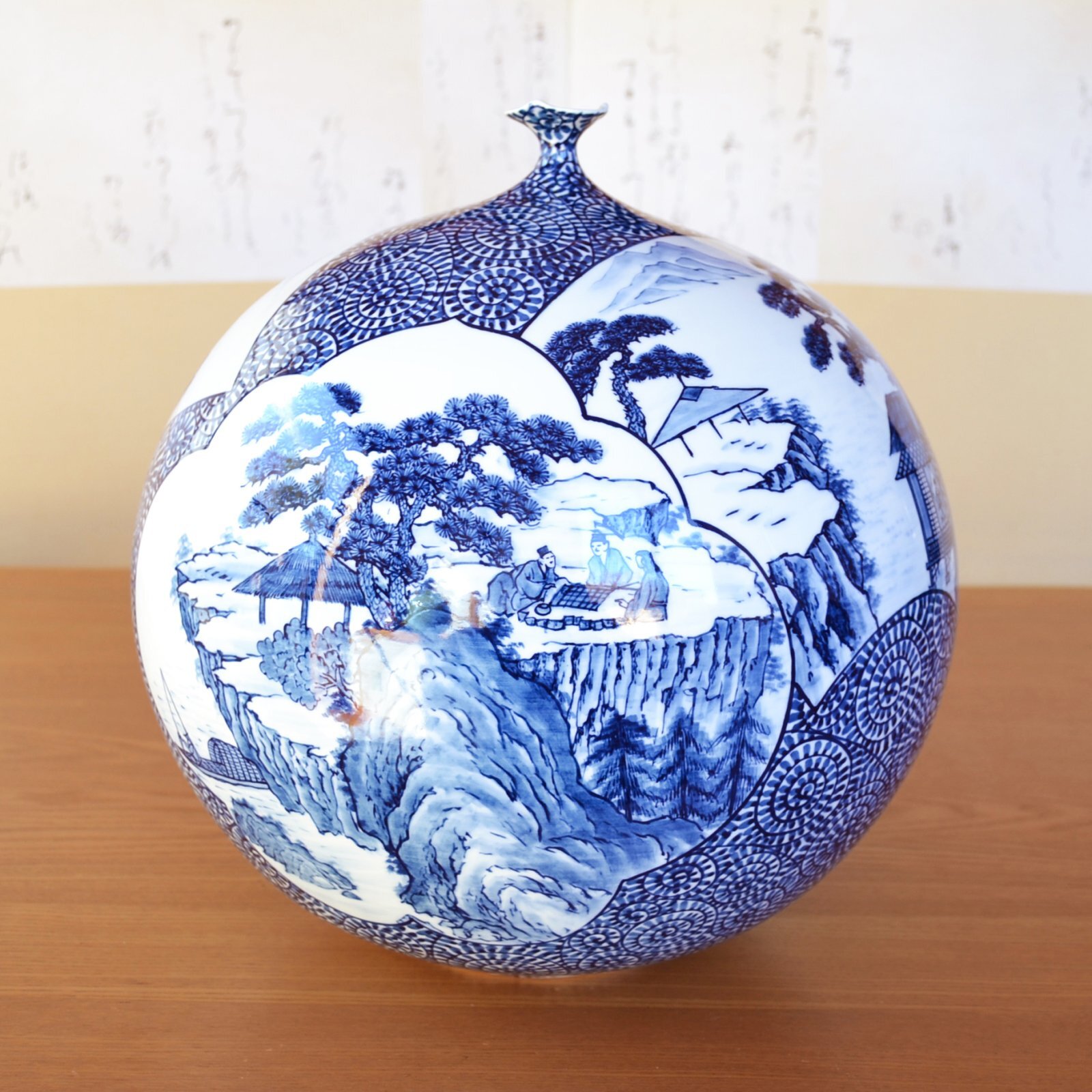
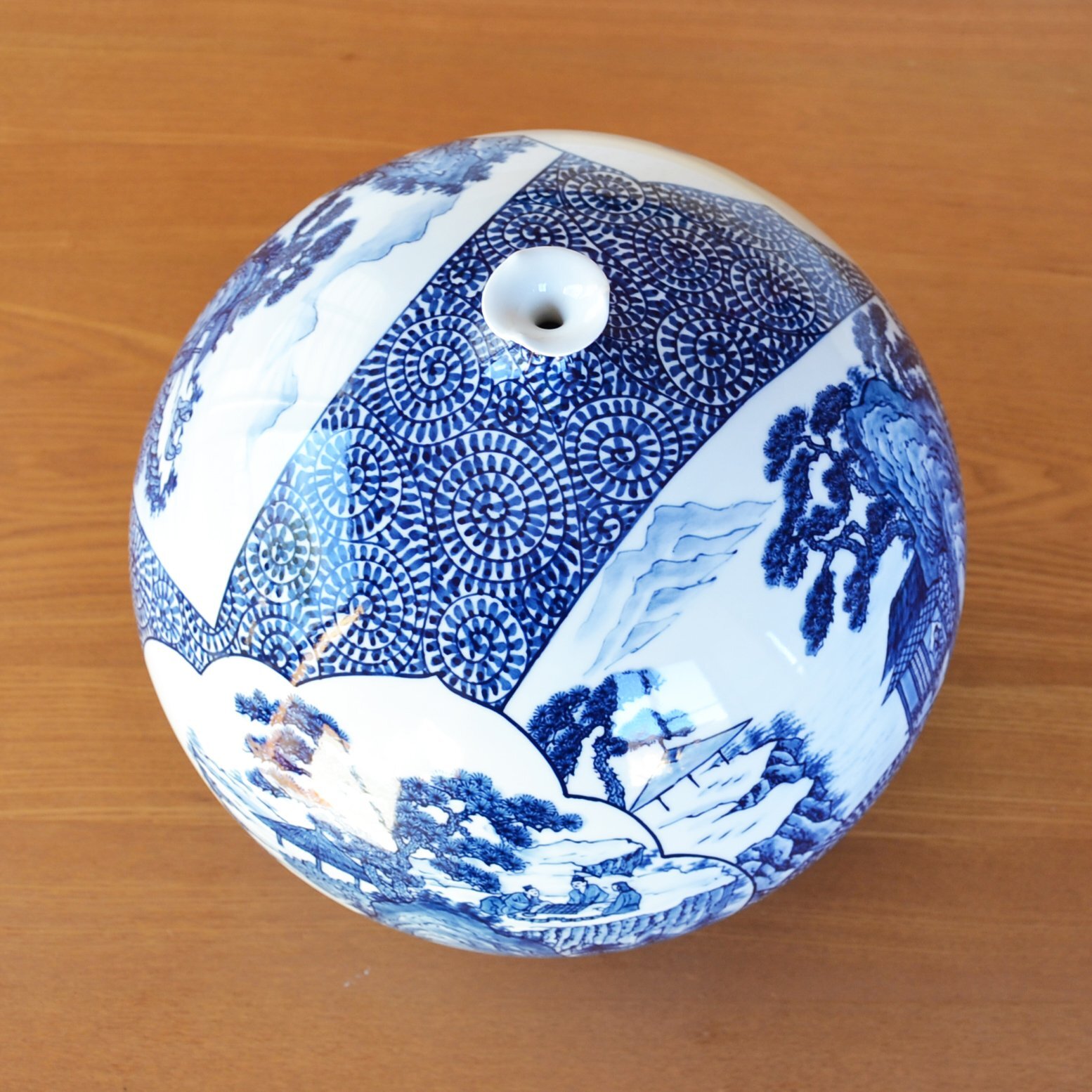
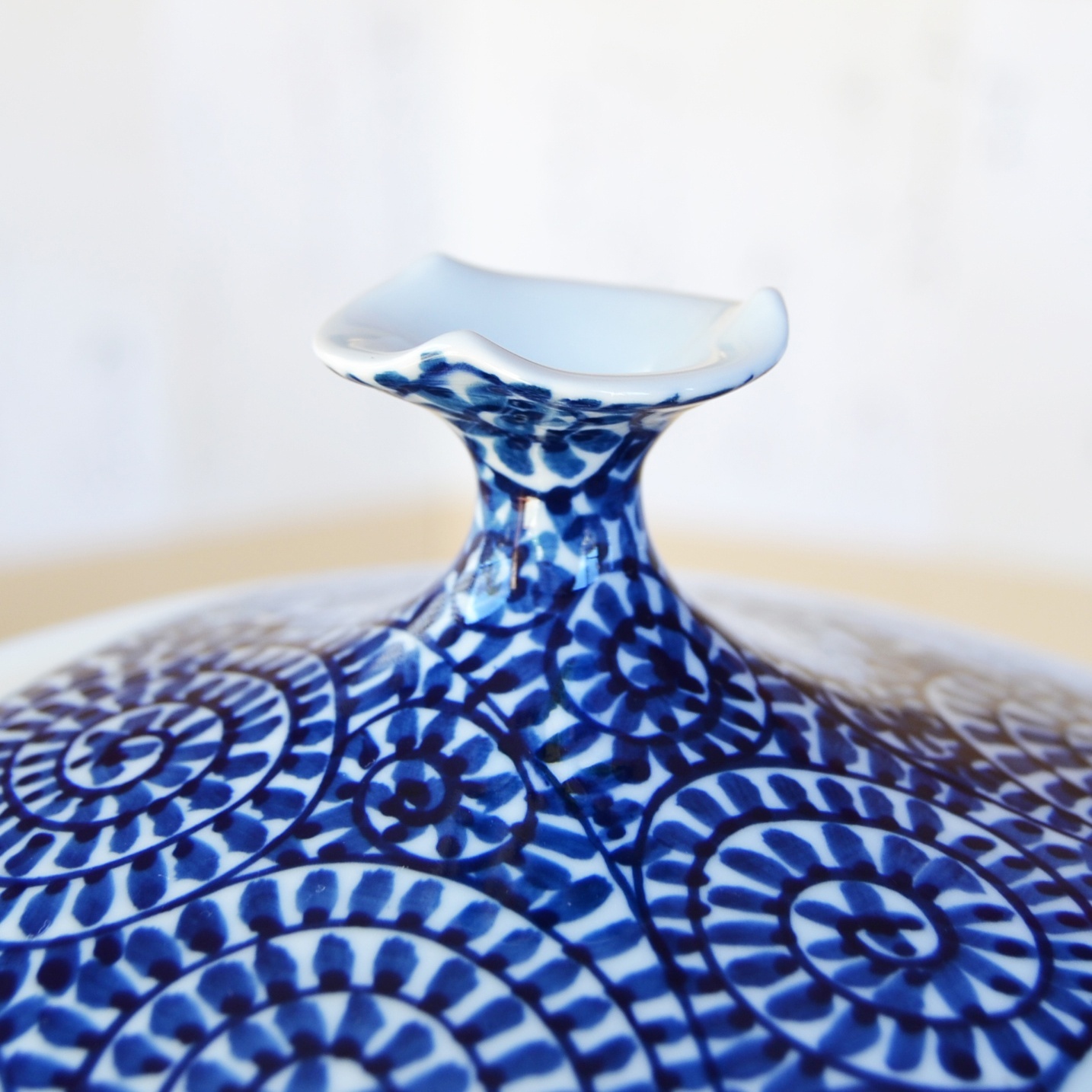
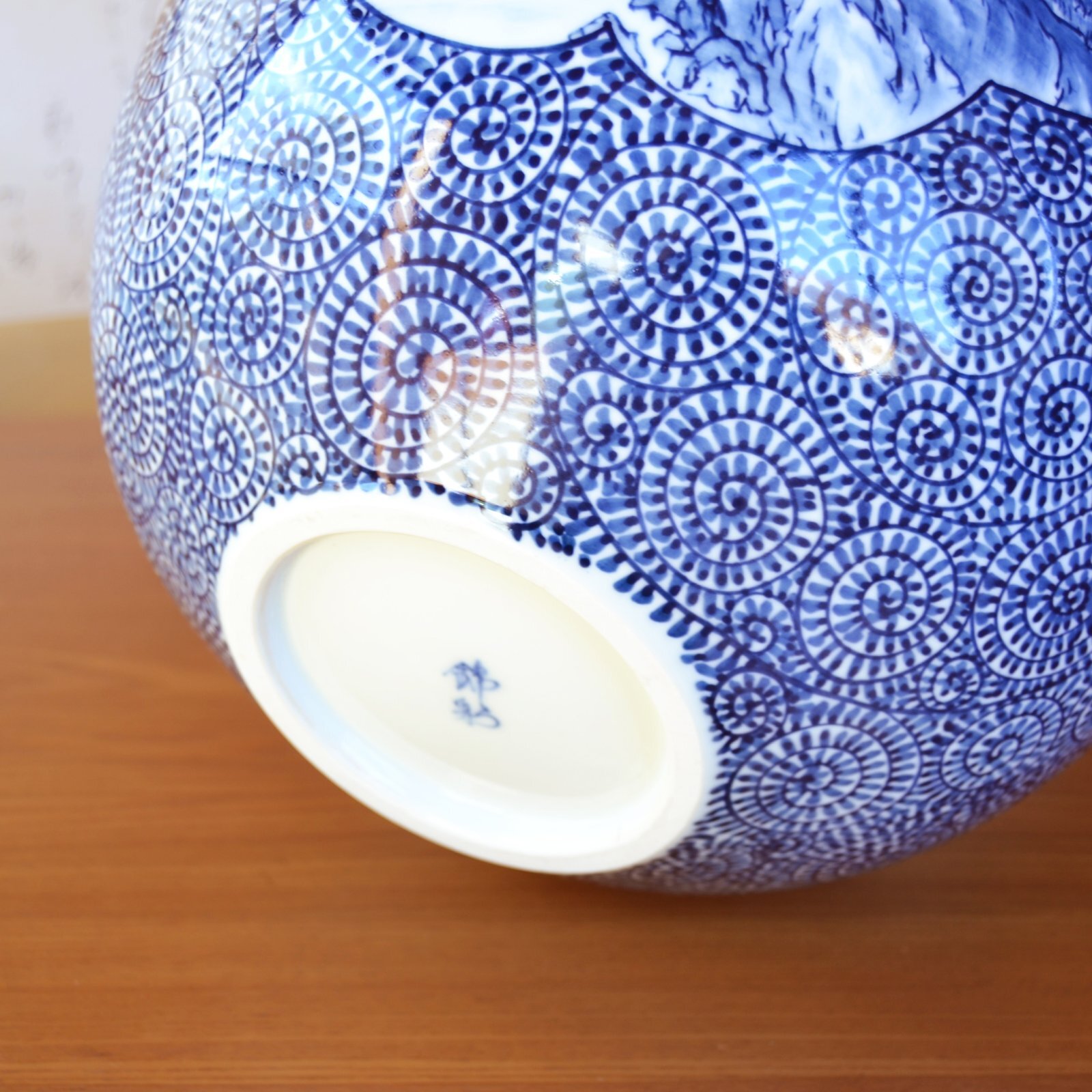
This is a work by Kinsai Fujii, one of the leading artists in the world of Arita ware. This large spherical vase is decorated entirely in traditional blue-and-white Sometsuke, with majestic mountains, pine trees, and people standing near a small hermitage depicted in intricate detail. The Sansui landscape extends around the surface of the vessel and is boldly framed by elaborate Tako-Karakusa arabesque patterns, revealing a different scene as the vase is viewed from each angle. The delicate brushwork possible only through meticulous hand painting combines beautifully with the varying shades of Sometsuke blue to create a remarkable sense of depth. The result is a work that brings together the refinement of traditional design with a powerful and dignified presence.
The subject depicted here is "Sansui," a traditional landscape theme centered on natural scenery such as mountains, rivers, lakes, trees, and rocks. The human presence is generally understated. Even when people or buildings appear, they are depicted on a small scale within the vastness of nature. Sansui painting was strongly influenced by Chinese Taoism, Confucianism, and Zen Buddhism. These traditions share a deep respect for nature and an appreciation of harmony between human beings and the natural world. Reflecting these philosophical and spiritual ideas, Sansui landscapes express humanity's inner and spiritual pursuits through the depiction of nature. The theme is not limited to ceramics, but is also frequently found in traditional ink paintings and hanging scrolls, making it one of the classic subjects of East Asian traditional art.
From a technical perspective, this work is particularly noteworthy for its use of Sometsuke. In this technique, the design is painted directly onto the bisque-fired porcelain body before the glaze is applied. The distinctive flow and touch of the brush make it possible to express the Sansui landscape with exceptional delicacy and depth. Painting directly onto the porous bisque-fired surface is extremely demanding because the pigment is quickly absorbed into the porcelain body, leaving virtually no opportunity for correction. Each brushstroke must therefore be applied with confidence and precision.
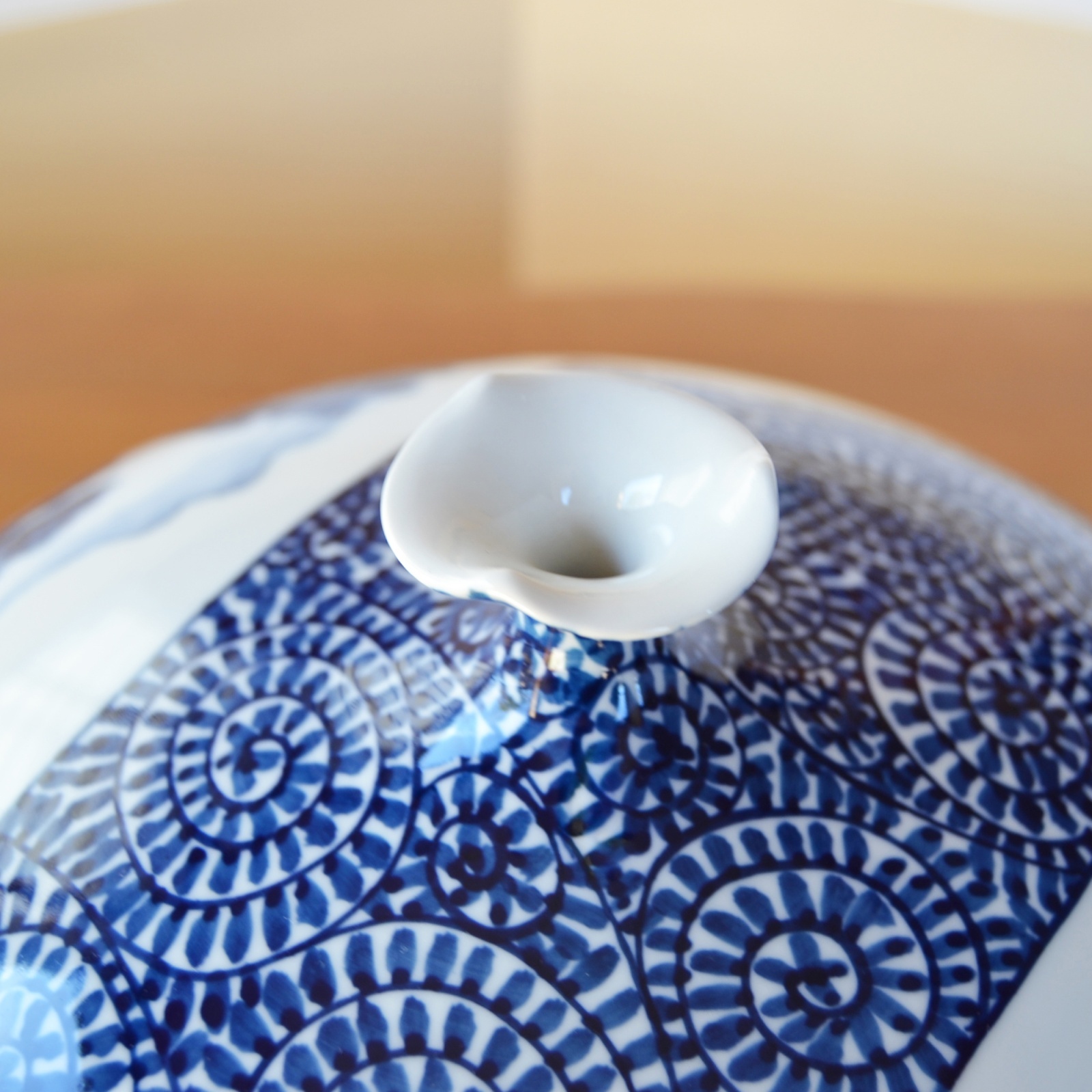
The surrounding "Tako-Karakusa" pattern, literally meaning "octopus arabesque," is a traditional Japanese decorative motif characterized by densely curling vine-like lines. Covering such a large surface with this intricate pattern requires extraordinary patience and concentration.
Patience, concentration, technical skill, and a highly developed sense of composition all come together in this monumental work. At 33 cm in height and 31.5 cm in diameter, it is an impressive example of Kinsai Fujii's mastery of traditional Arita ware painting.
[Potter Profile]
Kinsai Fujii
Kinsai Fujii's works are characterized by their luxurious finish using the overglaze enamel (nishiki) technique. He utilize metallic hues such as gold and platinum, as well as traditional Arita nishiki colors like red, green, and purple, showcasing strong individuality in their creations
Kinsai Fujii's career is as follows :
Born in 1976 in Arita, Saga Prefecture, Japan.
Entered the wheel-throwing department at Saga Prefectural Arita Ceramic Technical School in 1991.
Studied under Living National Treasures Manji inoue and Shigemasu Kajiwara in 1991.
Held the "Kinsai Fujii Exhibition" at Fukuoka Prefectural Museum of Art and Hita City Museum of Art in 2003.
Held the "Kinsai Fujii Exhibition" at Ehime Prefectural Museum of Art Branch in 2004.
Held numerous solo exhibitions at department stores and other venues nationwide since 1999.
[Main Awards]
Nagasaki Ceramics Exhibition, Asahi Shimbun Award
Kyushu-Yamaguchi Ceramics Exhibition, Selected
Workers' Art Exhibition, Minister of Labor Award
Asahi Ceramics Exhibition, Selected
Governor's Rotation, Saga Prefectural Governor's Award
Asia Craft Exhibition, Selected
And many others

 |
Import duties, taxes, and charges are not included in the item price or shipping cost. When a duty occurs, you are responsible for paying Customs Duties. |
 |
 |
Source: www.exchange-rates.org
 |
||||||||||||||||||||||||||||||||||||||||||||||||||||||||||||||||||||||||||||||||||||||||||||||||||||||||||||||||||||||||||||||||||||||||||||
|
||||||||||||||||||||||||||||||||||||||||||||||||||||||||||||||||||||||||||||||||||||||||||||||||||||||||||||||||||||||||||||||||||||||||||||
 |
||||||||||||||||||||||||||||||||||||||||||||||||||||||||||||||||||||||||||||||||||||||||||||||||||||||||||||||||||||||||||||||||||||||||||||
|
||||||||||||||||||||||||||||||||||||||||||||||||||||||||||||||||||||||||||||||||||||||||||||||||||||||||||||||||||||||||||||||||||||||||||||
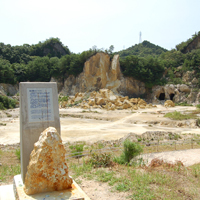
 Porcelain production started in Japan in the 17th century after kaorin stone was discovered in Arita. From the middle 17th century, large amounts of Arita ceramics, which captivated the European royalty and nobility, were exported to Europe, through the Dutch trading post on Dejima Island in Nagasaki. Augustus the Strong, Elector of Saxony, was so fond of Arita ceramics that he ordered porcelain resembling Arita ceramics to be made in his electorate. In Arita, the tradition and techniques of Arita ceramics have been preserved for over 400 years, while young potters and workshops take on the callenge of producing ambitious new works. |
||||||||||||||||||||||||||||||||||||||||||||||||||||||||||||||||||||||||||||||||||||||||||||||||||||||||||||||||||||||||||||||||||||||||||||
|
||||||||||||||||||||||||||||||||||||||||||||||||||||||||||||||||||||||||||||||||||||||||||||||||||||||||||||||||||||||||||||||||||||||||||||