Vase Large Tako karakusa | The first-generation head of the Shinemon Kiln [146127]
Price: 660,000JPY
Weight: 9300g
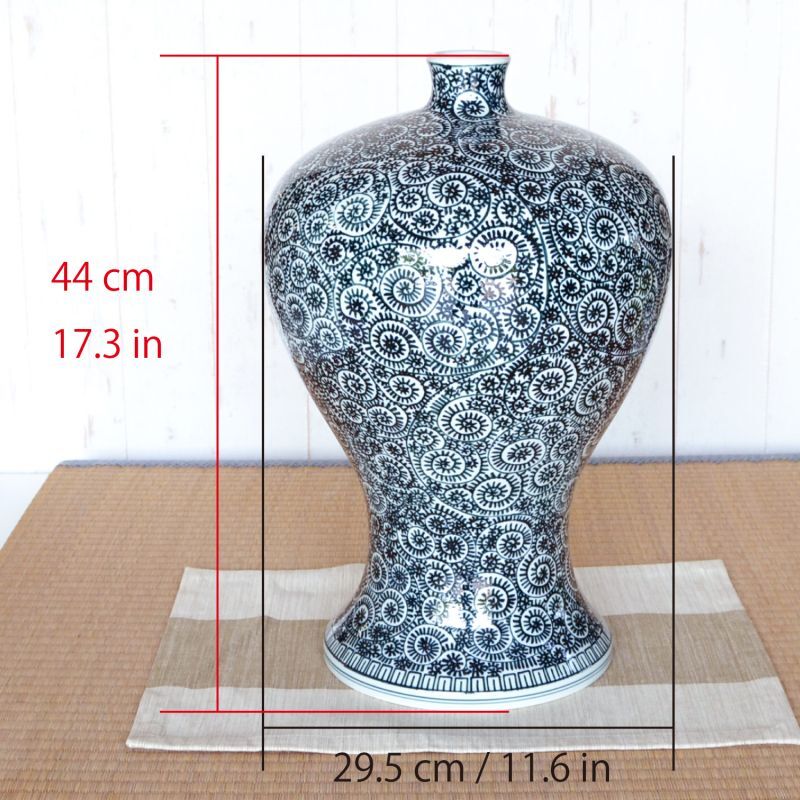
Width: 29.5 cm / Height: 44 cm
Width: 11.6 in / Height: 17.3 in
-----------------------
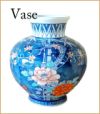
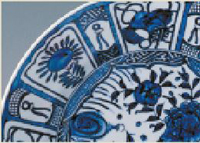
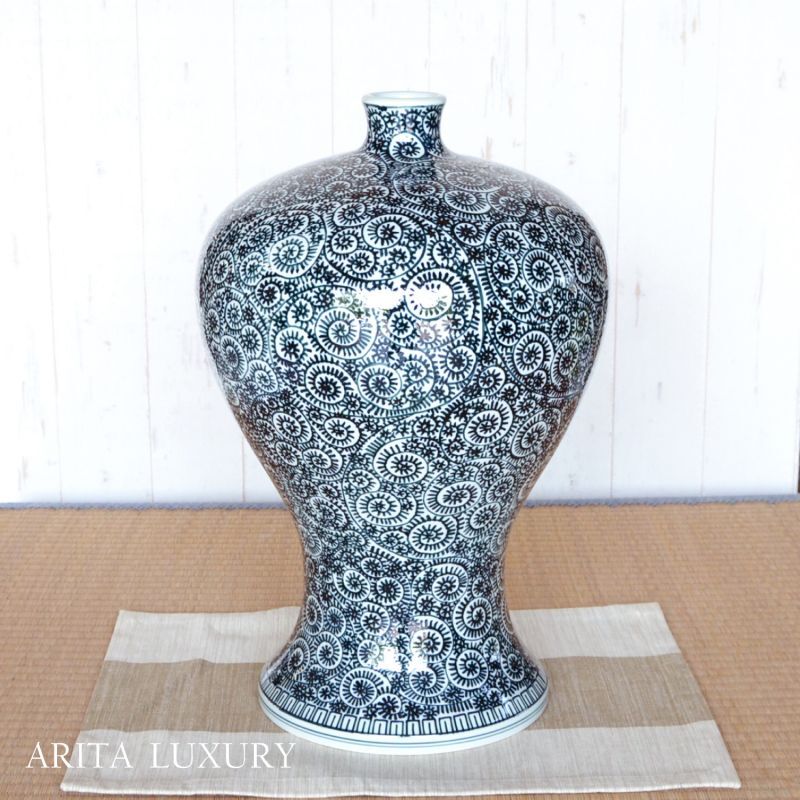
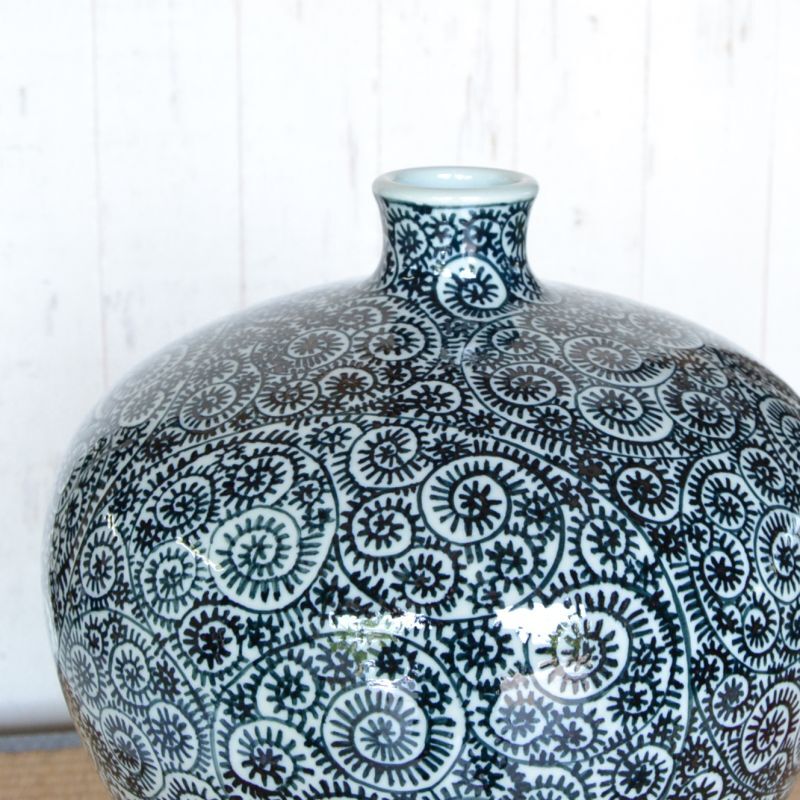
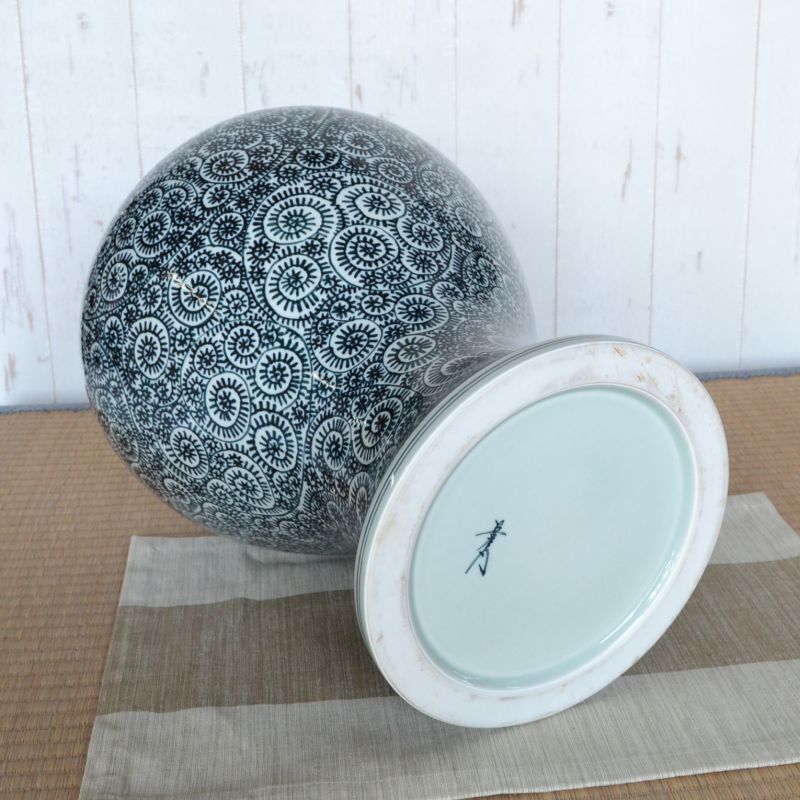
Works by the late Shinichiro Baba, the first-generation Shinemon and predecessor of the Shinemon Kiln, a representative kiln of Arita ware. It is a masterpiece meticulously adorned with intricate octopus tentacles vine patterns known as "Tako Karakusa,"
The current Shinemon Kiln is a leading authority in the Yohen technique, which skillfully manipulates glazes. However, this piece is not created using the Yohen technique but is painted with "sometsuke" (blue and white porcelain). This is because this large vase was created by the first-generation Shinemon, the late Shinichiro Baba, who founded the Shinemon Kiln. While he was exploring the Yohen technique throughout his career, he crafted this piece using the skills he had mastered up to that point. It is a work in which he fully demonstrated his skill using sometsuke, a basic painting technique of Arita ware. Since Sometsuke works are rarely produced at the current Shinemon Kiln, this piece is now considered highly rare and valuable.
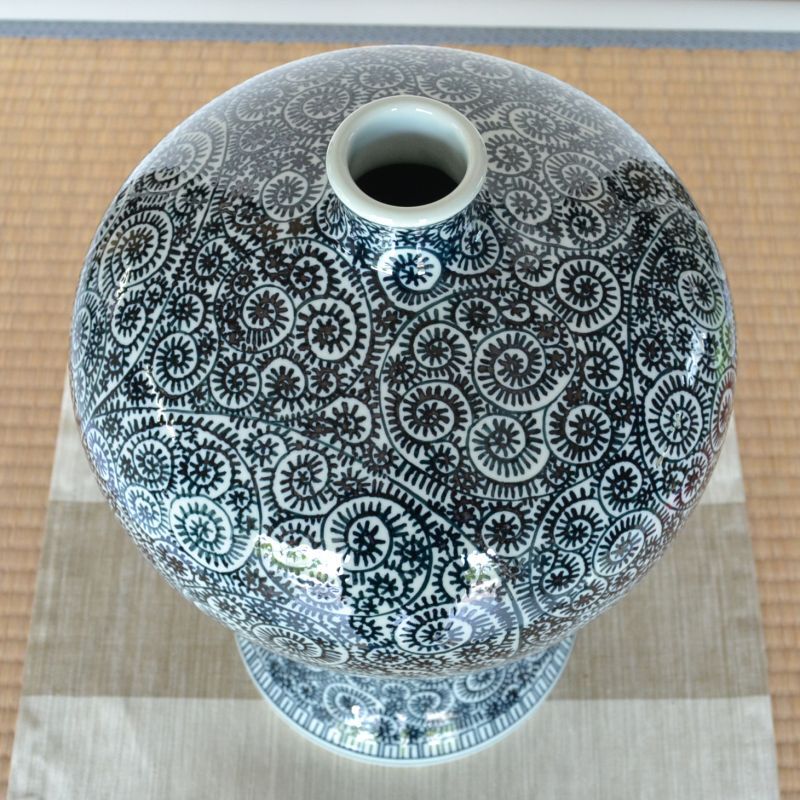
The depicted "Tako Karakusa" is one of the traditional patterns in Japanese ceramics. This pattern has several distinctive features. Spiral lines resembling octopus tentacles are drawn across the entire surface of the ceramic piece.
The continuous arrangement of these spiral patterns creates a unique, rhythmic design. Although it is an ancient pattern, Tako Karakusa is often incorporated into modern designs. It possesses traditional beauty while also fitt ing modern sensibilities in its design. The Tako Karakusa pattern is highly regarded not only in Japan but also around the world for its delicate and beautiful design. By preserving traditional techniques while pursuing new forms of expression, it continues to be cherished across generations.
From the perspective of production techniques, this piece is crafted using the "Gosu Sometsuke" technique, which emulates the colors of ancient times. Sometsuke is a painting technique where the designs are drawn on the bisque-fired pottery before applying the glaze. Sometsuke involves painting on the bisque-fired pottery, which is absorbent, making it impossible to make corrections. in other words, it is completed with a single, decisive brushstroke. It is a masterpiece completed with perseverance, concentration, and compositional skill.
[Potter Profile]
Shinichiro Baba (deceased)
The first-generation head of the Shinemon Kiln
Member of Nitten / Full Member of the Japan Contemporary Arts and Crafts Association / Member of the Saga Prefecture Ceramic Association / Member of the Arita Ceramic Association
Shinichiro Baba's career is as follows :
Born in 1924 in Arita, Saga Prefecture
1972: Founded the Shinemon Kiln in Arita.
1979: Selected for the Prefecture Exhibition with "Hexagonal Celadon Bowl."
1981: Selected for the Nitten exhibition with "Oil Spot Tenmoku Large Bowl," subsequently selected 21 times.
1989: Appointed as an art exhibition judge.
2000: Exhibited "Saiun-99" and "Sai-99" at the British Museum in London (Saga Prefecture Ceramic Exhibition).
2004: Exhibited "Saikei" and "Saimon" at the Arita Pottery Exhibition in Germany.
[Main Awards]
1983: Won the First Place Bijutsu Kyokai Prize at the Bijutsu Kyokai Exhibition for "Cinnabar Flower Vase."
1986: Received the Grand Prize and the Contemporary Craft President's Prize at the Contemporary Crafts Kyushu Exhibition.
1996: Awarded the Contemporary Craft Prize at the Contemporary Craft Exhibition for "Akebono no Nagisa."
2000: Received the Full Member Prize at the Contemporary Craft Exhibition for "Rensaku・Sai."

 |
Import duties, taxes, and charges are not included in the item price or shipping cost. When a duty occurs, you are responsible for paying Customs Duties. |
 |
 |
Source: www.exchange-rates.org
 |
||||||||||||||||||||||||||||||||||||||||||||||||||||||||||||||||||||||||||||||||||||||||||||||||||||||||||||||||||||||||||||||||||||||||||||
|
||||||||||||||||||||||||||||||||||||||||||||||||||||||||||||||||||||||||||||||||||||||||||||||||||||||||||||||||||||||||||||||||||||||||||||
 |
||||||||||||||||||||||||||||||||||||||||||||||||||||||||||||||||||||||||||||||||||||||||||||||||||||||||||||||||||||||||||||||||||||||||||||
|
||||||||||||||||||||||||||||||||||||||||||||||||||||||||||||||||||||||||||||||||||||||||||||||||||||||||||||||||||||||||||||||||||||||||||||
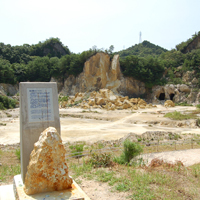
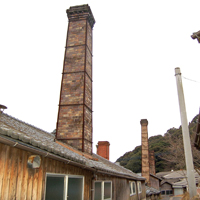
 Porcelain production started in Japan in the 17th century after kaorin stone was discovered in Arita. From the middle 17th century, large amounts of Arita ceramics, which captivated the European royalty and nobility, were exported to Europe, through the Dutch trading post on Dejima Island in Nagasaki. Augustus the Strong, Elector of Saxony, was so fond of Arita ceramics that he ordered porcelain resembling Arita ceramics to be made in his electorate. In Arita, the tradition and techniques of Arita ceramics have been preserved for over 400 years, while young potters and workshops take on the callenge of producing ambitious new works. |
||||||||||||||||||||||||||||||||||||||||||||||||||||||||||||||||||||||||||||||||||||||||||||||||||||||||||||||||||||||||||||||||||||||||||||
|
||||||||||||||||||||||||||||||||||||||||||||||||||||||||||||||||||||||||||||||||||||||||||||||||||||||||||||||||||||||||||||||||||||||||||||